T Levels: A Practical Route to Success

T Levels: A Practical Route to Success

T Levels are often overlooked by 16–19-year-olds when considering their academic pathways. However, in the last three years, T Levels have become a significant addition to the educational landscape in England, offering students a robust alternative to traditional post-16 academic routes. With a blend of classroom learning and practical industry experience, T Levels are designed to bridge the gap between education and employment.

What are T levels?

T Levels are technical qualifications introduced to provide a credible and practical route for students after their GCSEs. Developed in collaboration with employers, these qualifications are meticulously designed to meet industry requirements. T Levels consist of 80% classroom learning and 20% on a dedicated work placement, amounting to at least 315 hours, or approximately 45 days. Each T Level is equivalent to three A Levels, ensuring students are well-prepared for the real world of work, apprenticeships, or further study.

Unlocking Potential

One of the standout features of T Levels is the range of pathways they offer. For example, the construction T Levels provide three distinct routes:

Onsite Construction: This pathway focuses on practical skills needed for construction work on-site. It includes training in areas like bricklaying, carpentry, and other trades essential for building and maintaining structures.

Design, Surveying and Planning (DSP): This route covers the technical and creative aspects of construction. Students learn about architectural design, surveying techniques, and planning processes, preparing them for roles in project management and design.

Building Services Engineering: This pathway is about the systems that make buildings functional, such as heating, ventilation, air conditioning (HVAC), and electrical systems. It equips students with the skills to design, install, and maintain these critical systems.

These pathways cater to different interests and skills, from trades, to contracting and engineering. This diversity helps students understand the breadth of roles available in the construction industry beyond the common stereotypical jobs with hard hats.

For the construction industry, T Levels are not just about immediate skill development. They are a strategic investment in future talent pipelines. Historically, companies have relied heavily on graduate schemes to source talent. However, T Levels, alongside apprenticeship programs, offer a new avenue to attract capable and eager young individuals who prefer a more hands-on approach rather than full-time further education.

T Levels: Bouygues

Bouygues, who are on Lot 1 of our framework, see T Levels as a critical opportunity to provide young people with their first real taste of the workplace. This initial exposure is designed to connect students with the vast opportunities within the construction sector, highlighting how their existing creative and digital skills, along with their focus on sustainability, align with industry demands.

Working with organisations like Class of Your Own, which has a proven track record in engaging and educating young people globally, Bouygues integrates real work and real-world learning into the T Level curriculum. This alignment with the Department for Education’s ambitions and industry needs is pivotal. Bouygues also extends this engagement through initiatives like the Design Engineer Construct! Learning Programme, which is introduced to secondary schools via COYO’s ‘Adopt A School’ scheme. This initiative targets students from ages 11 to 18, creating a pipeline for technical and academic pathways and addressing the construction industry’s urgent need for skilled talent.

Success Story

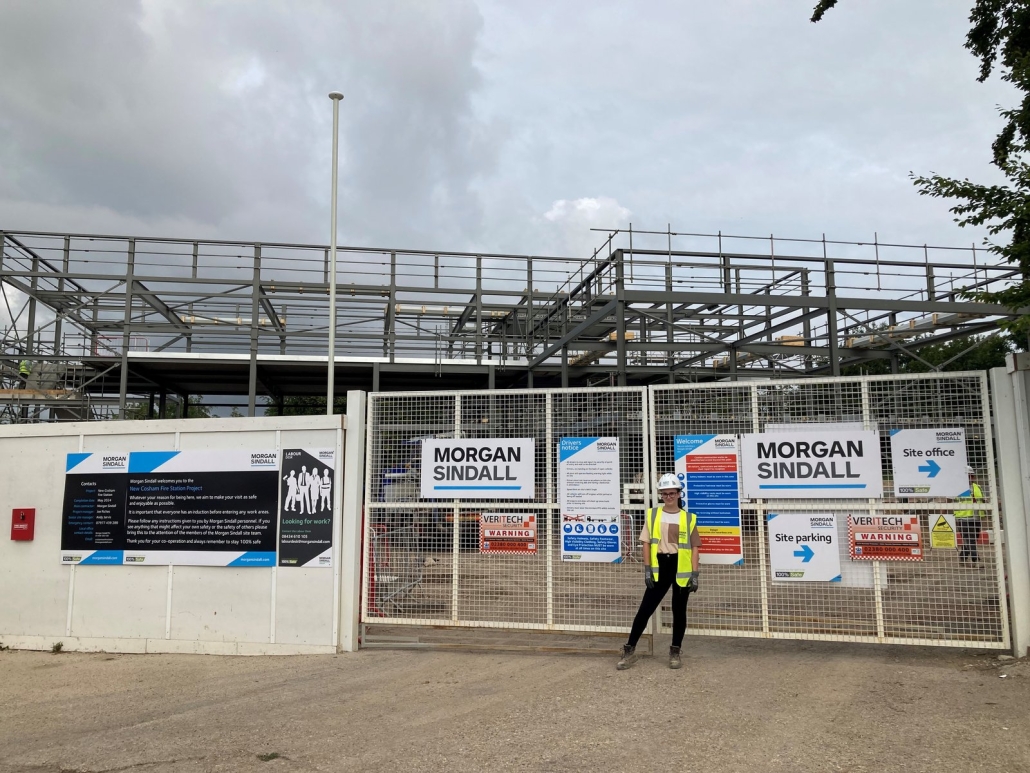
From T Level Student to Degree Apprentice: Take a look at Macey’s Inspiring Journey at Morgan Sindall