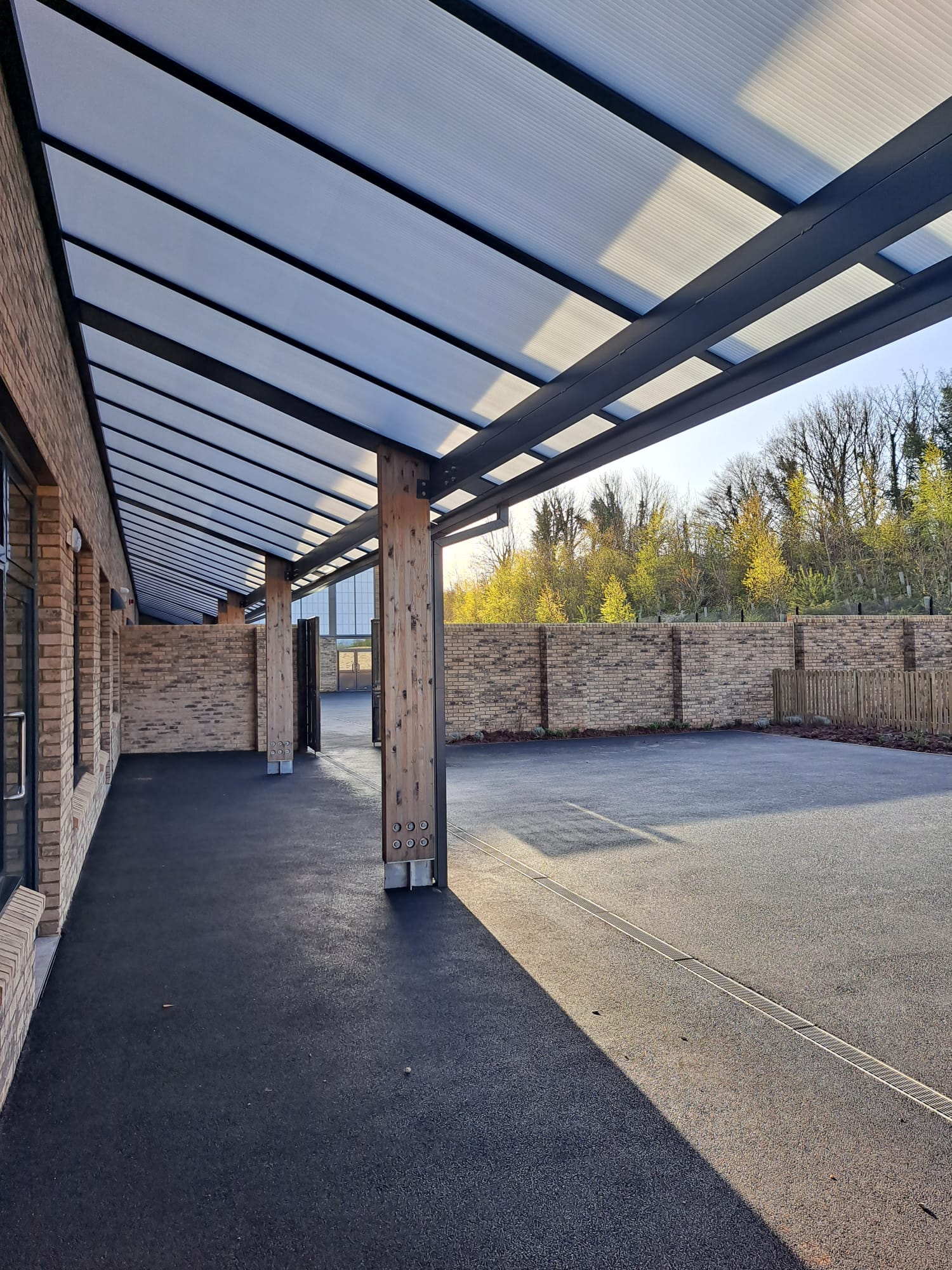
An unseasonably wet late winter / early spring in 2023 meant that the playing fields could not be prepared in time for the students, and the external work was slower in delivery than we would have liked. On most other projects, this would not be an issue, but in the setting of a SEMH school, it carries risks that you might not otherwise have. For example, delays with installing fencing meant that the site was not secure, which for this profile of students can present a risk: staff need to be confident that the school site always has secure boundaries. Thankfully due to the strength of Willmott Dixon’s relationships and localism of the majority of trades, the issue was rectified promptly.
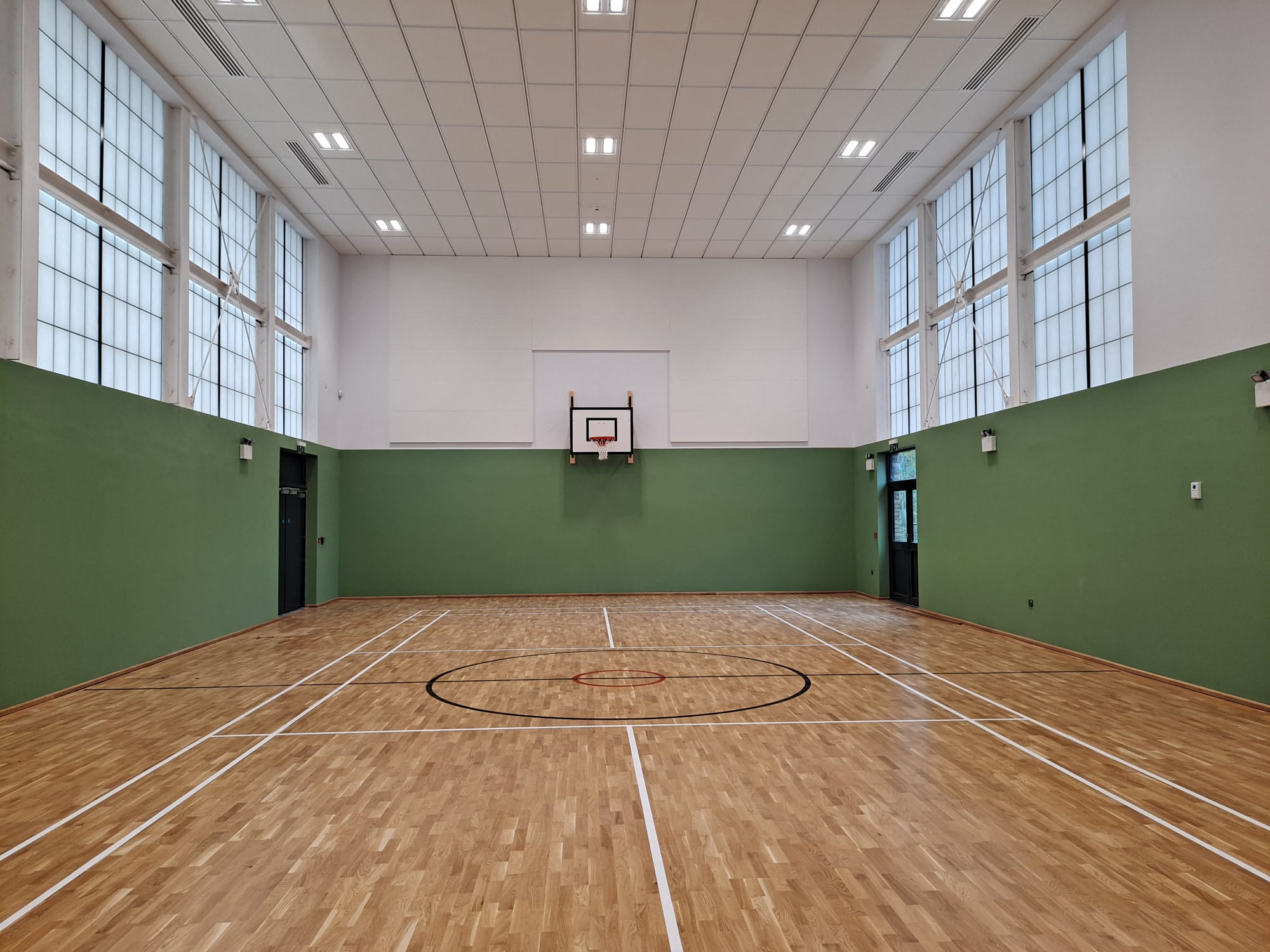
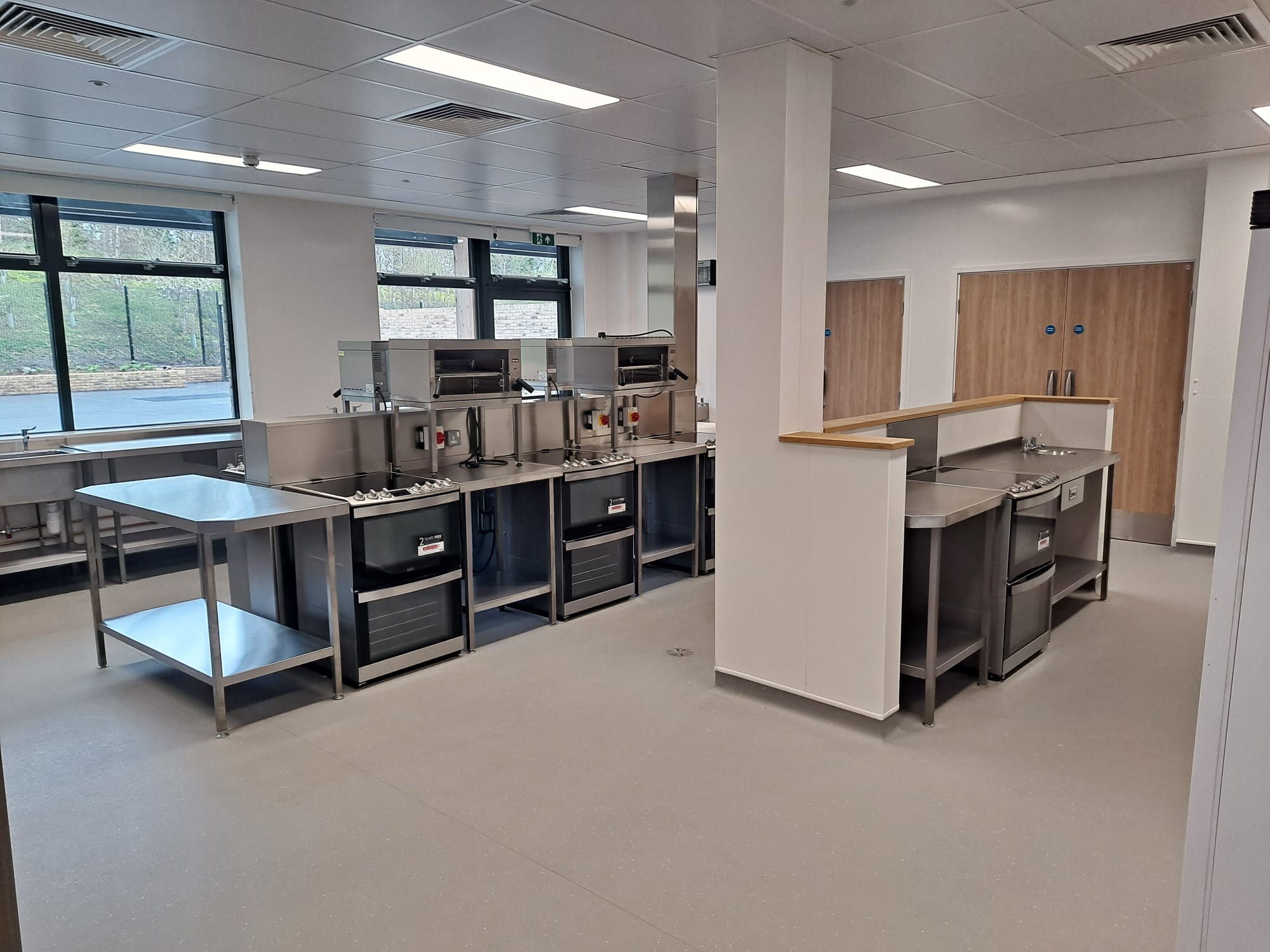
Careful design and delivery is essential when constructing SEMH schools, where the emphasis is on enabling both a tailored education, usually on a 1 on 1 basis, as well as the development of independence, life skills and confidence for students who would struggle in a mainstream setting. This means that facilities at The Promise include hygiene rooms, therapy and parents’ spaces and calm rooms. Alongside the more typical classroom spaces, staff and support areas, the school has subject specific indoor and outdoor teaching spaces for subjects such as art, PE and food technology – all essential in the development of young people with more complex interpersonal needs.
Sustainability was a key consideration throughout both design and delivery of The Promise School with a particular focus on minimising the impact of the building once in use:
All electric building services are supported by 137 roof mounted PV panels which have a capability to produce 47150kWh of electricity per annum, to assist with running costs and building emissions saving up to 20 tonnes of CO2 annually
Air Handling Units and Heat Recovery Units installed offer a far more efficient way to ventilate, heat or cool the space
Life cycle assessment recommendations adopted including slate roofing and timber frame led to a 40% carbon saving
Adopting a SuDS (Sustainable Drainage System) approach means that any increased surface water run-off from the school will be slowed down before being released into a local water course like a river or reservoir, minimising the risk of localised flooding.
A material management plan saw 99.4% of construction waste being diverted from landfill, but to go one step further, we also reclassified and reused 700m3 soil that was imported from Exeter City Football training ground!
459 hours of employability skills training in local schools,
279 hours of community initiatives and engagement and
10 laptops donated to local social enterprises.
72.26% of project spend – i.e. on goods and trades – was made within 30 miles of Okehampton, meaning not only lower emissions from transportation but also considerable support for the local economy in Devon. 13 work experience places were provided to local young people and 10 new jobs were created as a result of the project.
PV Roof Panels – carbon saving of 290,8826kg. This saving is equivalent to planting 4,809 tree seedlings grown over 10 years.
The Life cycle assessment was used to reduce the embodied carbon of the School. Based on the design and the changes that have been implemented based on the results of this assessment, there was an estimated total saving of 40% of carbon on this scheme.
Zero RIDDORS
100% payment within 30 days terms
Soft landings for handover

Bridges Cross (Lucy Faithful)
Scroll to top