The challenge was not only to create a state-of-the-art facility with larger ceremony spaces, advanced technical operations, and a dignified environment rooted in the calmness of the surrounding landscape, but also to do so within a constrained budget and during a period of significant disruption caused by the Covid19 pandemic and the war in Ukraine.
The project was procured through the Southern Construction Framework (SCF), which provided a collaborative two stage process and enabled early contractor involvement. This approach proved critical when initial cost planning had to be reviewed.
Through the SCF process, the project team were able to undertake extensive value engineering, identifying more than £4m in savings while maintaining the quality and ambition of the design. At the same time, enabling works such as site access improvements, ecological mitigation, archaeological investigations, and the diversion of a rising sewer main were advanced to keep momentum on site and mitigate programme delays.
The complexity of the design, requiring careful attention to privacy, dignity, and technical precision in every detail, added further pressure to the delivery. Ultimately, the SCF framework provided the structure for collaboration, transparency, and problem solving that allowed the team to overcome financial and logistical challenges and turn their long held vision of a modern bereavement centre into reality.
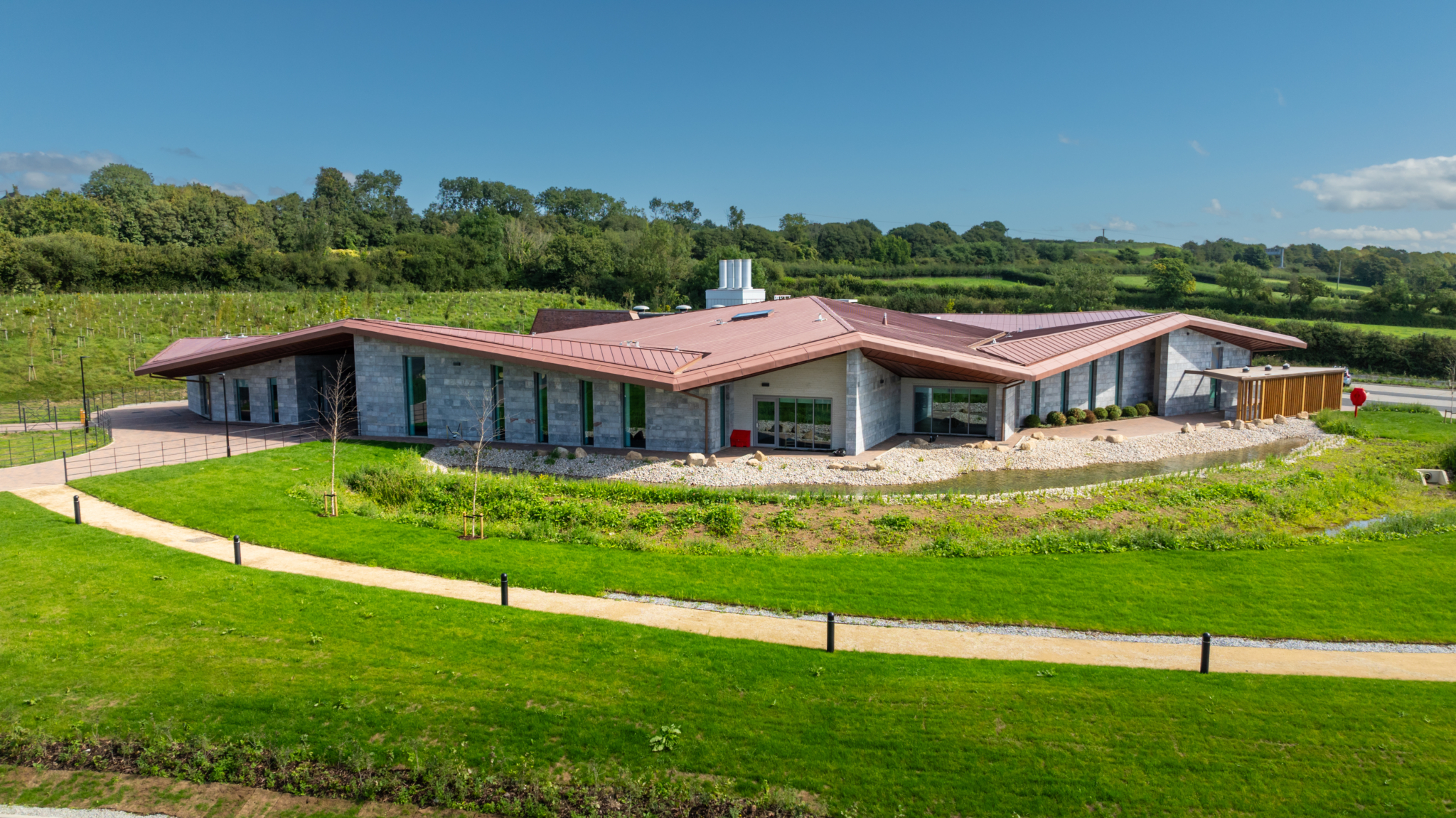
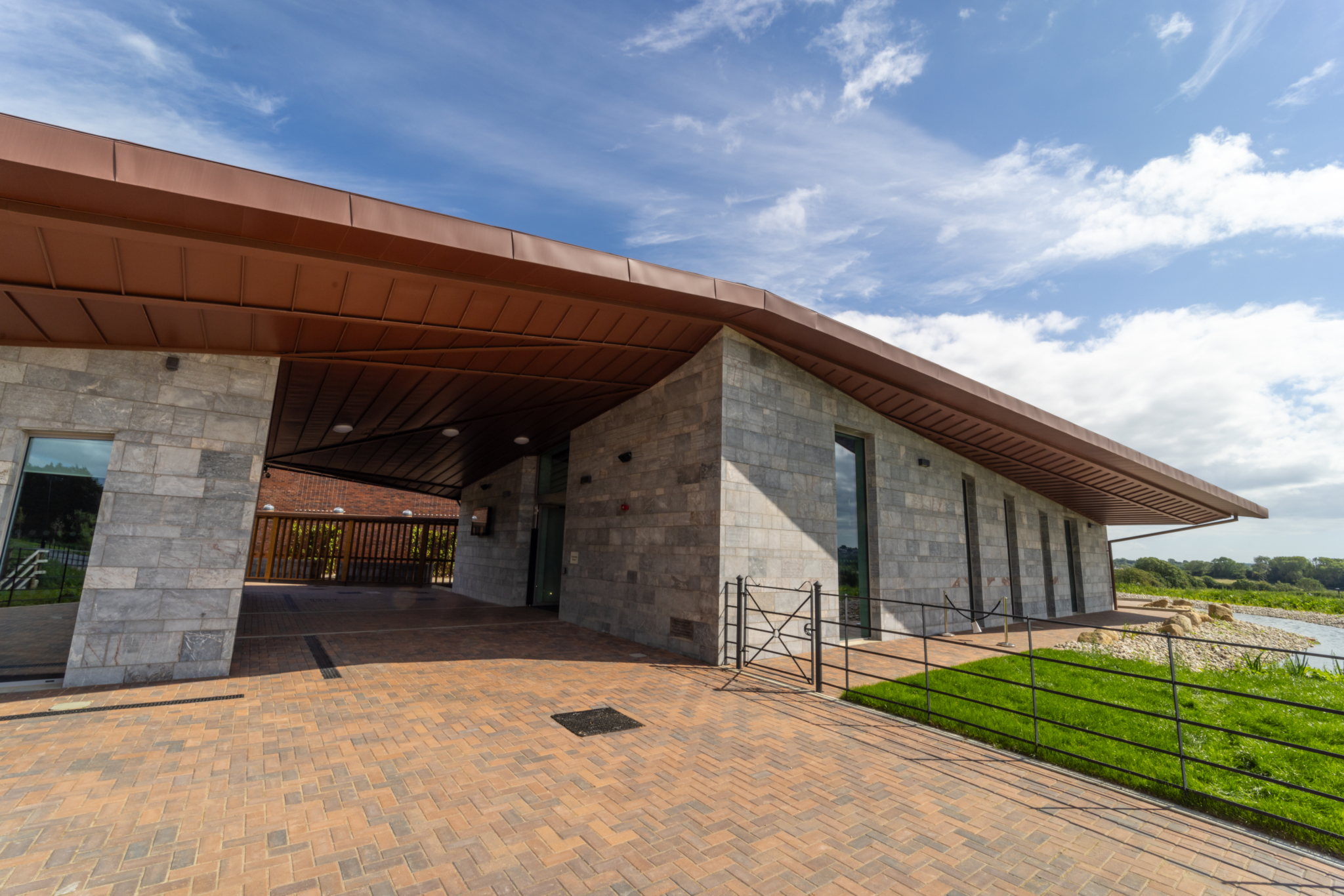
The finished building is divided into three main parts due to the land’s topography and the requirement for separate spaces: two ceremony spaces with ancillary rooms, and a private ‘back of house’ building for technical equipment, support, and welfare facilities. The new facility has designs inspired by the landscape, where the buildings nestle into the slope of the site.
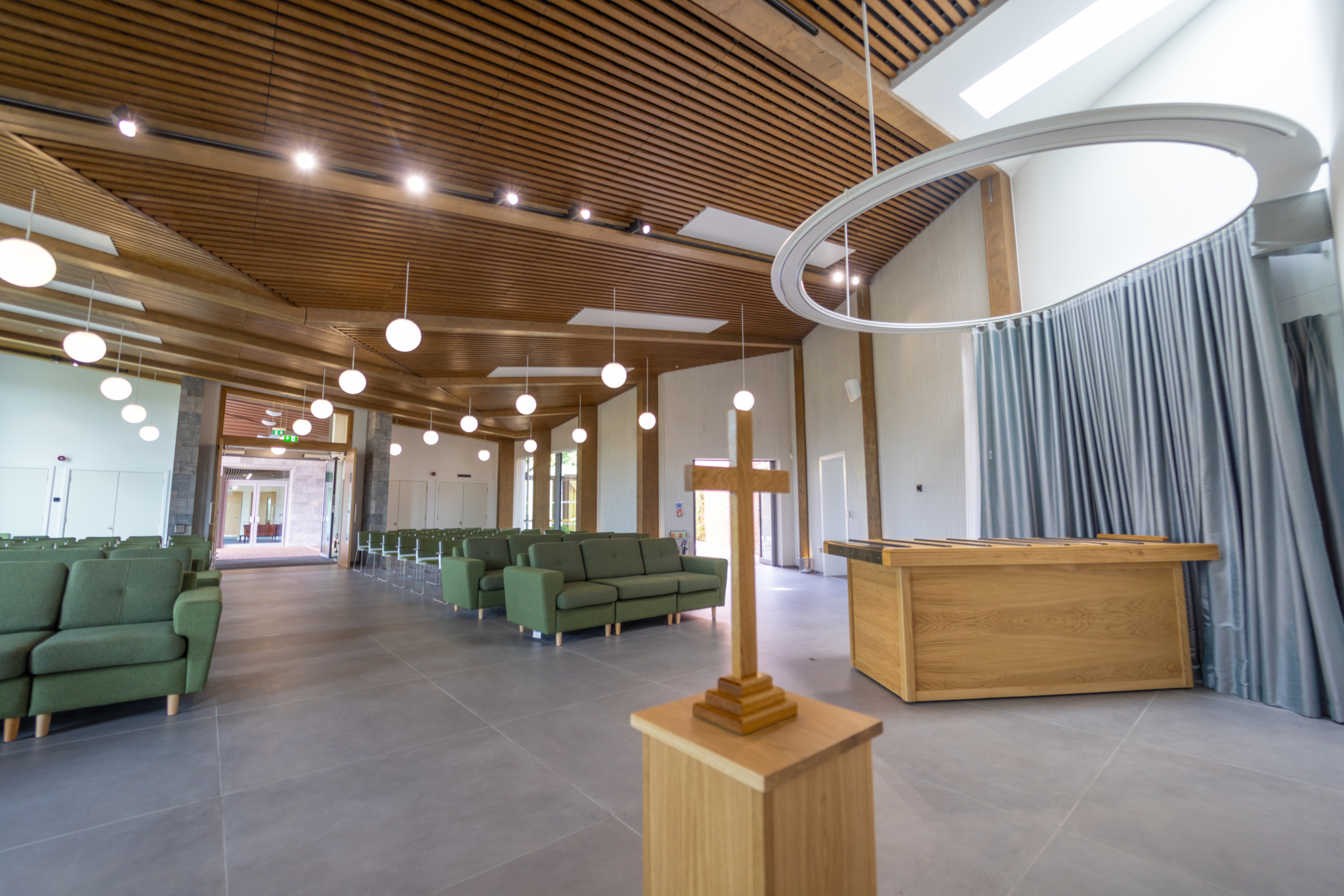
The project has delivered three spacious ceremony rooms of differing capacity inspired by Scandinavian design, offer a minimal and tranquil aesthetic. The architectural language, materials and colours used are natural and provide a neutral backdrop for celebrations of any denomination, faith or theme. Large windows provide plenty of natural light and opportunities for reflective views. The latest AV technology for livestreaming services and colour-change lighting settings are also available here.
The modern crematory houses three cremators with space for a fourth. The 17-acre site includes a memorial meadow, dedicated children’s memorial area, and other thoughtfully selected memorials.
The development also includes offices, a reception, waiting areas, a family room, a meeting room, an administration area, and car parking for mourners. A separate café building with two flexible function rooms is positioned near the main entrance with its own car park.
This new project replaces outdated facilities with a modern one, maintaining in-house service delivery. The unique design, using local and natural materials, provides a different architectural style rooted in the local vernacular. The design focus of the project was landscape-led, with careful consideration of the building’s location, use of topography, and natural drainage elements delivering the initial brief requirements.
Throughout the duration of the project, we completed: Launched the first cohort of Hard Hat Ready, the first 4-week programme focused on bringing the unemployed into employment based on a live site in partnership with Seetec Plus. 31 learners took part in the programme, 30 gained CSCS cards, 28 progressed into employment and/ or apprenticeship opportunities.
Community Engagement: Throughout the duration of the project, we completed: Kier volunteers dedicated their time to maintaining Weston Mill Cemetery and Efford Crematorium, working through challenging conditions to clear litter and debris from graves and tend to the garden of remembrance. This effort reinforced our commitment to social value, complementing the construction of the new crematorium by supporting the local community and its surroundings.
Kier supported YMCA Plymouth through initiatives like the young girls’ mentoring programme and the “Pledge to Paint” campaign, which renovated two classrooms that hadn’t been updated in over 20 years. These efforts empowered local youth and improved educational spaces, highlighting Kier’s dedication to creating lasting social value in the community.
Collaborating with the design team and creating a detailed cut and fill model greatly reduced surplus excavation carted away to landfill, saving traffic movements, carbon emissions, time, and costs. The landscaping design was wildlife friendly, incorporating wildflower meadows and tree planting. Efforts were made to maximise retention of existing hedgerows and achieve an ecological net gain of over 10%. This had to be sympathetically done whilst incorporating suitable external features and space for memorialisation’s.
This project included an extensive SUDs system with associate ponds and included the diversion of an existing watercourse that was enhanced with native planting and bridged. A foul treatment plant was installed to save time and cost by avoiding the need to connect to existing offsite main drainage infrastructure.
The carbon footprint of the building was reduced by producing renewable energy on site and reducing the power consumption of the building. This has been done by installing a substantial solar arrangement to the rear of the main building, and installing LED lighting installed throughout the premises. Additionally, electric vehicle (EV) charging points have been installed in the car parks.
Zero RIDDORS
CCS Score 40/45
Soft landings for handover
Dedicated Morgan Sindall point of contact
On-line portal for notifying any defects with 3 priority categories for response times
100% payment within 30 days terms

Freemantles Secondary School
Scroll to top