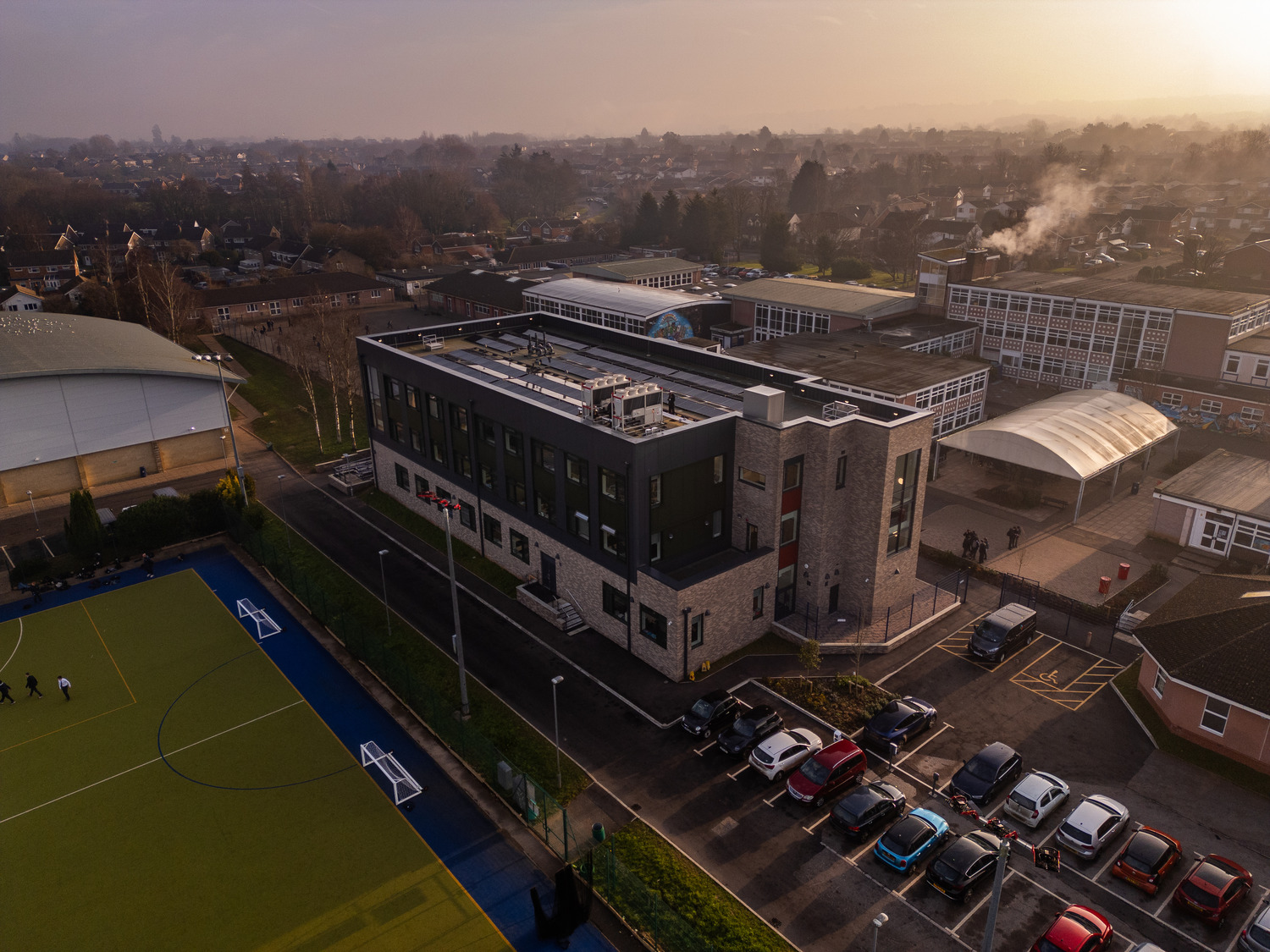
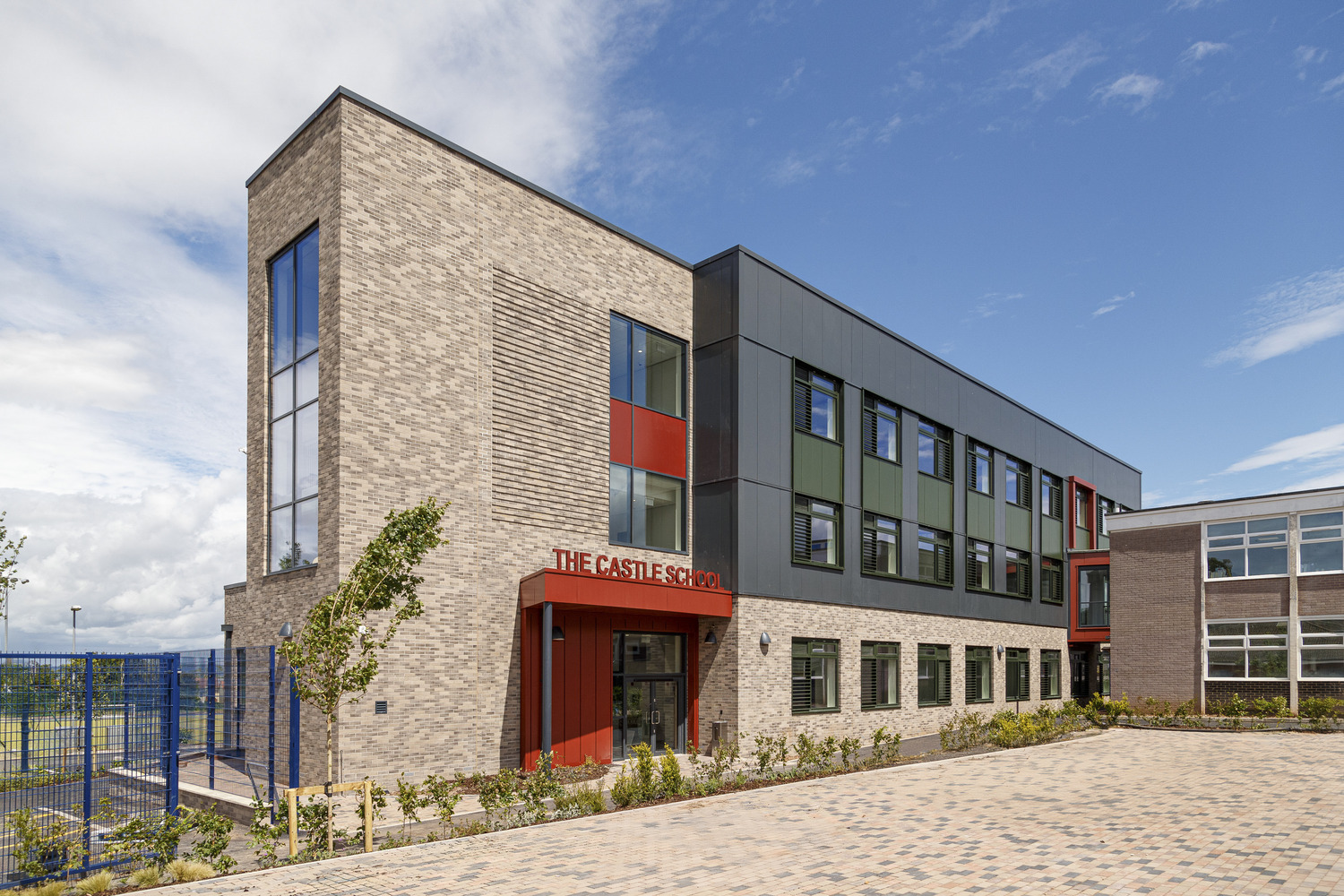
The Castle School project in Thornbury required a significant expansion to support its growing Sixth Form cohort, requiring a new three‑storey extension for Maths and Science teaching. The project also required a link bridge connecting the new block to the existing secondary school building, ensuring a seamless campus layout.
However, delivering this scheme posed several key challenges largely around disruption to the school; this included:
Working within a live school environment: Works were undertaken while the school remained open, meaning student safety, staff access, and uninterrupted learning had to be protected at all times.
Complex ground conditions: Beneath the preserved tarmac areas lay Type 1 build-up and shallow hard rock, meaning foundation and drainage works required drilling operations that risked generating prolonged noise.
Tight exam‑based restrictions: Noisy or disruptive works could not clash with GCSE and A‑Level exam periods, narrowing the available working windows.
Sensitive neighbouring receptors: Surrounding residential streets—Park Road, Regents Close, Alexandra Way—and a nearby care home required careful environmental management around noise and dust.
Busy school‑day traffic movements: With hundreds of daily drop‑offs and pick‑ups, deliveries needed strict control to avoid congestion and maintain site safety
The project team implemented a comprehensive package of operational controls, programming adjustments, and environmental protections to deliver the new block safely and efficiently.
Disruptive works such as rockbreaking and drilling tasks were scheduled outside exam periods, with the majority delivered during the summer holidays to avoid noise during teaching hours.
The team kept as much of the existing roadway and hardstanding in place which reduced unnecessary ground disturbance, improved site cleanliness, and prevented mud tracking onto public routes
Timed delivery restrictions were introduced to avoid conflict with school traffic.
Through meticulous planning and a proactive approach to environmental and stakeholder management, the project was delivered with:
Minimal disruption to school life, including zero clashes with exams despite significant drilling and groundworks.
Enhanced safety for students, staff, visitors, and construction personnel due to carefully managed vehicle movements and clear site logistics.
Excellent environmental performance, with noise and dust impacts effectively controlled and monitored in real time.
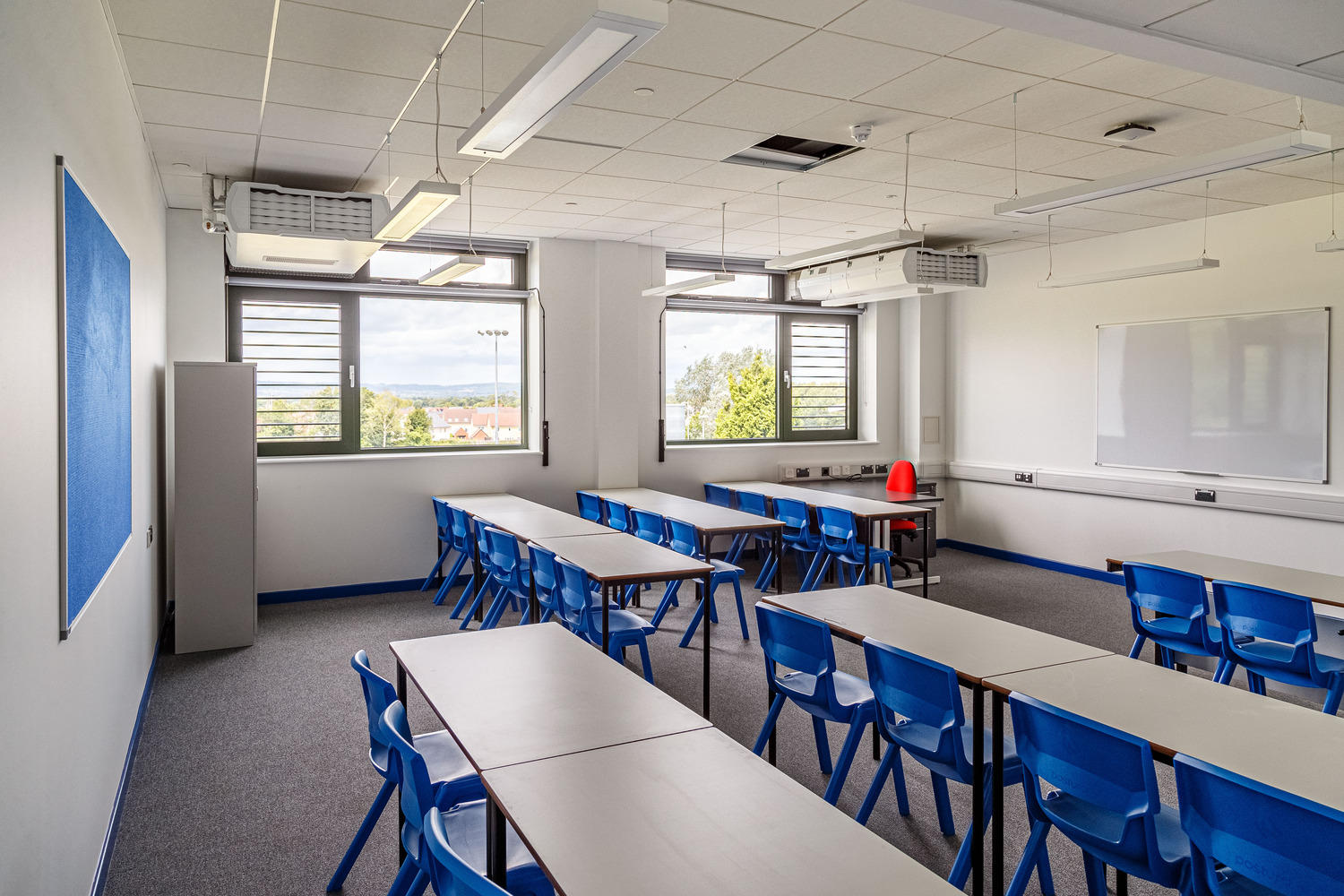
A modern, connected Sixth Form facility offering high quality Maths and Science teaching spaces, improving the school’s capacity and creating a more cohesive campus layout.
A successfully delivered project that demonstrates how thoughtful planning enables significant construction activity within challenging live school environments.
Amid the challenges faced, the project was delivered one week ahead of programme.
100% waste diverted from landfill
43T of CO2e saved
100% timber responsibly sourced
Zero RIDDORs
CCS Score 45/45
Soft landings for handover and Dedicated Morgan Sindall point of contact
On-line portal for notifying any defects with 3 priority categories for response times
100% payment within 30 days terms
87.1% No of SMEs, 15 jobs created, 12 Work Experience (11 – in Education/ 1 – not in education)
546 training weeks on site (Apprenticeships, Traineeships, Technical/Higher Level Qualifications)
£1.3k donations to charity/material donations, 28 volunteer hours, £6.5m social value created

Oakmoor Secondary School Exapansion
Scroll to top