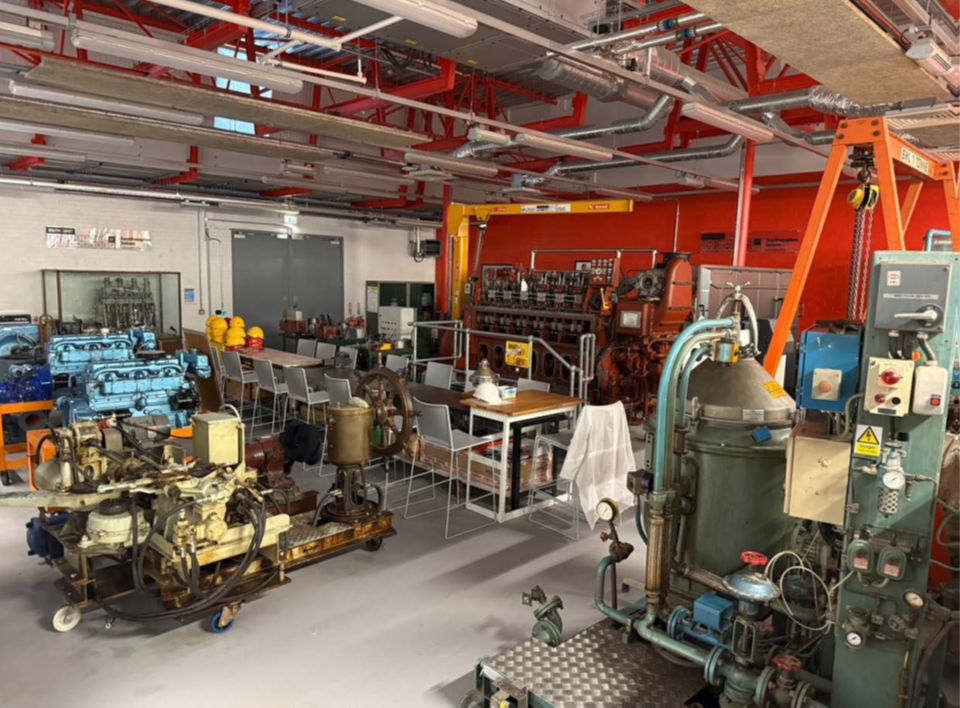
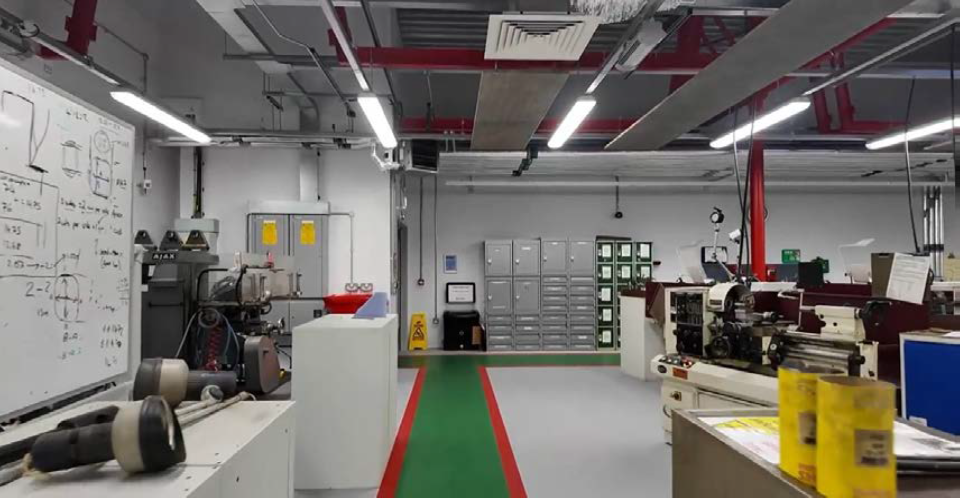
Transforming a tired 1960s Sir Christopher Cockerell Building into a state-of-the-art engineering and maritime technology centre required far more than a conventional refurbishment.
Early investigations uncovered a fragile roof structure with asbestos-containing components, rendering the original design unviable and requiring a fundamental rethink of the construction strategy.
The project also had to preserve the building’s operational marine tow tank, maintain critical live services feeding neighbouring university buildings and safely deliver major structural works within a live campus environment.
All of this had to be achieved without compromising programme, quality or safety, while creating a future-ready facility capable of supporting advanced engineering, robotics and maritime education for decades to come and in time for the start of the 2025/26 academic year.
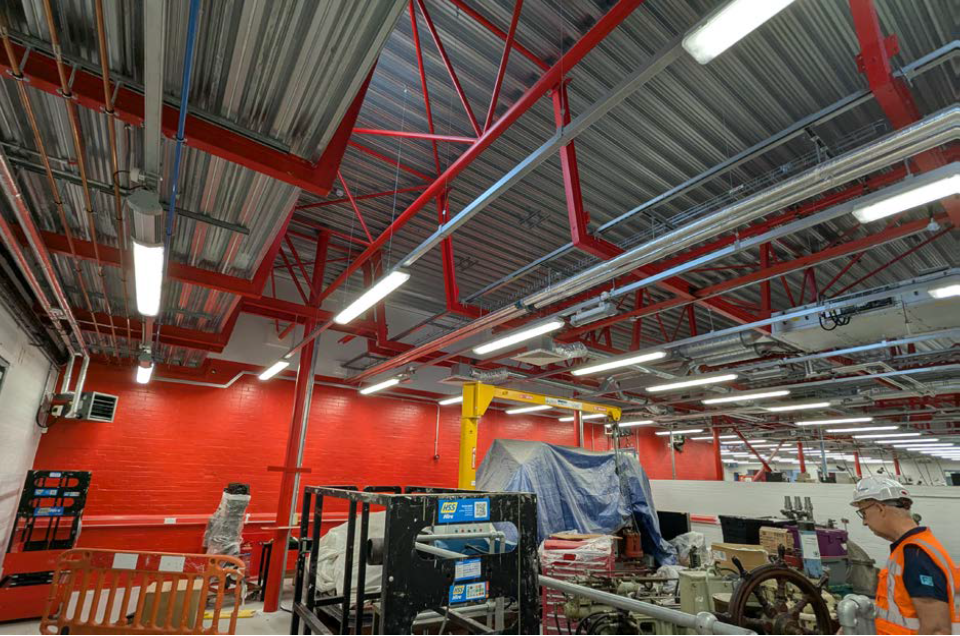
Francis Construction adopted a collaborative, design-led approach that transformed a major project risk into an opportunity for innovation. Working closely with the client, consultants and specialist supply chain during the PCSA, the team fundamentally re-engineered the original solution by replacing the fragile roof with a modern flat roof system while retaining the existing structural frame.
This not only reduced embodied carbon and improved the building’s long-term performance, but also enhanced internal teaching spaces and enabled future renewable energy generation.
Through meticulous planning, phased construction, digital project management and early specialist contractor involvement, the team safely delivered a technically complex refurbishment while maintaining live university operations and achieving programme certainty.
The SMART Centre stands as a flagship example of how collaborative refurbishment can deliver exceptional environmental, educational and social value.
The project successfully transformed a 60-year-old engineering building into a future-ready centre of excellence, providing over 2,000m² of world-class laboratories and workshops while retaining the original steel structure and reducing embodied carbon by up to 75%.
The project exceeded the client’s sustainability aspirations by achieving SKA Silver, supported the local economy through significant regional supply chain investment, and was delivered with 64,140 hours worked, zero RIDDOR incidents and zero lost-time accidents.
Completed in time for the 2025/26 academic year and officially opened by HRH The Princess Royal, the SMART Centre is now helping to develop the next generation of engineers, maritime professionals and innovators, leaving a lasting legacy for Southampton Solent University and the wider South Coast region.
SMART Centre strengthens the regional engineering and maritime skills pipeline
Supporting the South Coast Institute of Technology
Apprenticeships and student engagement
Retained primary structure
Reduced embodied carbon by up to 75%
Future-ready roof for PVs, SKA Silver
64,140 hours worked with zero RIDDORs and zero lost-time accidents
Phased roof replacement
Crash decks
Segregated live campus access
Collaborative two-stage procurement
Open-book cost planning
Early supply-chain engagement
Prompt payment practices
Digital handover through Procore providing a single source of truth with QA records
Drawings and asset information
Scroll to top