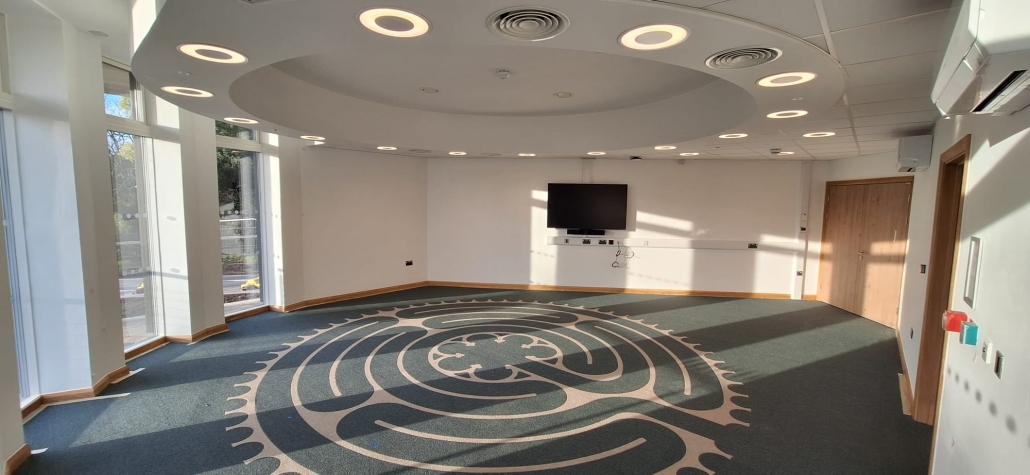
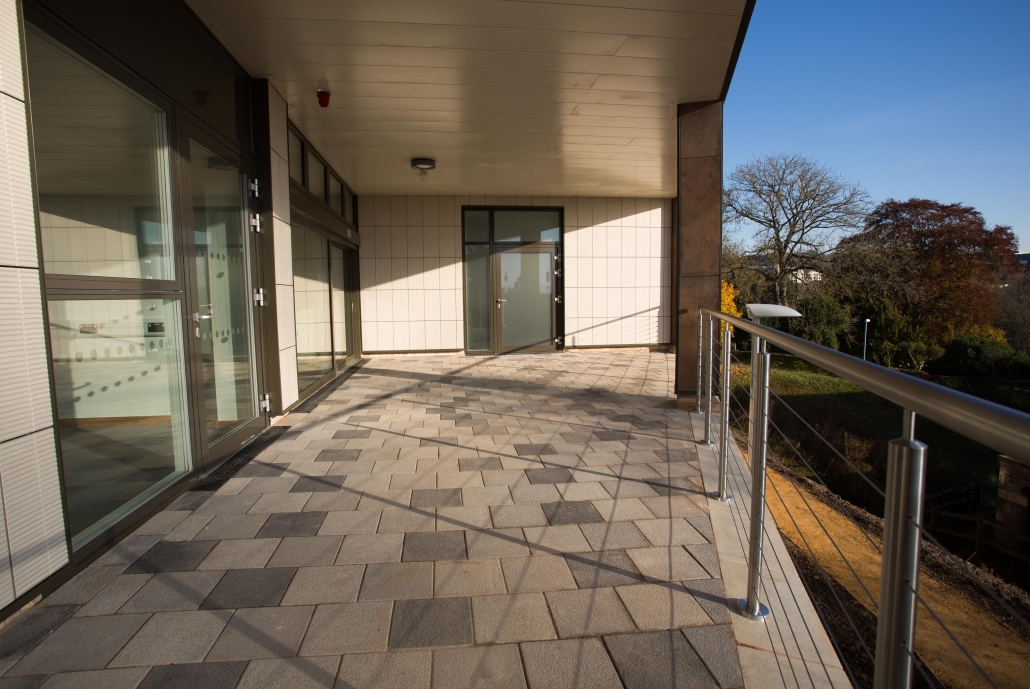
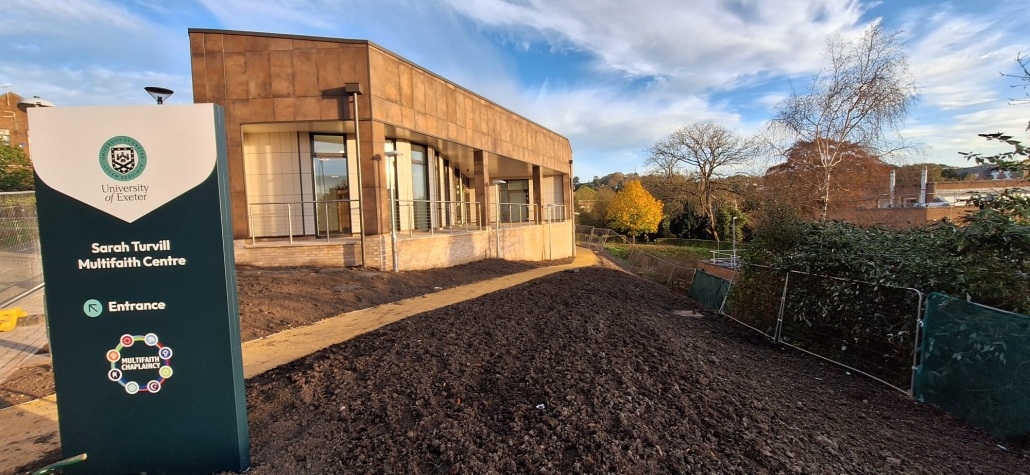
Commencing in August 2023 and completed in December 2024, this £5.5m project serves the diverse student and faculty population at the University of Exeter.
The enriching new facility aims to promote respect and diversity of all faiths and beliefs and create a sense of community and inclusion on campus and beyond.
The new centre is a space for quiet reflection, multifaith activities and events, as well as providing a 50 person Muslim prayer space, and a dedicated home for the University’s Multifaith Chaplains who serve the whole community, uniting 14 faith groups and a student population representing over 150 countries.
It is named in honour of alumna of the University and former Chair of the University’s Council, Sarah Turvill.
The biggest challenge faced by the project was the stringent demands of a Passivhaus project, which require a proactive approach, aligned supply chain and immense attention to detail. The project was also situated on a busy area of campus, sandwiched between student support buildings, lecture theatres, teaching spaces and even laboratories working within stringent environmental conditions, however, the project consistently scored 45 on the Considerate Constructors Scheme.
Willmott Dixon team overcame these difficulties through collaboration with stakeholders and experience from other Passivhaus projects which included:
Sustainability and reducing carbon emissions have been fundamental to the design and the construction of the building, which aims to achieve Passivhaus certification for its energy efficiency, carbon reduction and air quality. The building is constructed from energy efficient porotherm blocks and includes air source heat pumps and solar panels on the roof.
Our work to achieve Passivhaus Classic Certification included rigorous low-energy design standards, significantly improving building comfort, air quality and energy use, with greater carbon reduction.
One way was through using low carbon porotherm clay blocks, which are made from 30% recycled materials and have an expected lifespan of 150 years; even after which the blocks can be recycled. It also incorporated high levels of insulation including triple glazed windows to drive high air tightness performance. It also benefits from air source heat pumps and PV solar panels on the roof.
Beyond the building itself, the project’s impact extended to the wider community. Over 100 people benefitted from outreach initiatives, including site tours and CV workshops for prison leavers. On-site mental health talks and screenings supported worker wellbeing, reinforcing a culture of care.
Despite the challenges of working on an active campus, the project was delivered on time and budget, with extensive community outreach and careful sequencing to minimise disruption to the live campus. The result is a pioneering, net-zero-ready building that celebrates diversity, promotes wellbeing, and exemplifies construction excellence.
5,151.88kg CO₂ savings using hydrotreated vegetable oil, HVO), a low carbon diesel alternative.
99.77% construction wasted diverted from landfill
21,697KG embodied carbon saving
0.5 airtightness exceeds Passivhaus 0.6 target
100% fossil fuel-free in operation
Willmott Dixon prides itself on meeting the expected payment period.
171 training weeks
342 student interactions
233 people benefitted from employment workshops
10 work experience placements
72% of the workforce within the Exeter postcode
591 trees planted in Exeter
“The University of Exeter opened the doors of an exciting and unique new building on it’s Streatham Campus in December 2024, The Sarah Turvill Multifaith Centre, which was constructed by Willmott Dixon in 14 months.
Located in the heart of the campus, the new, purpose-built Centre promotes inclusion and respect for diverse faiths and beliefs, while fostering a sense of community, encouraging connections and inter-faith collaborations and is a space for quiet reflection, prayer and contemplation for all.
This building is unique in that it brings together carefully designed dedicated Muslim prayer space and washing facilities (wudu) with a multifaith room for other faith and worldview groups, as well as quiet space alongside both indoor and outdoor social spaces.
The space provides a dedicated home for the University’s Multifaith Chaplains who serve the whole community, uniting 14 faith groups and a student population representing over 150 countries.
A number of students have commented on how the new building has provided them with a ‘home’ at university, a safe and welcoming space that they know is inclusive and welcoming to all.
Over 30 student and colleague groups and societies make use of the space on a regular basis and the building is booked for activities and events on average 49 hours per week.
Sustainability and reducing carbon emissions have been paramount in the design, construction and operation of the building. The innovative techniques have resulted in the building achieving PassivHaus Certification (an internationally recognised high standard of energy efficiency, carbon reduction and air quality).
The building has been constructed using low carbon materials. The use of low energy technology, such as air source heat pumps, further reduce carbon emissions from the operation of the building, and a series of roof mounted PV panels take advantage of the building’s sunny location to provide a zero carbon energy source.
Careful consideration and respect was also given to the cultural and religious importance of the space. Throughout the project, the team consulted with stakeholders representing the building’s future residents and users, as well as students and university colleagues.
The finished building looks striking and creates an island of calm within a busy area of Streatham Campus. Our student’s and colleagues are already making use of the facility and enjoying the benefits of this dedicated community space in which everyone’s beliefs are valued.
The Southern Construction Framework, (SCF) was instrumental in the delivery of this project.
The need for this building was well overdue, with the existing faith facilities proving to be unfit for purpose, being dispersed across campus, providing limited flexibility in use and not accessible to all users.
SCF provided a robust and trusted framework to enable the University to quickly access the construction supplier market.
Given the high sustainability aspirations for the building, the University identified the need for a specialist and highly skilled construction partner. This is where SCF came into its own, already having experienced and verified suppliers embedded within their Framework.
SCF assisted the University in identifying and selecting suitable candidates through a competitive selection process.
Willmott Dixon were selected and operated in a true partnership manner, to successfully delivering the University’s first PassivHaus building, helping the University along their journey to achieving their sustainability objectives.”
“We are hugely proud of this fantastic new community focussed and inclusive facility that has been created at the centre of life at our University.
“Our working partnership with Willmott Dixon has been key to the delivery of this successful project. Working together, the project has supported our ambition to reduce carbon emissions on campus, with sustainability being fundamental both to the design and the construction of the building. The team worked collaboratively with us throughout the project to manage disruption on campus, resolved issues efficiently, and despite the bad weather at critical moments in the construction programme the project was delivered within agreed timescales.
It is fantastic to see our vision for the Multifaith Centre made into a reality.”
Scroll to top