The Challenge
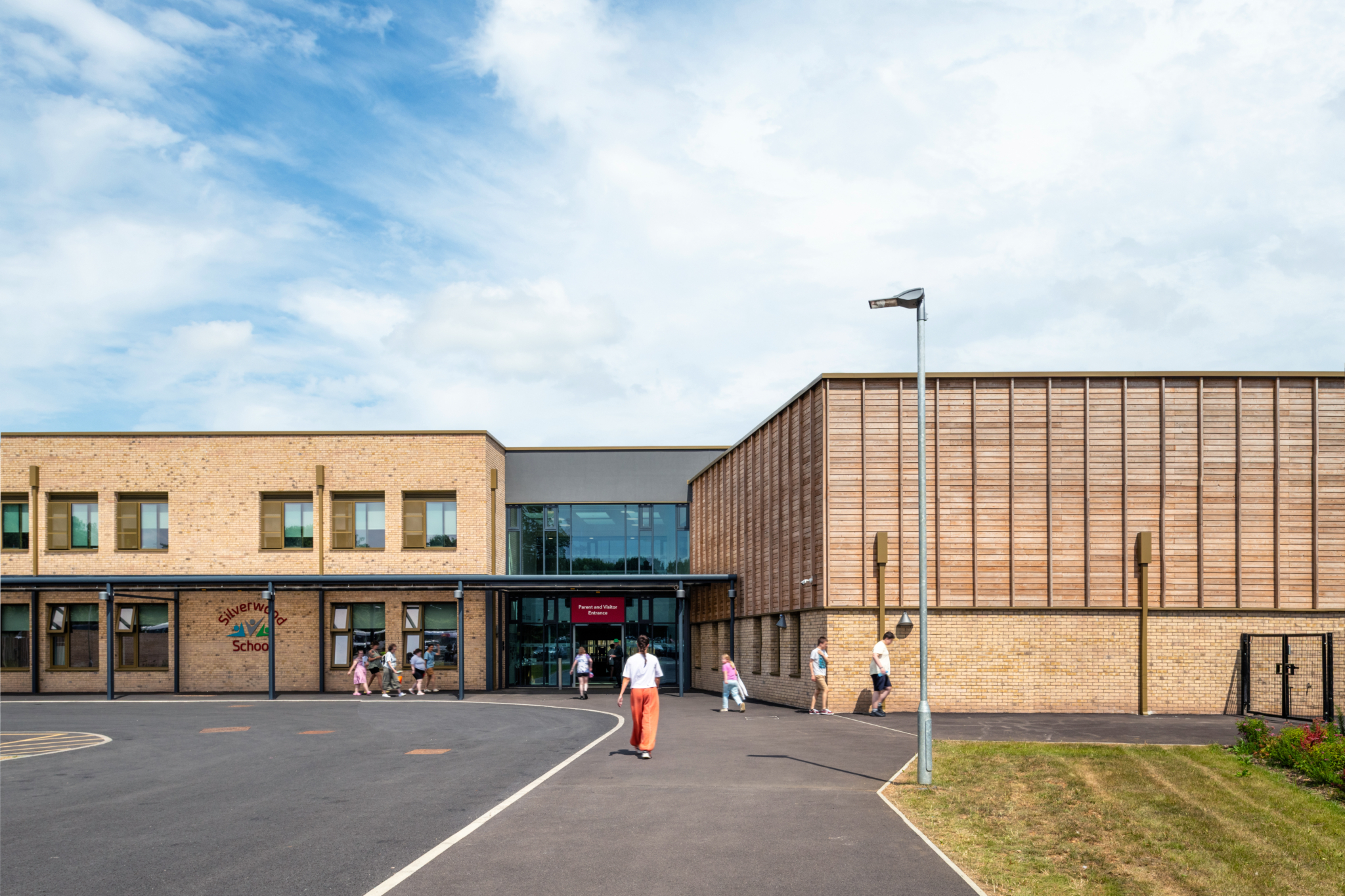
Built to be net-zero in operation, Silverwood also represents the future of sustainable education estates. The school reaches net zero carbon through a combination of renewable energy and low-carbon systems and materials.

Built to be net-zero in operation, Silverwood also represents the future of sustainable education estates. The school reaches net zero carbon through a combination of renewable energy and low-carbon systems and materials.
Over 1,000 solar panels generate more than 400 MWh annually—enough to power the entire facility, with surplus energy exported to the local grid. Three biomass boilers provide sustainable heating. In a pioneering community energy initiative, the solar panels are owned and operated by Wiltshire Wildlife Community Energy, generating approximately £5,000 annually to support environmental education at the school. Material choices were also at the heart of Silverwood’s highly sustainable build with embodied carbon reduced through use of a Cross Laminated Timber (CLT) frame.
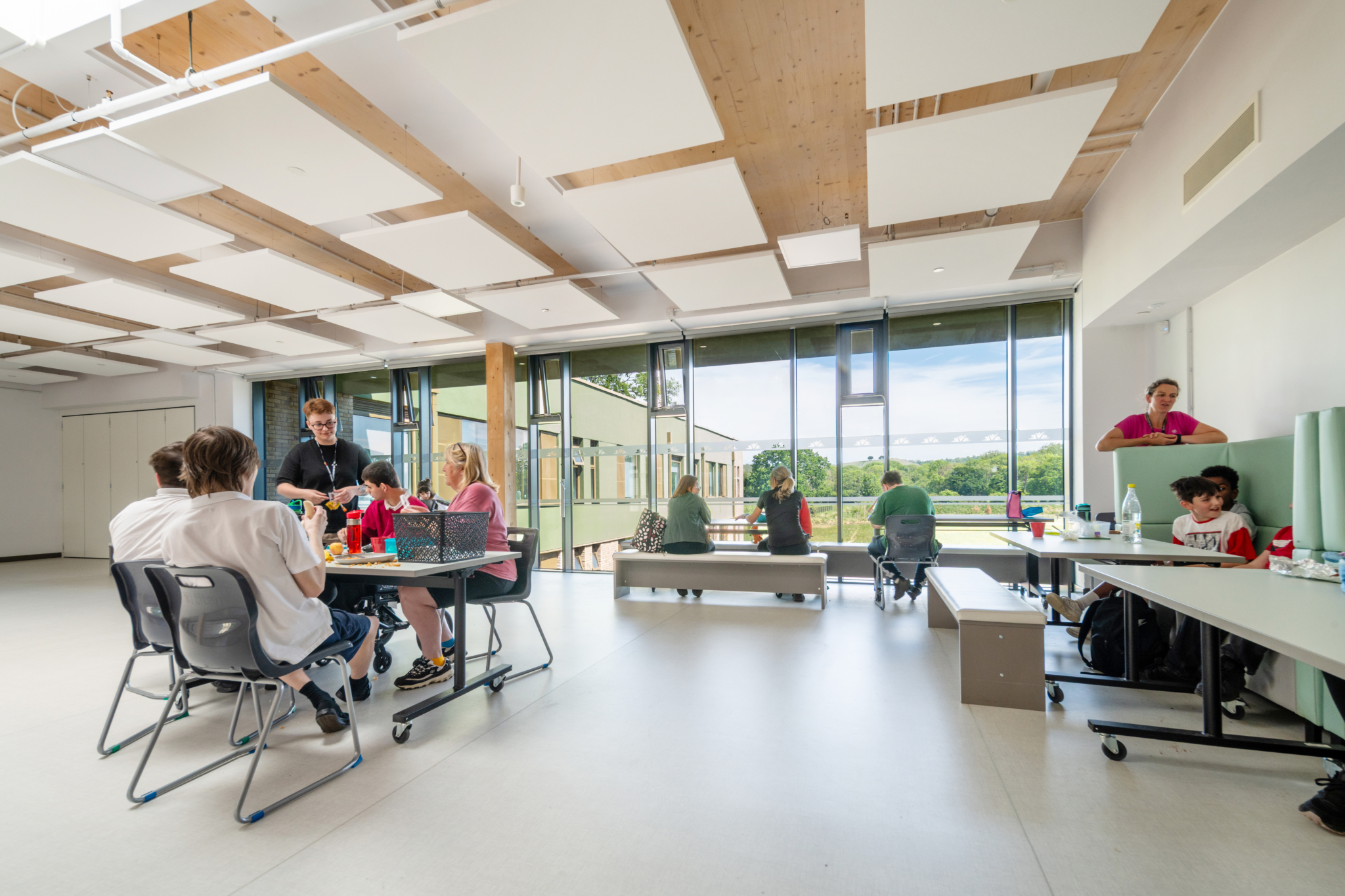
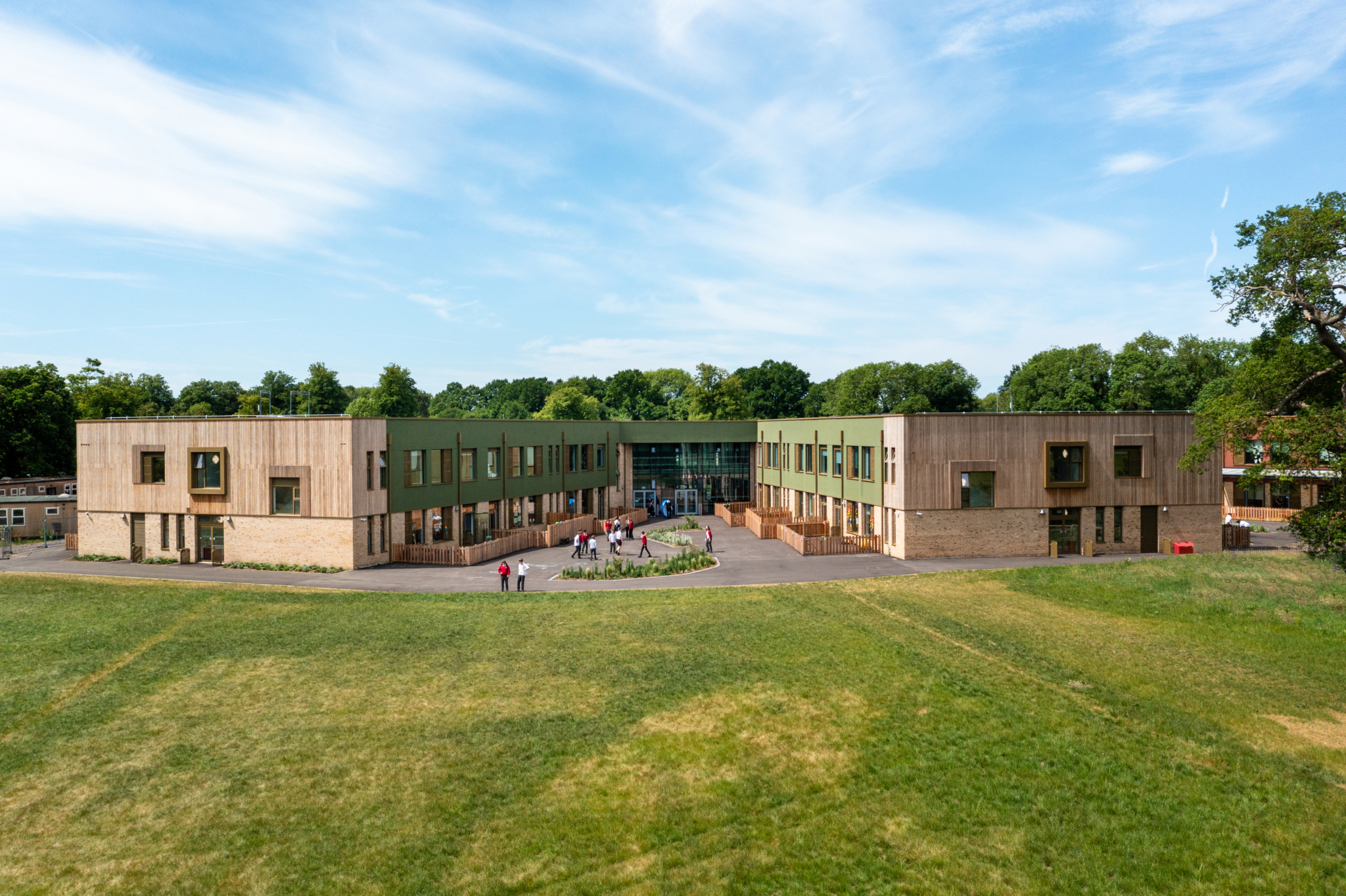
As a result of the precise construction methods and materials, the building achieves an airtightness score of 1.843/hr/m2 - that’s highly energy efficient compared to the average modern building, which is around 53/hr/m2. The school also achieves an EPC score of –13. The negative number indicates that the building generates more energy than it consumes annually. Sustainability by design drove every element of the project plan. Silverwood achieved remarkable results in construction waste management: 98.8% of all construction waste was diverted from landfill. This positive environmental outcome was achieved through a comprehensive Material Management Plan.
The project diverted 25,000 m³ of excavated material for complete on-site reuse, while 1,096 pallets were collected by Pallet Loop for reuse instead of disposal. Community Wood Recycling Social Enterprise collected 256 tonnes of timber from the site, and 10 pallets of spare bricks were donated to St Edmunds Society for apprentice training.
Silverwood students also gained valuable learning opportunities by constructing bird boxes made with reused waste timber from the construction site. All hard and soft plastics were segregated and recycled. Insulation offcuts were collected and sent offsite for reuse.
By reusing 100% of excavated material on-site rather than disposing to landfill, the project saved an estimated £715,000 in avoided disposal costs. This calculation factors in landfill gate fees, landfill tax, and haulage costs minus onsite management expenses, demonstrating that sustainable construction makes both environmental and economic sense.

6718 students engaged with and 115 trainee weeks

4% Biodiversity net gain 25,000m3 excavated materials reused on site

Zero RIDDORS

100% payment within 30 days terms

Soft landings for handover


 Abbey View Primary Academy
Scroll to top
Abbey View Primary Academy
Scroll to top