Construction – Improving Physical Health & Lifestyle Behaviours
The construction sector’s culture—centred around resilience, long hours, time and financial pressures, and a ‘can do’ approach discourages people from seeking help early, and can exacerbate or alter lifestyle choices with unhealthy coping behaviours like skipping meals, smoking, or excessive alcohol use. These in turn can adversely affect performance making accidents or poor mental health more likely.
A major PhD study in 2025 investigated lifestyle behaviours among construction workers, identifying the following issues:
Construction workers demonstrate higher levels of lifestyle risk factors such as:
• Physical inactivity (relative to physical work demands)
• Unhealthy dietary patterns
• Smoking
• High alcohol consumption
These behaviours contribute to increased risk of non‑communicable diseases.
A cross-sectional study on construction workers showed that 20.0% were smokers and a significant portion, 51.7%, had elevated blood pressure, with 30.2% categorised under Stage 1 hypertension. Additionally, 32.6% of the workers were classified as overweight.[theses.gla.ac.uk]
So what can be done to help address the situation?
Contractors take the wellbeing of their staff, and that of their subcontractors seriously. In the same way that they work to make sites safer and to provide support for mental health they are increasingly providing guidance about healthy lifestyles and offering health checks.
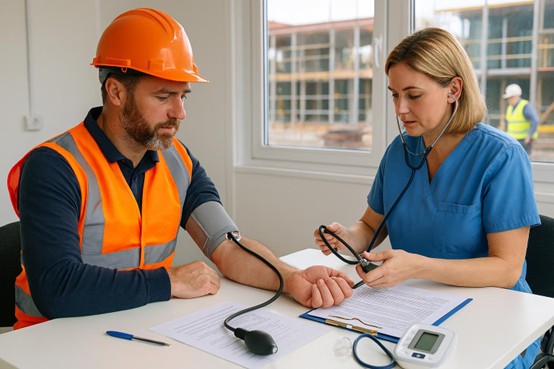
As an example, Morgan Sindall’s UK SHE Manager, Chris Bentley, told SCF that on its Alderwood School project, the company provided employees and supply chain partners with the opportunity to attend a Healthy Lifestyle Assessment provided by partner organisation, The Healthy Employee. The health checks looked at metrics such as blood pressure, blood glucose level, prostate cancer testing for males and thyroid testing for females along with lifestyle choice questionnaires.
As a result of that assessment, quite a high proportion were referred to their GP for high blood pressure.
In addition, personalised data about nutrition, alcohol use, sleep, activity and stress was produced to show people, perhaps for the first time, that their lifestyle choices are putting them at risk of disease, and they can now seek advice and support from their GP.
Following on from this health assessment, the project is looking use their provider to deliver sessions on healthy eating and healthy lifestyle options. These include healthy food tasting sessions at the project.