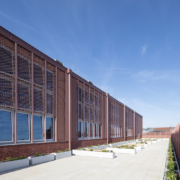

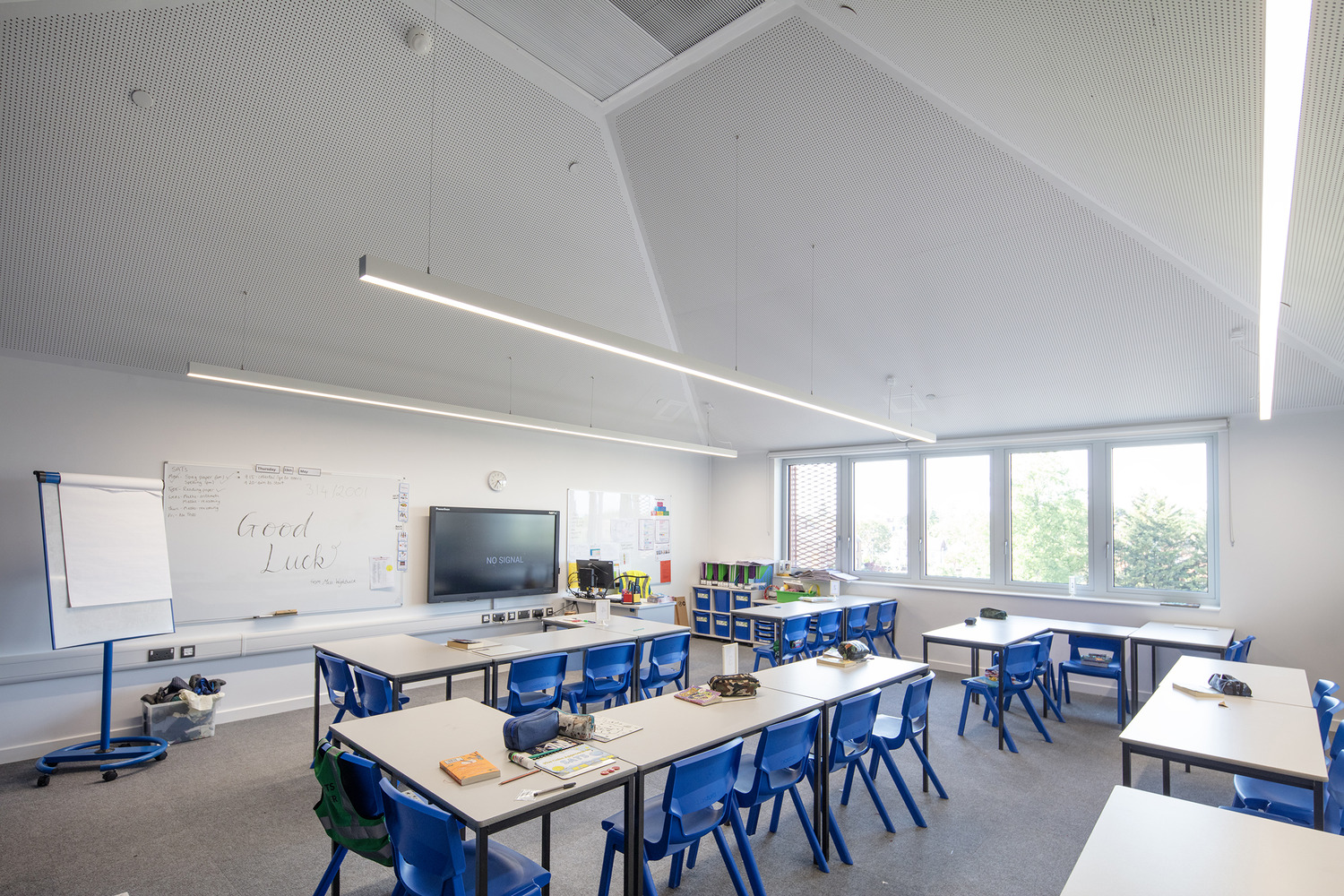
The Burlington Primary School redevelopment presented several unusual challenges. The project required the replacement of an ageing 1970s CLASP system building while maintaining a fully operational school campus throughout construction. Careful phasing was essential to ensure pupil safety, minimise disruption to teaching, and maintain access across the site. The scheme also needed to integrate a new contemporary building alongside a retained Victorian school building, balancing modern educational requirements with heritage considerations. In addition, the borough required increased pupil capacity to address future demand for school places, while achieving ambitious sustainability targets and delivering extensive external works, including sports facilities, landscaping and improved infrastructure within a constrained live school environment
To address these challenges, the project team adopted a carefully phased construction strategy that allowed teaching activities to continue safely throughout the programme. A new 2,800m² three-storey teaching block was constructed before the redundant CLASP building was demolished, ensuring continuity of school operations. The design combined refurbishment of the Victorian building with modern educational facilities, creating a cohesive campus. Sustainability measures included the installation of 72 photovoltaic panels, the use of low-carbon hempcrete insulation, energy-efficient building systems and a BREEAM Excellent design approach. The project also introduced two Multi-Use Games Areas (MUGAs), enhanced landscaping, upgraded infant school facilities and a new shared car park to maximise community and educational benefits.
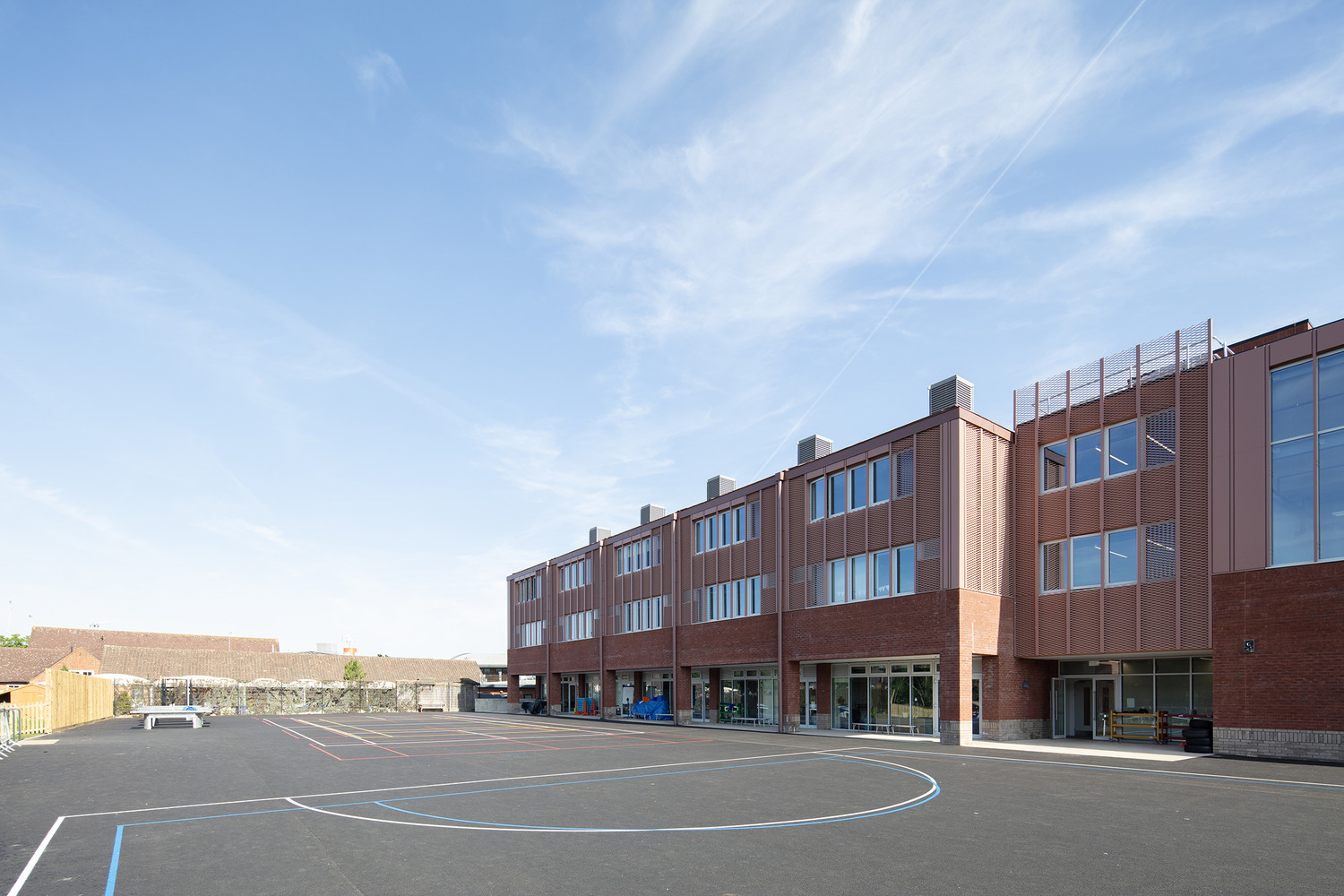
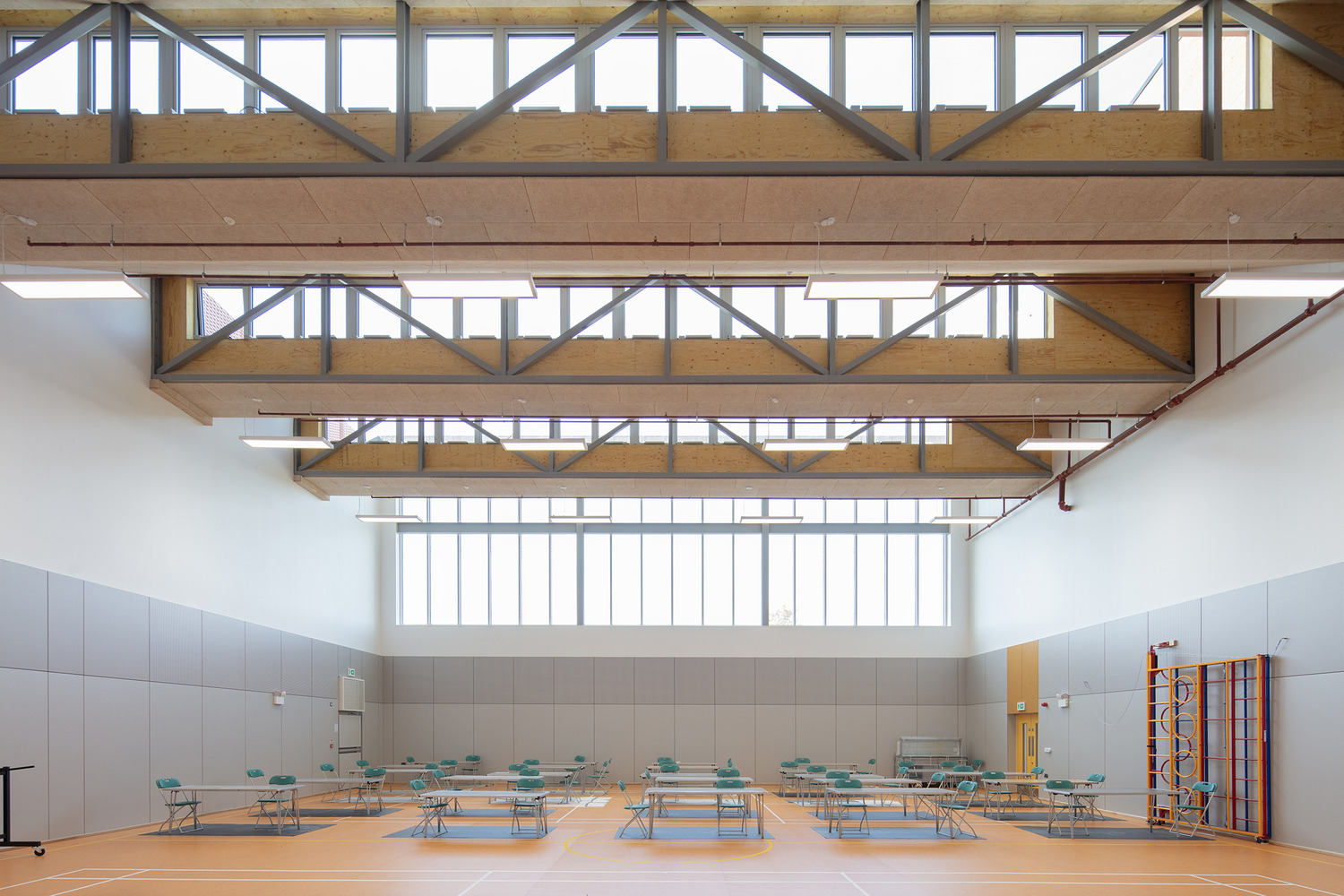
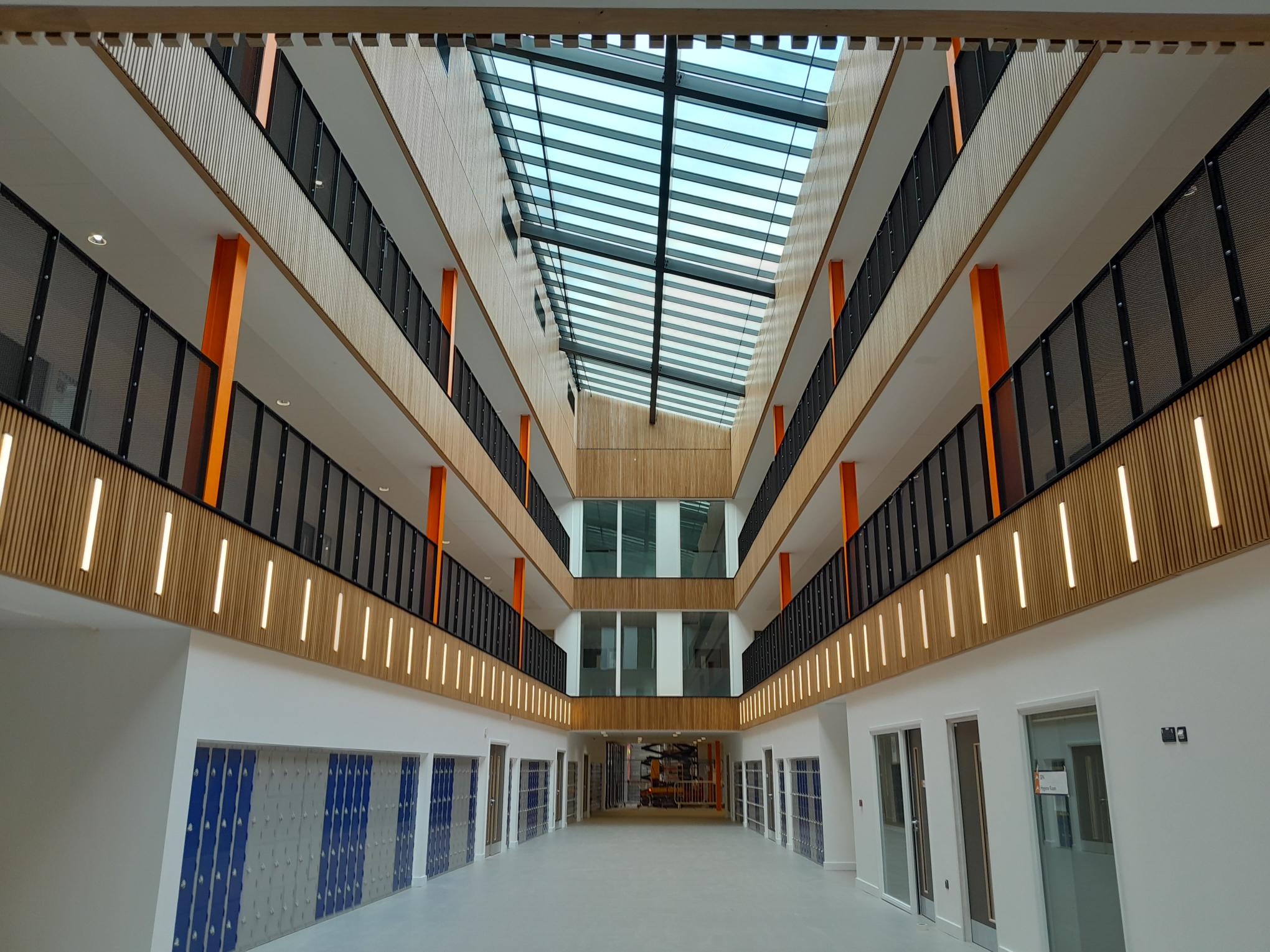
The completed redevelopment has delivered a future-ready educational environment that significantly improves learning, wellbeing and operational efficiency. The school gained 120 additional pupil places, helping meet increasing local demand while providing 15 modern teaching spaces, a sports hall and collaborative learning areas centred around a striking three-storey atrium. Sustainability outcomes were equally impressive, with 98% of construction waste recycled and zero waste sent to landfill. Renewable energy generation from rooftop solar panels supports lower operational carbon emissions, while the use of innovative materials reduced embodied carbon. The project successfully combines heritage refurbishment, modern educational design and environmental excellence, creating a high-quality asset for pupils, staff and the wider New Malden community

Delivered a carefully phased programme that enabled the school to remain fully operational throughout construction, ensuring a smooth transition into the new facilities with minimal disruption to teaching and learning.
Refurbished the retained Victorian building alongside the new teaching block, preserving existing assets and extending their long-term value in line with Government Soft Landings principles.
Engaged extensively with school staff, governors and stakeholders throughout design and construction, ensuring the completed facilities met user needs and operational requirements.
Delivered training, site familiarisation visits and educational engagement activities to support users before and after occupation.
Achieved a BREEAM Excellent building with low-maintenance, energy-efficient systems designed to reduce operational costs and support long-term performance monitoring.
Continued support after handover through community investment, additional school improvements, donated equipment, landscaping enhancements and maintenance activities valued at over £22,000.
Successfully delivered facilities that increased capacity from 480 to 600 pupils, ensuring the school remains fit for future educational demand.

Zero RIDDOR reportable accidents recorded throughout the project, demonstrating excellent health and safety performance over 198,224 operative hours worked.
Achieved outstanding Considerate Constructors Scheme (CCS) scores of 45/45.
Delivered 255 toolbox talks and 23 safety stand-downs to reinforce safe working practices and Conducted 35 senior management site safety visits to maintain strong leadership and oversight.
Implemented rigorous safety controls to enable construction within a live operational school environment with minimal disruption to pupils and staff.
Delivered community safety initiatives, including CLOCS traffic marshal training and school engagement activities focused on construction safety awareness.
Supported workforce wellbeing through mental health campaigns, wellbeing initiatives and on-site health support services.

Achieved BREEAM Excellent standard for sustainable building design and operation.
Installed 72 solar PV panels to generate renewable energy and reduce operational carbon emissions.
Utilised hempcrete insulation, a low-carbon bio-based construction material.
Recycled 98% of construction waste with zero waste sent to landfill
Delivered a Gold Carbon Management Plan, Gold Air Quality Plan, and Silver Biodiversity Legacy Plan.
Enhanced the site through landscaping, biodiversity improvements and sustainable procurement initiatives.
Achieved a perfect 45/45 Considerate Constructors Scheme score, recognising excellence in environmental management and workforce welfare.

16 work experience placements (target: 15)
12 workless job starts
1,167 students engaged through educational and STEM activities
116 school engagement hours delivered

Commitment to the Fair Payment Charter with prompt & transparent payment
Engaged 26 SMEs throughout construction.
Supported responsible procurement through local supply chain portal engagement and opportunities for regional businesses.
Achieved a Growth and Responsible Regional Business score of 9/10 within the SCF Social Legacy framework.
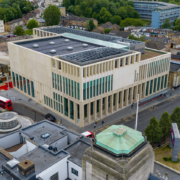
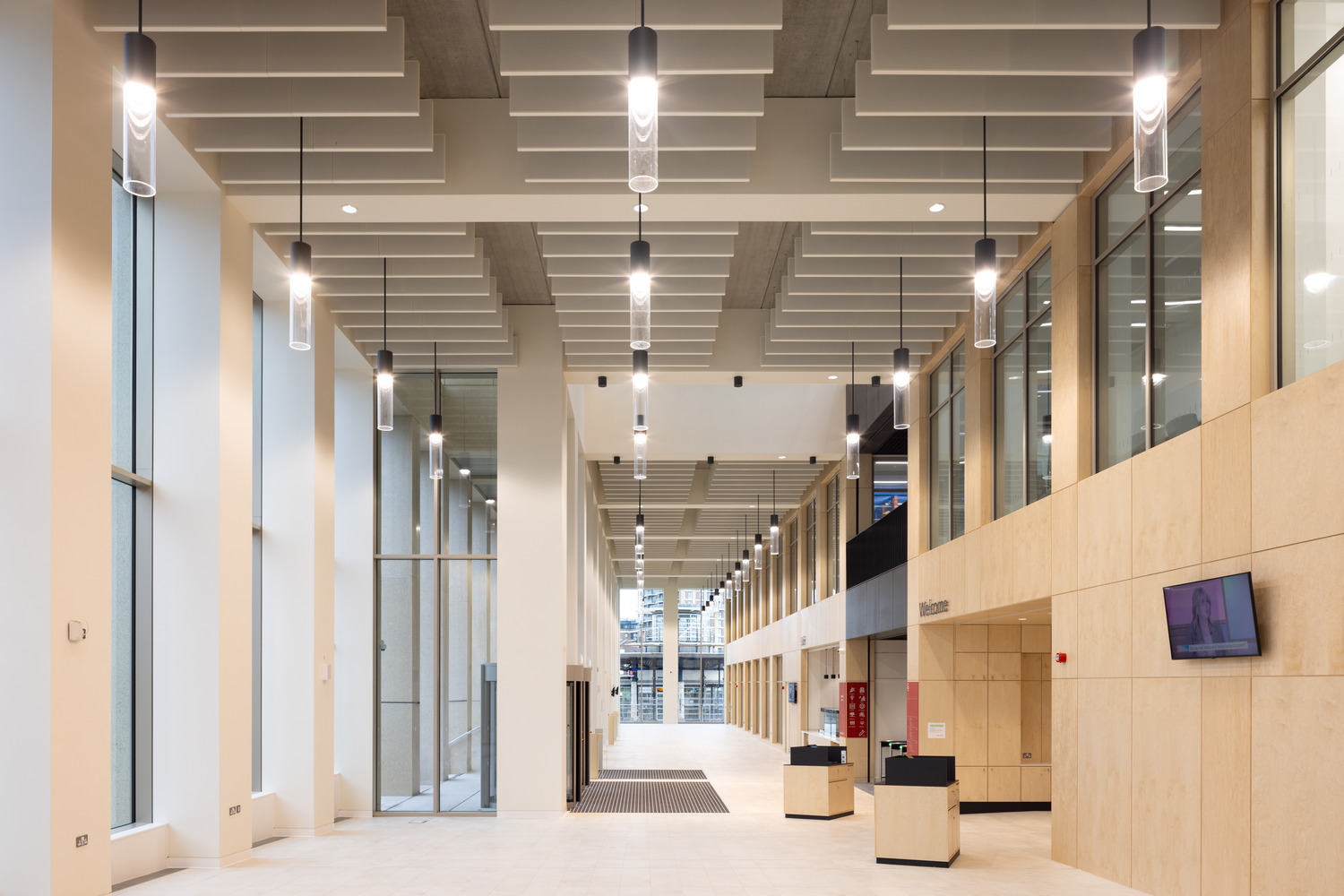
The delivery of The Wave presented a series of complex design, construction and stakeholder challenges. The project required the creation of a modern, multi-purpose leisure destination capable of serving a diverse range of users, including competitive athletes, fitness enthusiasts, families, children, older residents and people with disabilities. The design needed to successfully integrate swimming pools, fitness facilities, sports spaces, wellness amenities and community areas within a single building while maintaining intuitive navigation and an inclusive user experience.
From a stakeholder perspective, the project was replacing the much-loved former Waterfront Leisure Centre, creating high public expectations around retaining popular facilities while delivering a significantly enhanced offer. Construction was further complicated by the scale of the £82 million development, specialist engineering requirements and its location within a busy town centre regeneration programme close to major transport hubs. Sustainability targets added further complexity, with the facility required to achieve exceptional environmental performance despite the energy-intensive nature of leisure and aquatic facilities.
The project team adopted an integrated design and construction approach to address the technical, operational and community challenges. A carefully planned facility mix was developed, including a 25-metre eight-lane competition pool, leisure pool with flumes, training pool, two-storey gym, fitness studios, spa facilities, sports hall, squash courts, indoor football pitch, soft play areas and community spaces. This diverse provision ensured broad appeal and long-term usability for all sections of the community.
To maintain continuity with the former leisure centre, popular family-focused attractions, including water slides and leisure water facilities, were incorporated into the new design. Accessibility was embedded throughout through the inclusion of Changing Places facilities, accessible changing rooms, specialist pool access equipment and inclusive circulation routes. Construction activities were carefully coordinated with the wider regeneration programme to minimise disruption in a busy urban environment. Sustainability objectives were achieved through innovative solutions including one of the UK’s largest air source heat pump arrays, rooftop solar panels, green roof systems and a stacked multi-storey design that maximised a constrained town-centre site.
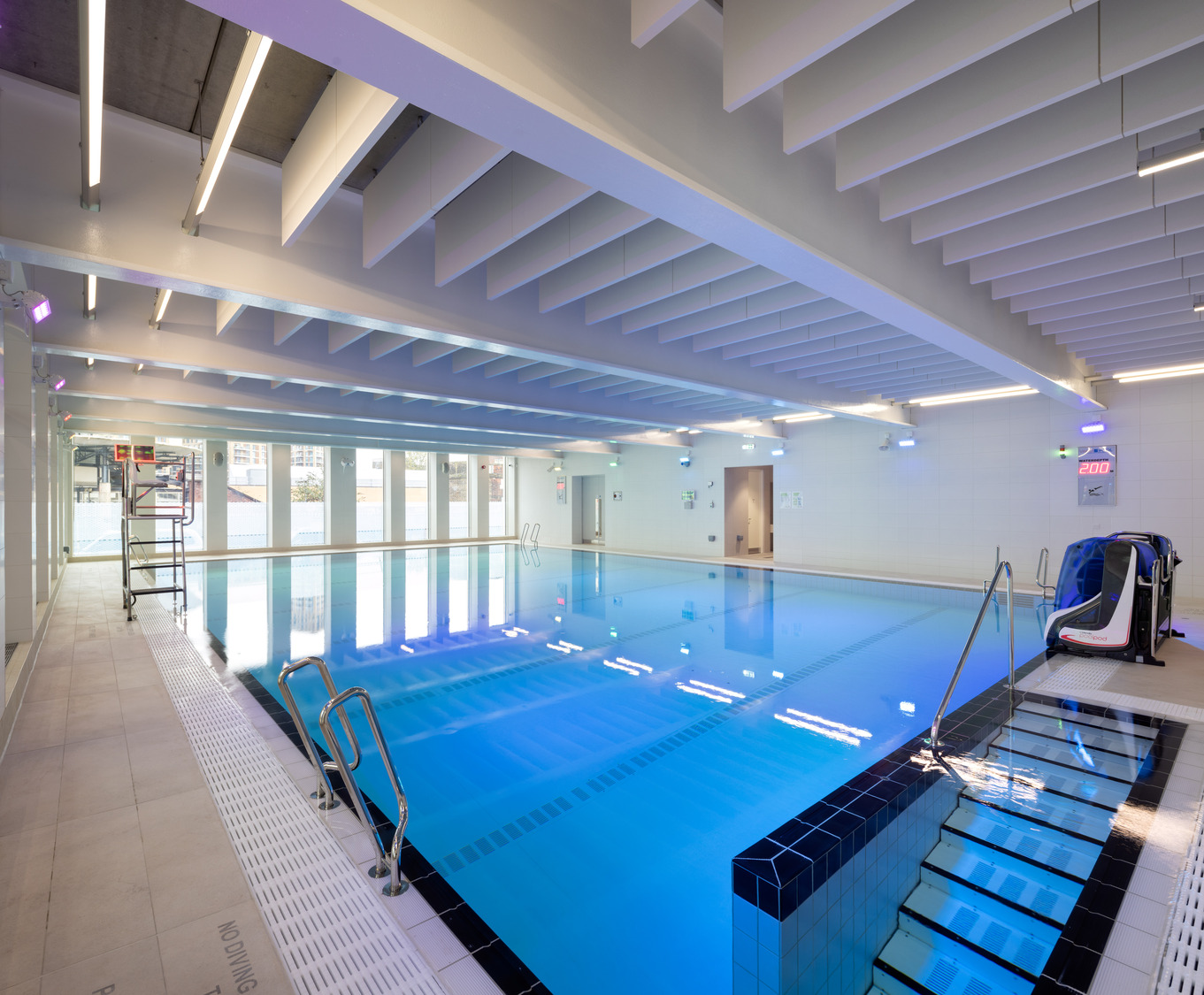
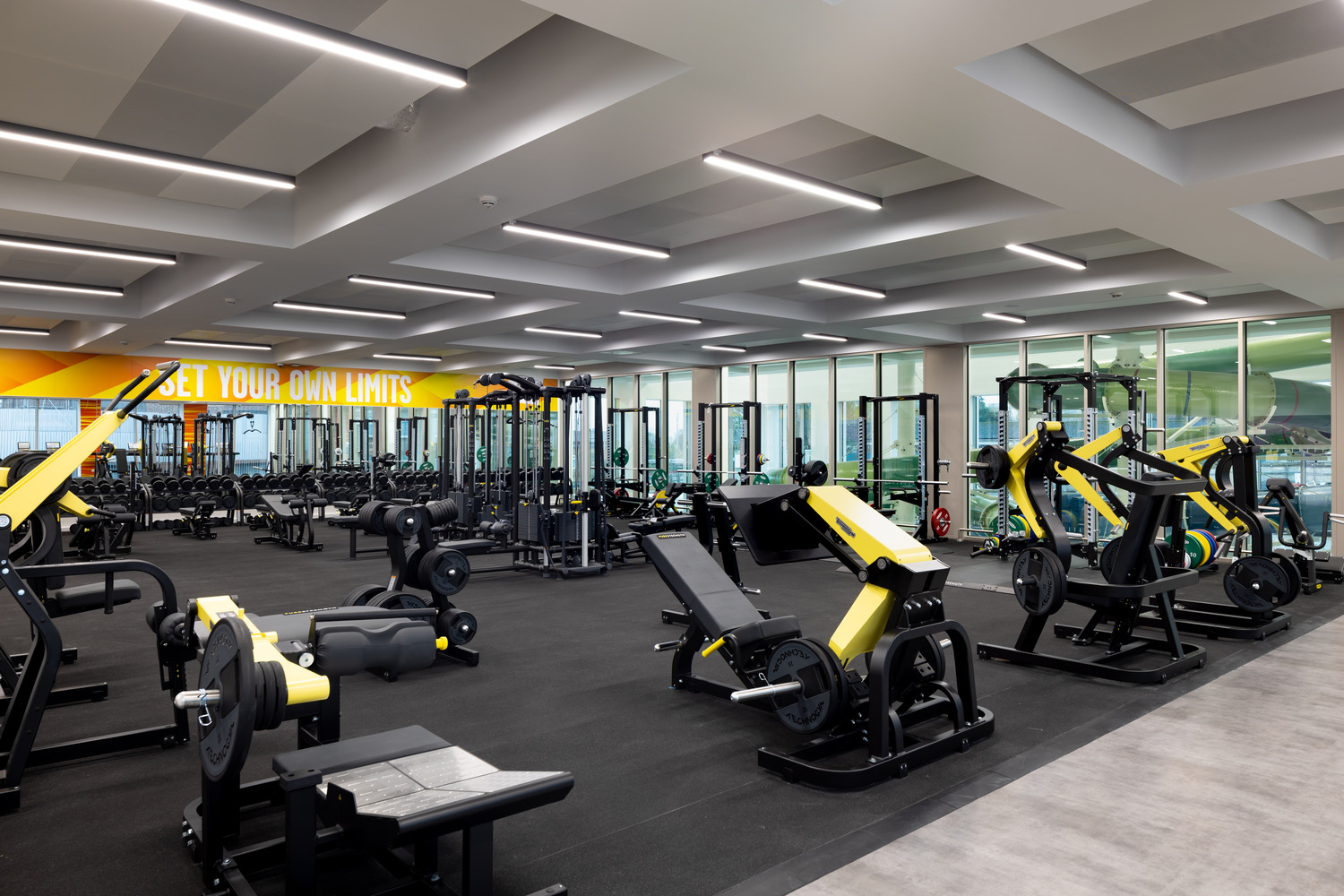
The completed Woolwich Waves leisure centre has become a landmark community asset that delivers significant social, environmental and economic benefits for the Royal Borough of Greenwich. The 12,800m² facility provides some of the most comprehensive leisure, fitness and wellbeing amenities in the region, creating opportunities for healthier lifestyles, increased physical activity and greater community participation. The centre has also become a key catalyst within the wider Woolwich regeneration programme, encouraging investment and supporting local economic growth.
Construction performance was equally impressive, achieving zero RIDDOR incidents across more than 600,000 working hours, a perfect 45/45 Considerate Constructors Scheme score and 100% waste diversion from landfill. Sustainability outcomes include achieving BREEAM Outstanding at design stage, establishing a low-carbon energy network and creating infrastructure capable of supplying sustainable heat to neighbouring community assets and more than 500 future homes. Community legacy benefits included 39 apprenticeships, 31 jobs created, over 770 students engaged in education initiatives and £12.6 million of added social value
Achieved (or is on track to achieve) BREEAM Outstanding, one of the highest sustainability ratings available, making it only the second leisure centre in the UK to reach this standard.
Features one of the UK’s largest Air Source Heat Pump (ASHP) arrays, providing low-carbon heating for the leisure centre.
The ASHP-fed energy centre also supplies sustainable heat to the neighbouring Tramshed Theatre and community arts hub, reducing overall carbon emissions across the wider development.
Designed to become the heat source for more than 500 new homes being developed nearby, creating a community-scale low-carbon energy network.
Incorporates a substantial planted green roof, improving biodiversity, supporting rainwater attenuation, and helping to reduce the urban heat island effect.
Adopted an innovative stacked, multi-storey design to maximise the use of a constrained urban site, reducing land take while delivering a large leisure facility in the town centre. Sustainability was embedded throughout the design, construction and operational phases, forming a core project objective from inception.
The facility forms part of the wider Woolwich regeneration programme, combining health, community and environmental benefits within a sustainable urban development.
Designed to support active, healthy lifestyles for residents, contributing to the social sustainability and wellbeing objectives of the Royal Borough of Greenwich.
Achieved BREEAM Outstanding at design stage, demonstrating exceptional environmental performance alongside strong social value outcomes
Generated 31 jobs, 39 apprenticeships and 40 work experience placements and engaged 770+ students through careers STEM initiatives and Developed a Knowledge Quad training hub.
Established a low-carbon energy network benefiting the leisure centre, neighbouring facilities and future homes
Achieved zero RIDDOR reportable accidents throughout construction, demonstrating exemplary health and safety management across a complex £80m leisure centre project.
Delivered over 600,000 person-hours of work while maintaining strong safety performance and workforce engagement.
100% payment within 30 days terms
Collaborative two-stage procurement
Open-book cost planning and early supply-chain engagement
Deployed Government Soft landings for handover
Digital handover providing a single source of truth with QA records
Drawings and asset information
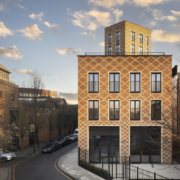
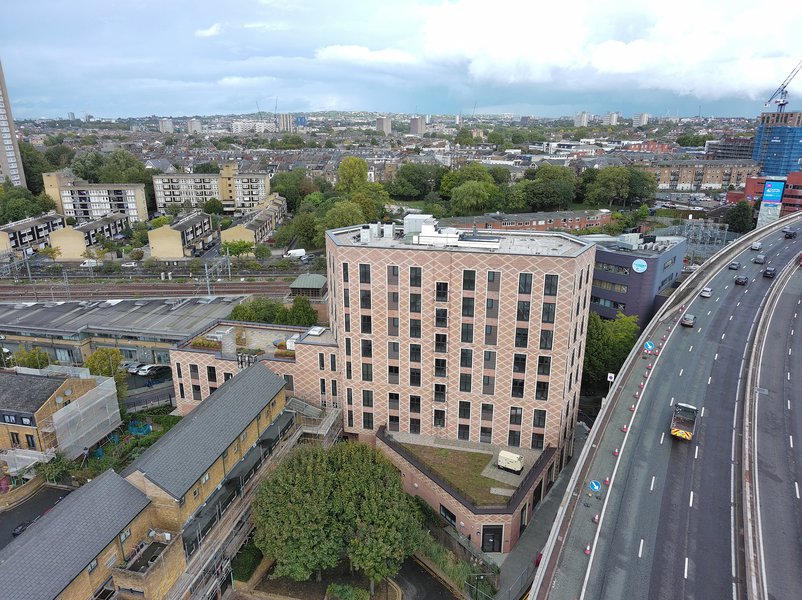
Proximity to Infrastructure: The plot sat a mere 3.5 meters away from the elevated Westway (A40 dual carriageway) and was bounded tightly by nearby railway lines. This caused massive acoustic disruption, high levels of traffic pollution, and complex structural foundation concerns.
Post-Grenfell Safety Imperative: Located in North Kensington, the project carried immense emotional and civic responsibility following the Grenfell Tower tragedy. The building demanded the absolute highest tier of structural fire safety and evacuation compliance.
Tight Brownfield Footprint: The plot was narrow, highly restricted, and left very little room for standard resident green spaces, play areas, or construction staging.
To overcome these barriers, RBKC teamed up with project manager Arcadis, architect PRP, delivery architect HNW Architects, and contractor Morgan Sindall Construction to execute targeted technical interventions:
Environmental Buffer Engineering: Dual-aspect wide frontages were incorporated alongside fully enclosed winter gardens (indoor-outdoor hybrid rooms). These acted as physical acoustic and pollution shields against the Westway highway.
Ground Movement Assessments: Engineers produced rigorous ground movement evaluations to get approvals from Transport for London (TfL), ensuring construction wouldn’t compromise the existing Westway highway foundations.
Advanced Fire Safety Infrastructure: The building was upgraded far past standard regulation, integrating a commercial-grade sprinkler system, early smoke detection/evacuation alerts, a dry riser, two standalone emergency staircases, and two dedicated evacuation lifts.
Imaginative Amenity Design: Because ground space was limited, architects designed a third-floor raised podium garden. This provided seating, soft landscaping, and a secure children’s play area isolated from traffic.
Co-Design and Contextual Architecture: The building’s intricate, textured brickwork was explicitly designed to mirror the patterns of the adjacent Al-Manaar Muslim Cultural Heritage Centre. Local groups—including the Swinbrook Residents’ Association—directly co-designed the layout of the new community facilities
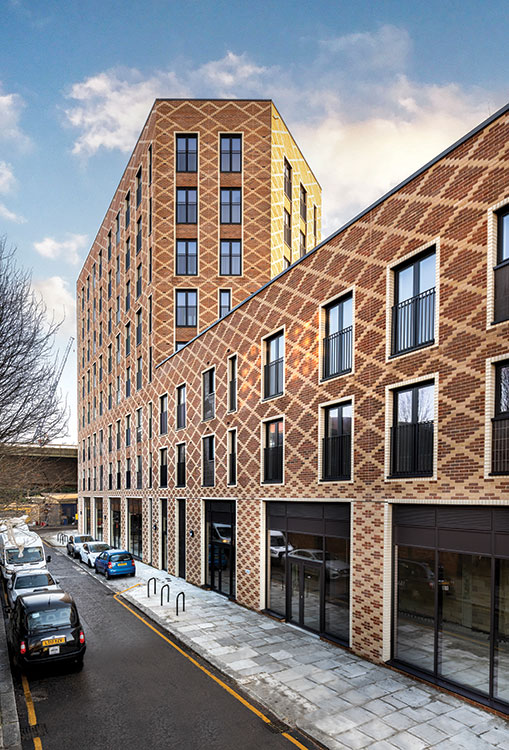
Acklam Road successfully set a new benchmark for municipal urban regeneration:
High-Quality Housing Stock: Delivered 32 new homes, comprising an inclusive blend of 20 social rent units and 12 market rent flats.
Fully Accessible Living: Integrated four purpose-built, fully accessible wheelchair homes within the social housing allocation.
Tenure-Blind Inclusivity: All residents access the building through a singular, high-quality tenure-blind lobby, removing the social segregation of traditional developments.
Vibrant Social Infrastructure: Successfully handed over two newly constructed ground-floor community spaces. One serves as a replacement hub for the Swinbrook Estate, and the other expands youth and community programming run by the Al-Manaar Centre.
Eco-Efficiency: Reached a “fabric-first” energy rating using air-source heat pumps and thermally efficient windows, driving down utility costs for council tenants.
Industry Recognition: The project’s success earned it a prestigious shortlisting for Affordable Housing at the British Homes Awards.
Inclusive Mixed-Tenure Housing: Promotes a balanced community by integrating 20 social rent homes and 12 market rent homes.
Tenure-Blind Design: All residents share a high-quality main entrance lobby, ensuring an equitable standard of living regardless of tenure.
Universal Accessibility: Includes four fully adapted, accessible wheelchair homes.
Community-Led Spaces: Ground-floor units were co-designed with local stakeholders. They offer a replacement hub for the Swinbrook Estate Residents’ Association and an expanded facility for the adjacent
Third-Floor Podium Garden: Maximizes space on a tight brownfield site. It features soft landscaping, casual seating, and play zones for young children to boost biodiversity and resident wellbeing.
Borough-Wide Bee Superhighway Integration: Works alongside the local. The broader Acklam Road area utilizes pocket parks, vertical climbers, and pollinator-friendly marsh plants to clean localized air and support urban wildlife
Fabric-First Approach: High-performance insulation and thermally efficient doors and windows significantly lower heating demand.
Fossil Fuel Elimination: Individual low-carbon air-source heat pumps power the heating and hot water systems across all apartments.
Innovative Acoustic & Air Mitigation: Located just 3.5 meters from the elevated Westway (A40) dual carriageway. Smart structural design protects residents from extreme roadside noise and air pollution.
Enclosed Winter Gardens: Every home features a fully glazed, versatile indoor-outdoor winter garden. These serve as thermal buffers to retain heat while offering acoustic insulation.
Durable, Low-Carbon Envelope: The distinctive brick exterior was chosen for extended lifespans, low-maintenance requirements, and reduced embodied carbon.
Soft landings for handover
Dedicated Morgan Sindall point of contact
Awards
LABC Awards 2025 – Best Small Social Housing Regional Winner.
Inside Housing Development Awards 2024 – Best Affordable Housing Development (Under £20m) Winner.
Property Week RESI Awards 2025 – Outstanding Residential Design Finalist.
Fair payment Charter and its principles underpinned delivery through transparent, open-book processes, prompt payment within 30 days, aligned cash flow across the supply chain, proportionate retention practices, and collaborative contract management, supporting a resilient, sustainable and trusted project environment
0 RIDDOR reportable incidents recorded during the reporting month.
0 accidents/incidents recorded during the reporting month.
0 HSE, Environment Agency or Environmental Health visits during the month.
0 learning events and 0 positive intervention cards recorded during the month.
7 Toolbox Talks delivered in the month, attended by 31 operatives (2 direct employees and 29 subcontractors)

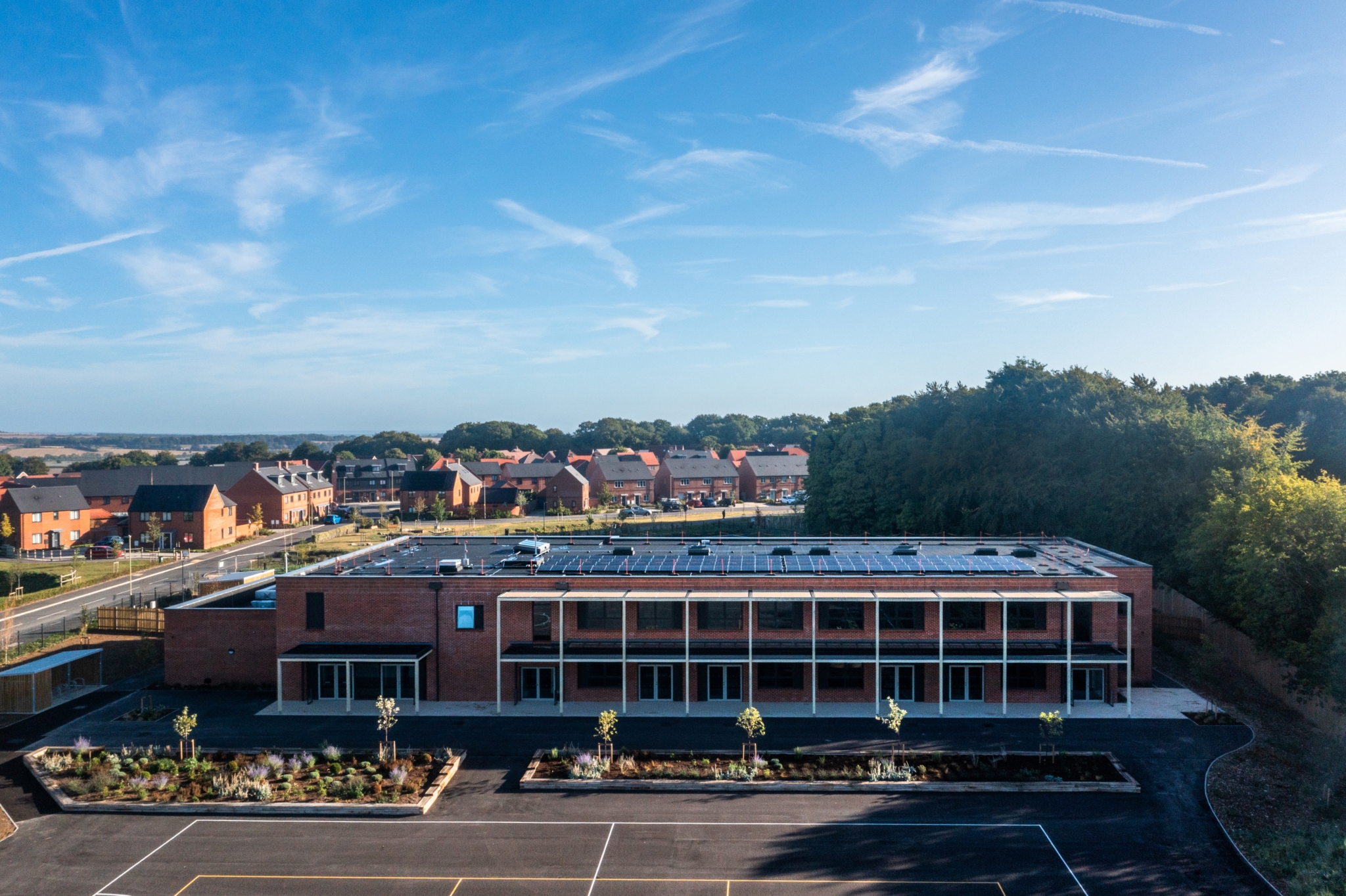
Hampshire County Council committed to providing new schools in areas with significant housing growth and population increases. One of these new schools was required to meet the anticipated demand for primary school places arising from the approximately 1,750 new homes to be built in the residential developments at Hounsome Fields and the adjacent Basingstoke Golf Course on the southwest of Basingstoke.
Hounsome Fields Primary School needed to accommodate 2 forms of entry, providing primary education for up to 420 children aged between 4 and 11 years old, together with a resource provision for 8 pupils with special educational needs. The selected school site is approximately 3.0 hectares of previous farmland and will be sufficient to accommodate an expansion of the school by a further form of entry (210 pupils) if necessary, in the future.
The project included the construction of the school building, car parking, external play areas and playing fields and the in-house property team at Hampshire County Council designed the facilities with energy efficiency and modern construction techniques in mind, prioritising the learning experience of pupils.
Hounsome Fields Primary School is one of the first schools to be built to Passivhaus Classic standard in Hampshire.
The two-storey school features a shaded loggia, a single-storey canopy for outdoor play, and an off-site timber frame to reduce embodied carbon. It is finished with brick, triple-glazed windows. The school building comprises: of a main hall, studio, 14 classrooms, a classroom for pupils with special educational needs and disabilities, a specialist practical classroom, group rooms, a learning resource centre, staffroom and administration offices, pupil and staff toilets, accessible toilets and a hygiene room, kitchen and other ancillary support facilities.
The school’s exterior includes play courts and dedicated play areas for different age groups, a pedestrian entrance, two grassed playing fields, soft landscaping with trees, an all-weather path around the fields, car parking, service access, and covered bike and scooter storage.
The project was adopted as a Climate Change Primary School Pilot project, aiming to achieve zero on-site carbon emissions with all-electric heating and solar power, low embodied carbon meeting the RIBA 2030 Challenge, and enhanced resilience to future overheating and flooding.
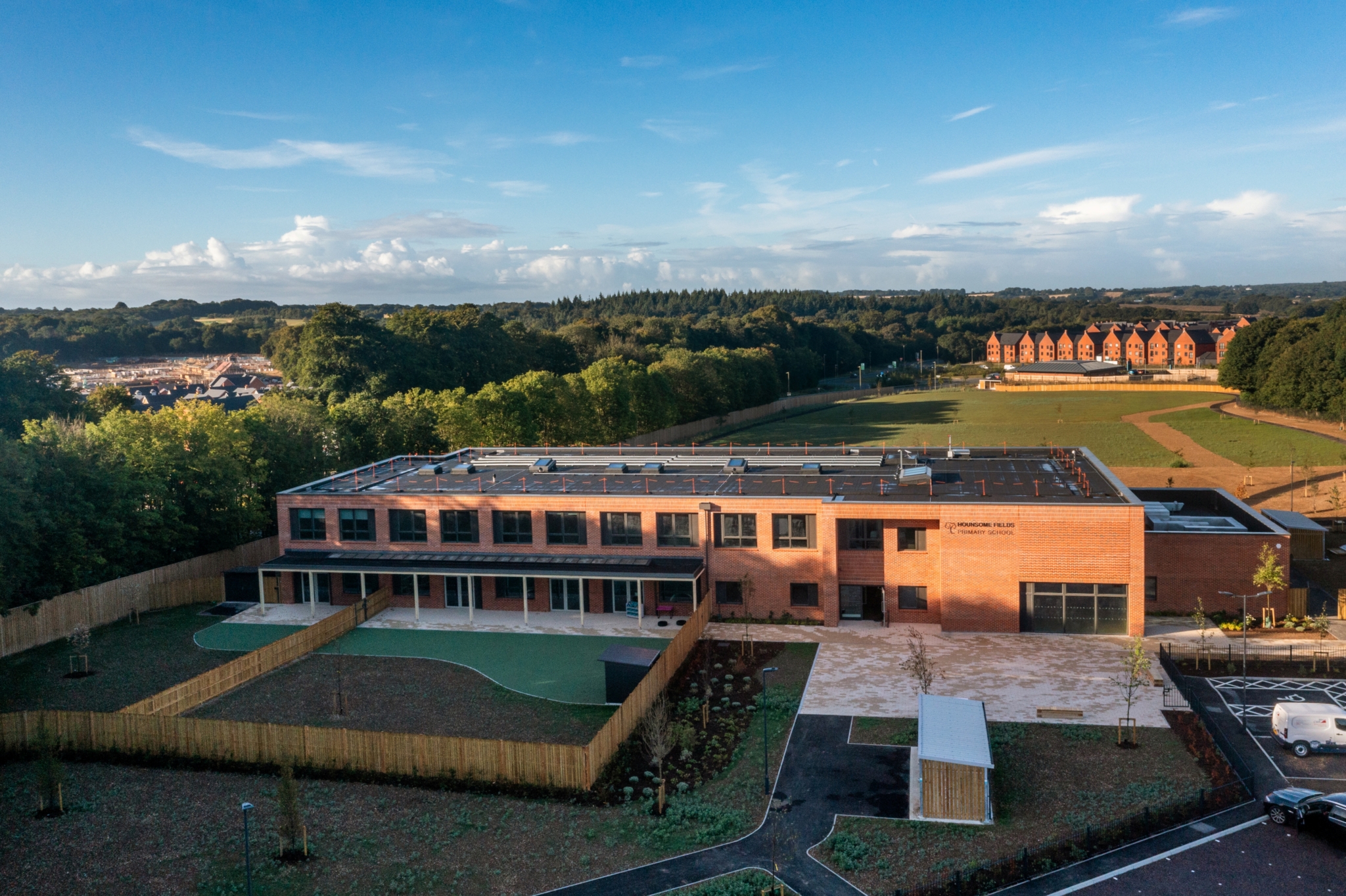
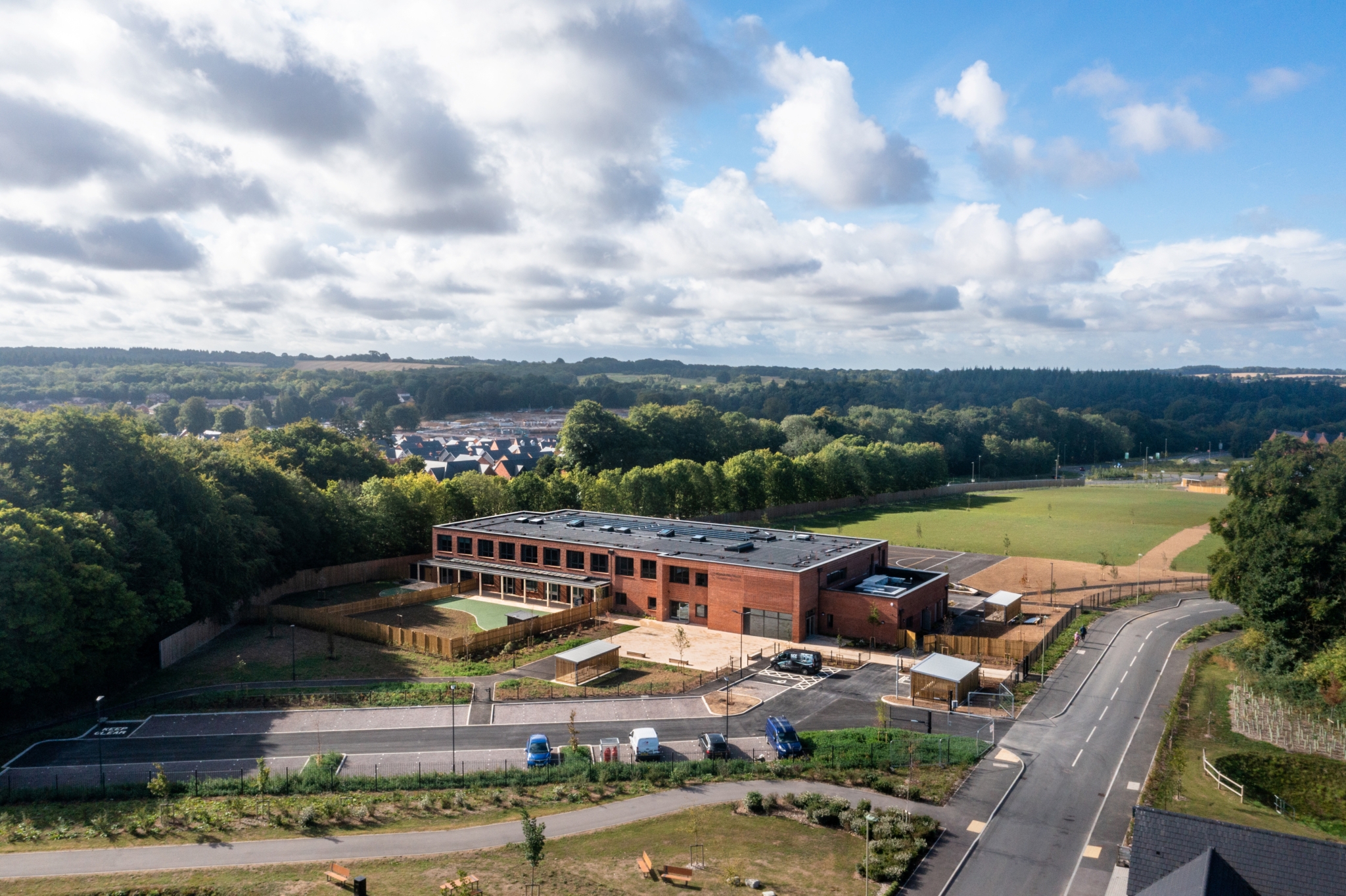
Hounsome Fields Primary School is the first “Standard Primary School” model by Hampshire County Council targeting Passivhaus Classic certification (pending). The two-storey building, designed for energy efficiency and sustainability, excellent thermal comfort and air quality, creating a healthy, low-carbon learning environment for pupils and staff.
To meet the heat and energy objectives behind the Climate Change Primary School Pilot, the design and construction of Hounsome Fields incorporates a ground-source heat pump, rooftop solar panels, and a highly insulated, airtight Passivhaus-standard building envelope with triple glazing and MVHR ventilation. Energy-efficient lighting and heating controls are used, and post-occupancy monitoring evaluates the building’s actual energy performance.
The building reduces embodied carbon by using a sustainably sourced timber frame and low-carbon concrete, targeting 540 kgCO₂e/m², with a site waste management plan to minimize construction waste.
It is oriented east–west with shading and special glazing to keep it cool and reduce glare. Night-time ventilation helps lower indoor temperatures in summer. The main play area is placed away from the sun and shaded by trees. Water-saving fixtures are used, a drainage swale manages rainwater, and landscaping boosts biodiversity.
230 training weeks : 26 Careers events and workshops : 30 weeks wex for supported Internship : x1 building lives academy : 41 workers within 10 miles : 89 workers with 20 miles
100% waste diverted from landfill
Zero RIDDORS
100% payment within 30 days terms
Soft landings for handover
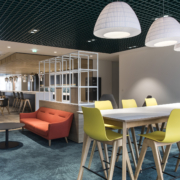
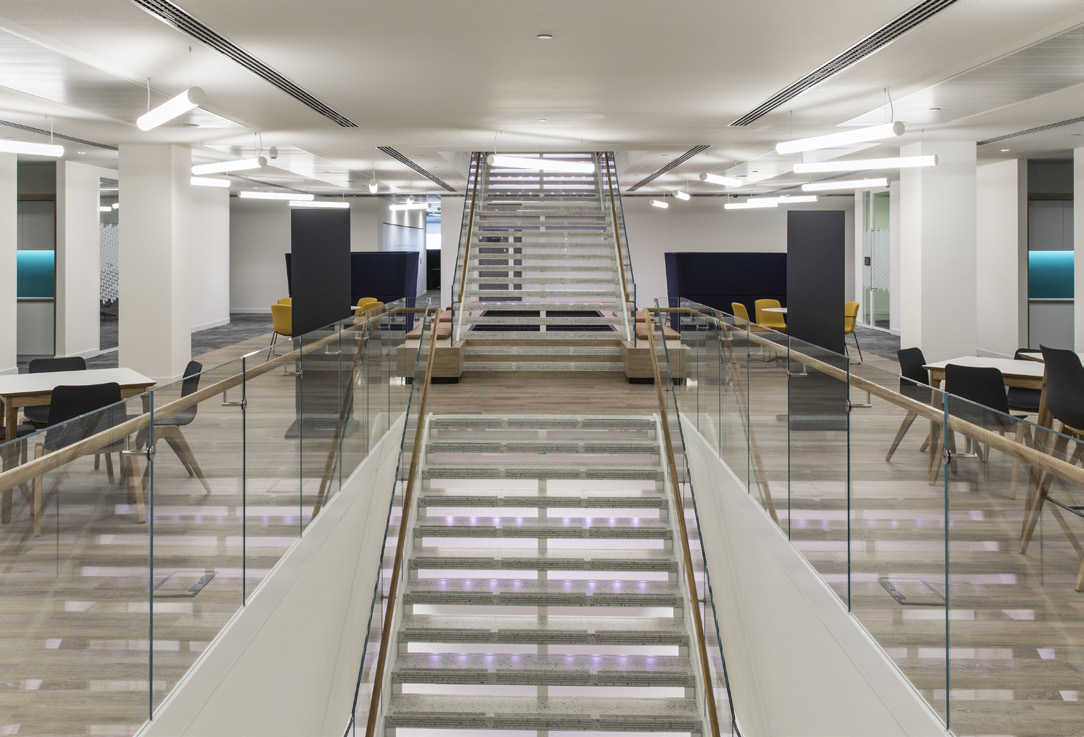
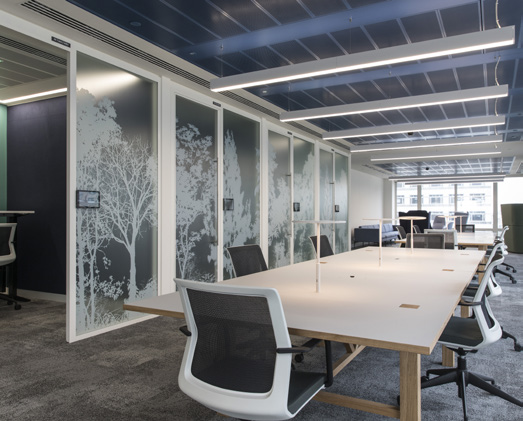
The design and fit out to Cat B from shell and floor including the design, supply and installation of furniture requirements, AV, room booking installation, access control, CCTV and security installations to provide all accommodation and functional areas to achieve the client brief. Approximately 113,000 ft sq of employee and public-facing space within newly leased office premises across three main floors (7, 8 and 9) with a new interconnecting staircase, plus additional back of house areas to two further floors (Ground and Mezzanine).
The project was tendered based on a complete stage 1 design however, upon appointment, there was only a limited design brief. Overrunning programme on the basebuild (by others) resulted in delays of varying lengths on all floors to works commencing.
Overbury, along with Architect TP Bennett, developed the design brief working closely with the client through all stages, using engagement sessions with the workplace champions to understand the intended building use and circulation. Multiple presentations were given to client user groups at each design stage. Recommendations from a Leesman Report undertaken at the client’s previous office space were also incorporated into the final design solutions.
The team assisted the client with proactive advice on how best to mitigate and deal with the delays to the base build, monitoring quality and programme. This became almost a full-time role for the Overbury project manager. This high level of collaboration engendered reciprocal trust that continued throughout the building fit out.
The completed project achieved a BREEAM Excellent rating, the WELL Building standard, and a score of over 70 on the Leesman Survey, putting it in the top 5% globally of the survey.
97% waste diverted from landfill
100% timber responsibly sourced
100% payment within 30 days terms
Zero RIDDORs
CCS Score 39/50
Soft landings for handover
Dedicated Morgan Sindall point of contact – Senior Project Manager, Graham Holland
On-line portal for notifying any defects with 3 priority categories for response times. Once reported, defects were logged on Project+ to track and close out.
31 No of SMEs
7 jobs created
363 trainee weeks
Schools engagement: 4 events
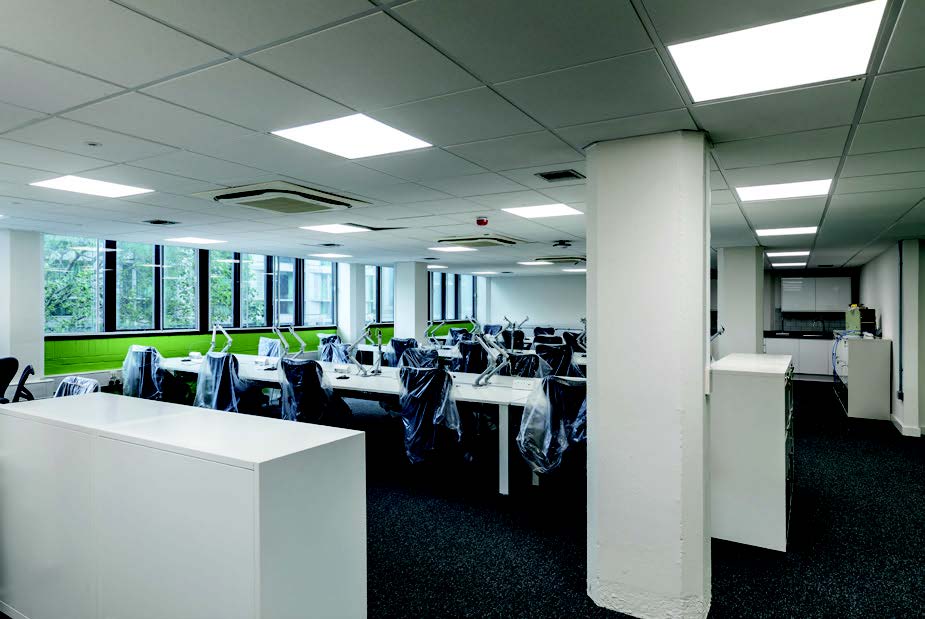
RBKC undertook these works to upgrade their existing office space, reshaping the floor plan layout to suit the new needs of the space.
The building remained occupied throughout the project, with RBKC staff continuing to use the building, requiring a phased programme, and residential dwellings above the plant deck area on the upper floors. Therefore planning, communication and minimising disruption were key focuses throughout the project. Positive feedback was received from the residents at the end of the project demonstrating how well this was managed as a team.
RBKC undertook these works to upgrade their existing office space, reshaping the floor plan layout to suit the new needs of the space.
We replaced many features throughout this project including the: Service plant Toilets, Tea points, Building management systems, Air conditioning systems, Doors Refurbishment of existing fire-rated doors, Improved compartmentation, Radiators
Mechanical services transitioned from Gas to electricity and public health services were segregated from the residents’ systems.
RBKC also upgraded all their fire safety doors. By upgrading the services and newly installed BMS, the building became more efficient and user-friendly to run. This also reduced maintenance and running costs.
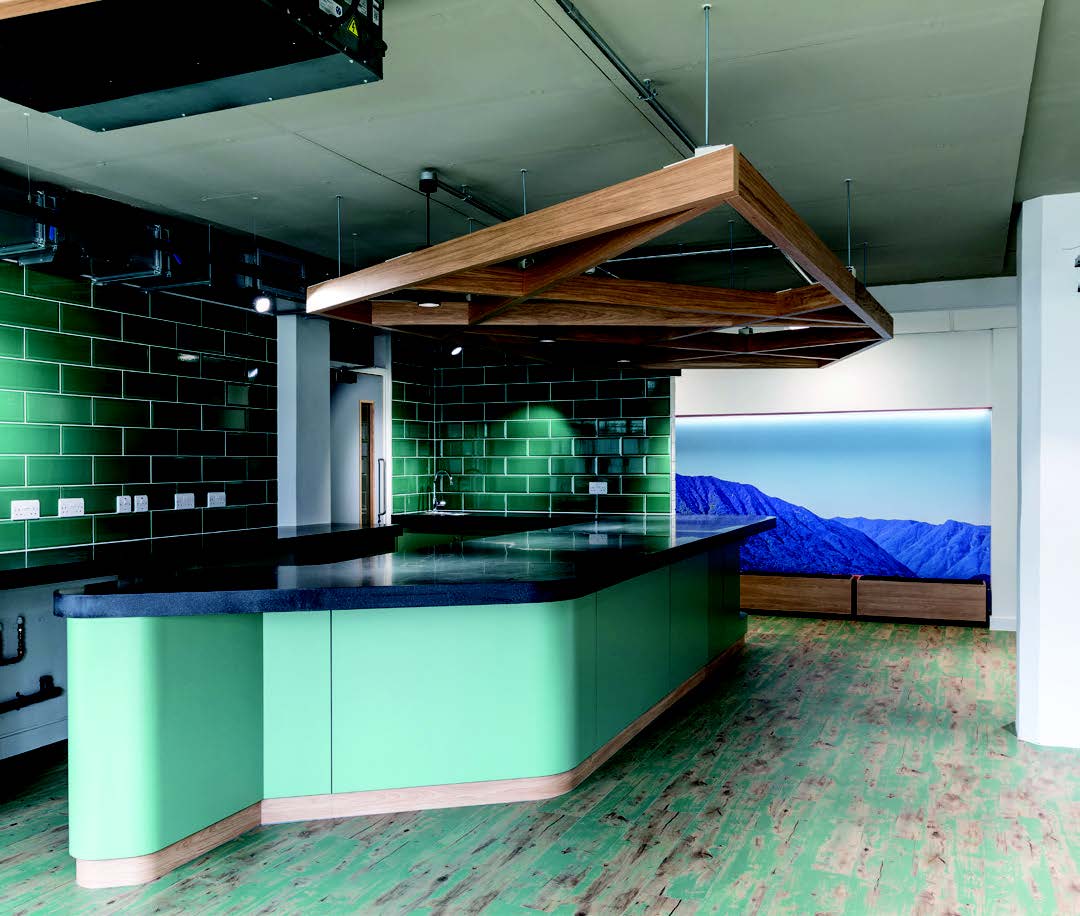
waste recycled 99%
100% timber responsibly sourced
11 tons of Asbestos removed
29 No of SMEs – 5 jobs created – 265 trainee weeks – Schools engagement: 3 events 70 pupils over all – 12 volunteer hours
£3,098.93 donations to charity – 0.03% social value created
MS got involved with the tenants in the flats above the office space and redid there garden
Soft landings for handover – yes training session
On-line portal for notifying any defects with 3 priority categories for response times
Zero RIDDORs
CCS Score 45/45
100% payment within 30 days terms
Live university campus
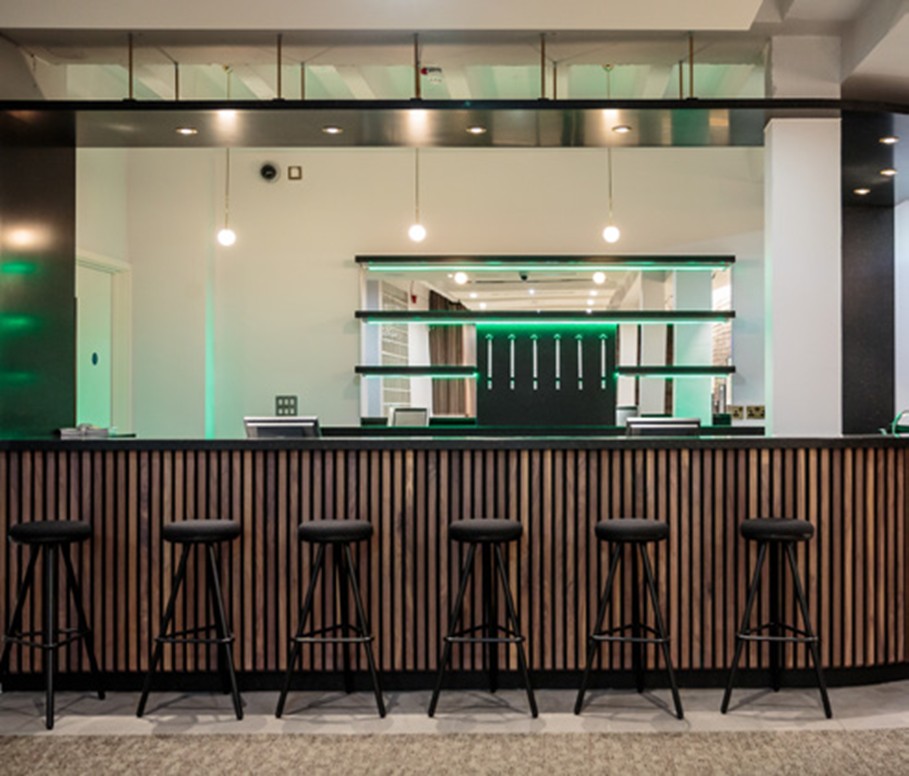
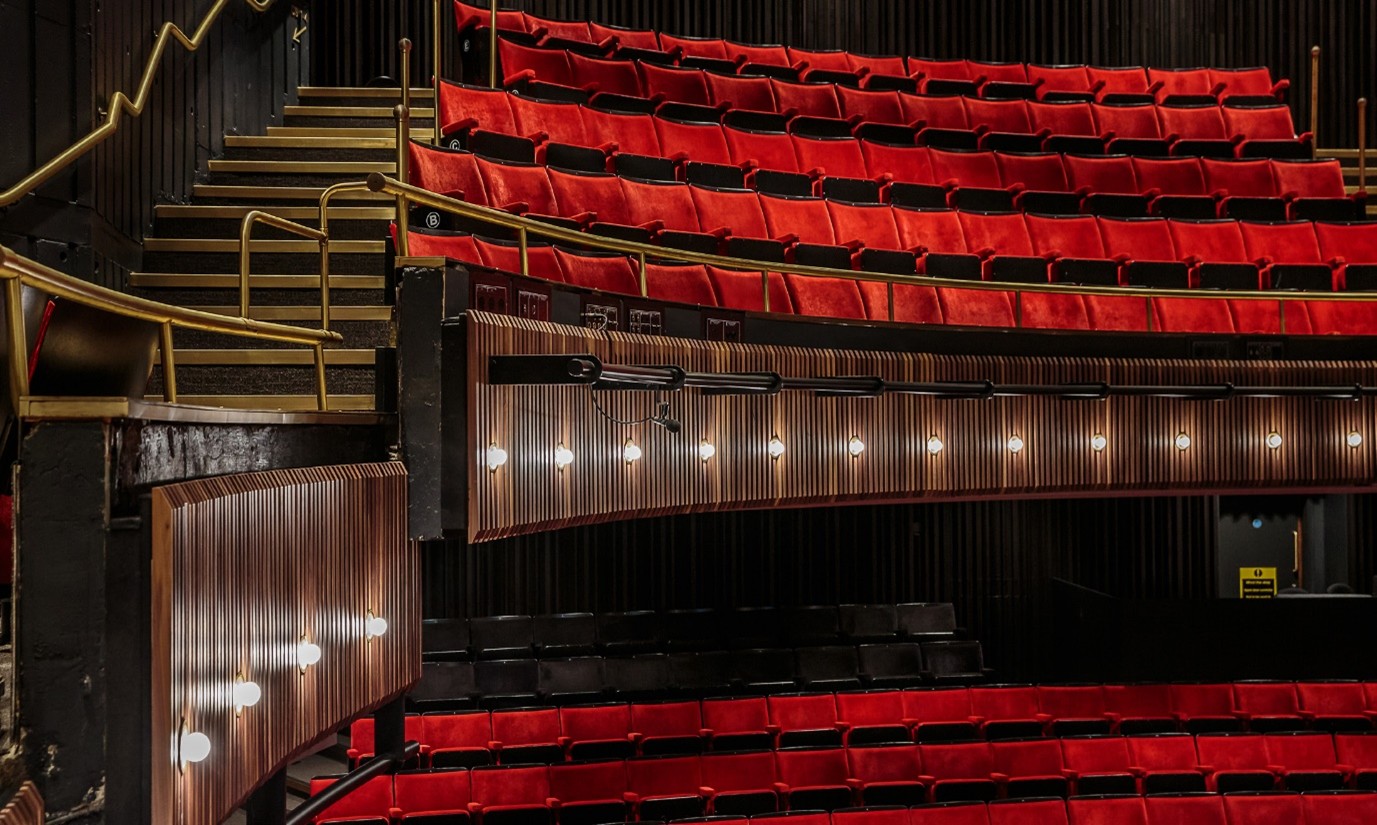
During the course of the Theatre refurbishment, all of the surrounding areas were fully occupied by either students, academics or were the subject of construction work. Overbury successfully delivered the 36 weeks project without disruption by diligently planning and sequencing the works, ensuring all live and transient services were maintained, while liaising with a wide variety of stakeholders.
3D modelling
As the project was being designed in a 3D environment, but with the absence of an existing model of the buildings structure, additional point cloud surveys were utilised during the strip out and enabling phase to assist in developing the building services model and co-ordination with structure.
Scaffold design
In order to work at high level and low level simultaneously, a birdcage scaffold was utilised, along with a number of other innovative scaffold designs, in order for works to adjacent areas to progress concurrently.
During the Theatre refurbishment, all areas were fully occupied by either students, or were the subject of construction work.
At no point were any occupants, adjacent buildings or building projects disturbed during our 36 weeks on site, and all live and transient services were maintained throughout
Programming was a challenge particularly towards the end of the project, but we flagged issues early, provided extra staff to mitigate any impact, and updated on our progress weekly.
15 SMEs (9 local), 13 beneficiaries, 3 jobs created, 130 trainee weeks
Schools engagement: 949 students
£1.93 LM3, 92% social value created
16.2 tonnes carbon equivalent saved in Morgan Sindall’s 10 Tonne Carbon Challenge by changing the heat protection tile supplier to a UK supplier, reducing number of and distance of deliveries
98% waste diverted from landfill
7 biodiversity enhancements
Soft landings for handover
Dedicated Morgan Sindall point of contact
On-line portal for notifying any defects with 3 priority categories for response times
Zero RIDDORS
CCS Score 40/45
100% payment within 30 days terms
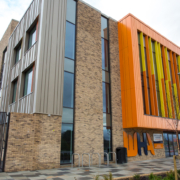

The Winterstoke Hundred Academy project needed to meet a rapidly increasing demand for secondary school places in North Somerset.
The scheme required delivering a new 900‑place secondary school (expandable to 1,200 pupils) across a large, multi‑hectare site while meeting high environmental performance standards including Net Zero Carbon, BREEAM Excellent and a 10% biodiversity net gain.
It also required integrating sports facilities, community‑focused spaces and on‑site energy generation, all while coordinating with Homes England funding requirements and the existing Academy’s expansion strategy.
The design team created a future‑proofed secondary school across two sites, incorporating a main school building, sports hall, Sustainability Lab, all‑weather pitches, parking, and extensive outdoor learning spaces.
The school was designed using standardised, low‑carbon solutions aligned with Net Zero Carbon in Operation requirements. Community legacy was embedded through the Sustainability Lab, offering training, skills development, and local business support.
Kier worked collaboratively with North Somerset Council and the Cabot Learning Federation, enabling the project to progress from concept to site start within months.
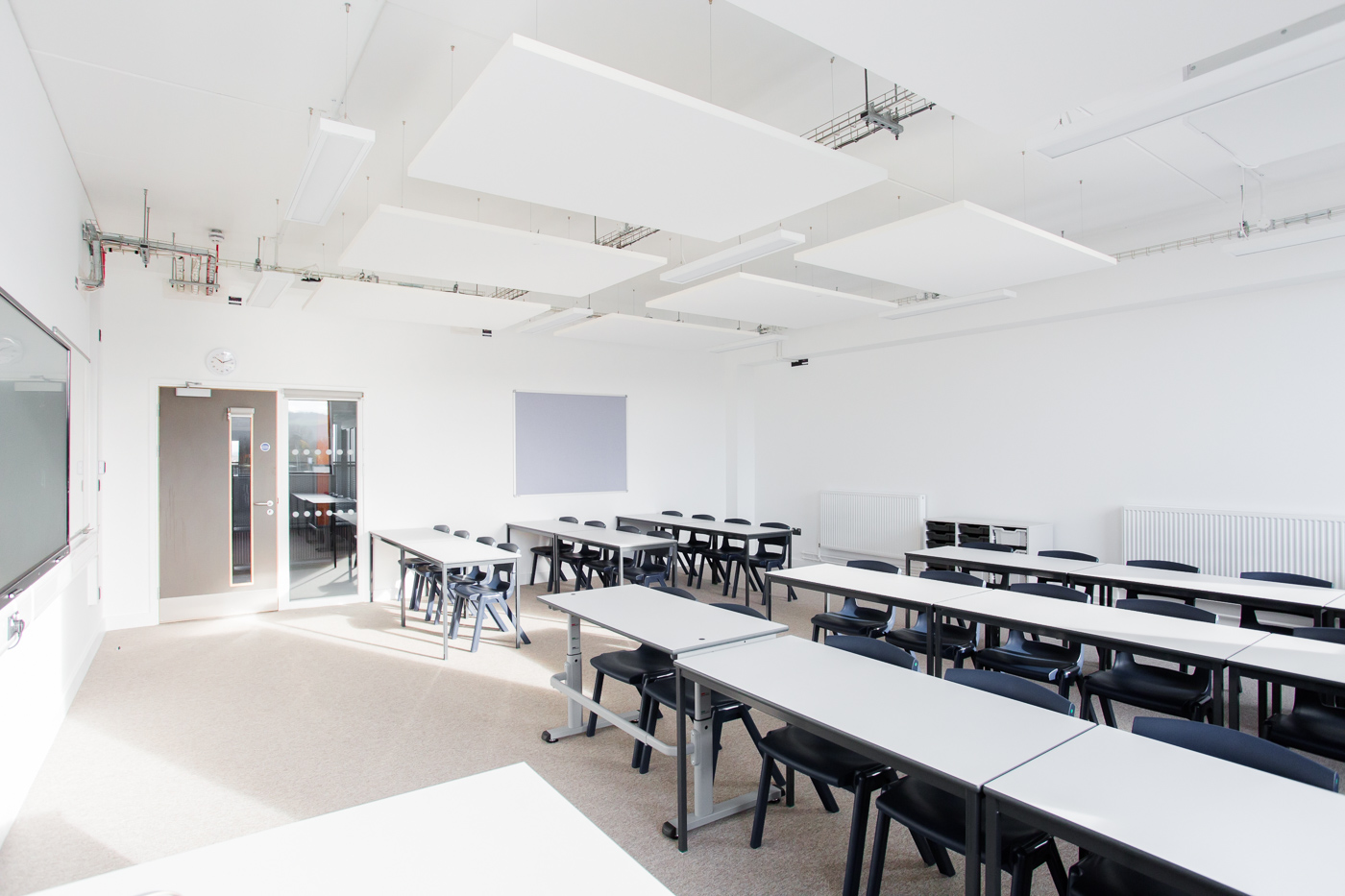
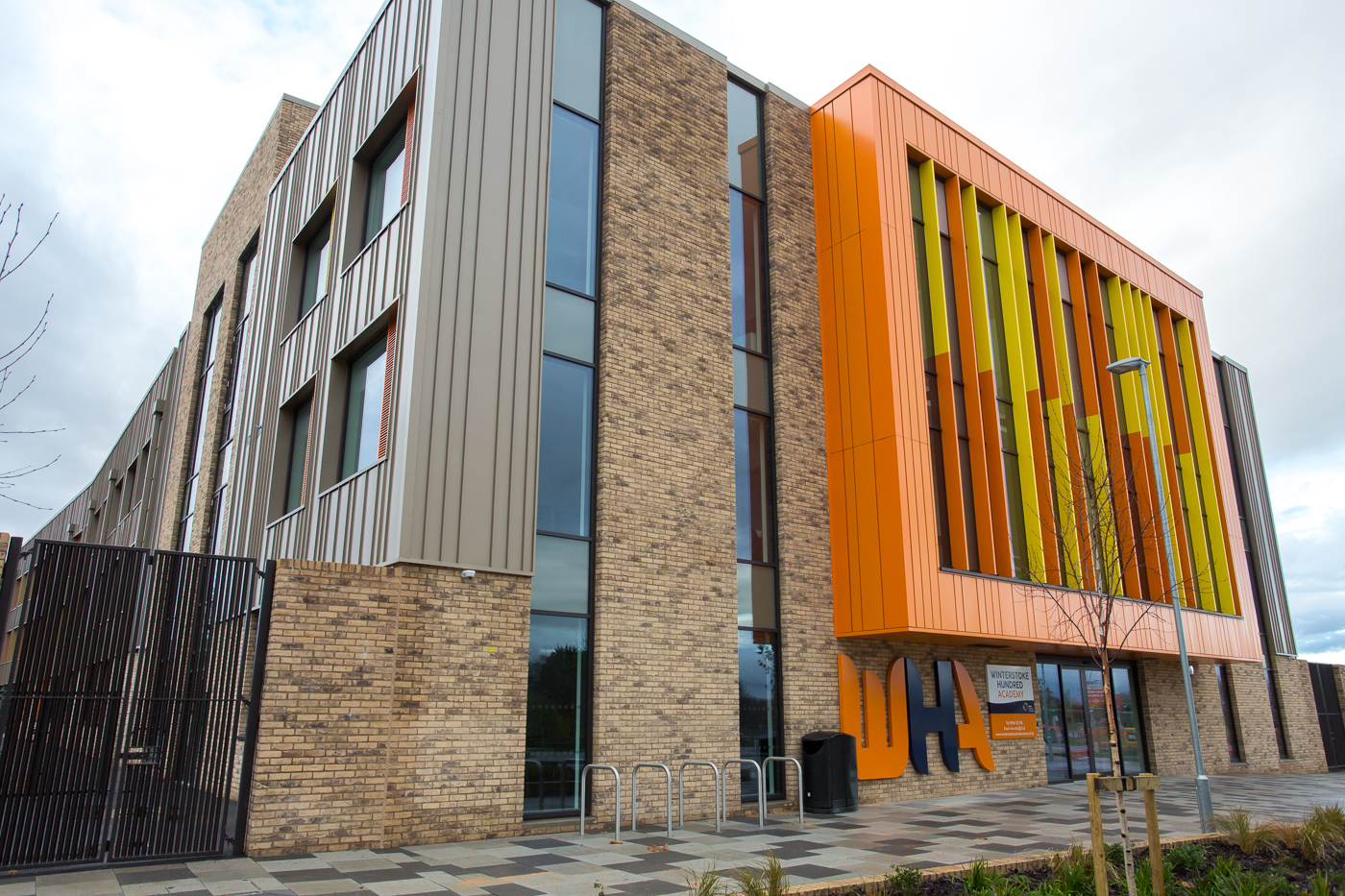
The project successfully delivered a £30m+ Net Zero Carbon secondary school providing 900 new pupil places with capacity for future expansion. The completed school achieves BREEAM Excellent, 10% biodiversity net gain and includes low‑carbon energy systems, sustainable transport infrastructure and significant community facilities.
The scheme met the client’s tight programme expectations and has created a modern, sustainable, and community‑focused education environment for North Somerset
There is a large array of photovoltaic panels on the main building roof, which contribute towards achieving Net Zero Carbon in Operation
BREEAM ‘Excellent’
EPC rating
NSC have declared a climate emergency and have policies aligned with this.
As such it was imperative that this building minimised impact on the climate through both construction and operation as far as was practical with budget and programme constraints.
Within this context the architects decided to focus on the delivery of a building which is net-zero carbon in operation which has been achieved.
376 waged training weeks on site
39 Qualifications gained
29 work placements
22 new jobs
45 hours volunteering 20 career and guidance events
This collaborative approach to passive fire protection was encouraged throughout the project, starting with upskilling the team.
Toolbox talks on the topic of the Building Safety Act and the importance of quality design, install and recording of fire protection was led by the Design Manager through the project.

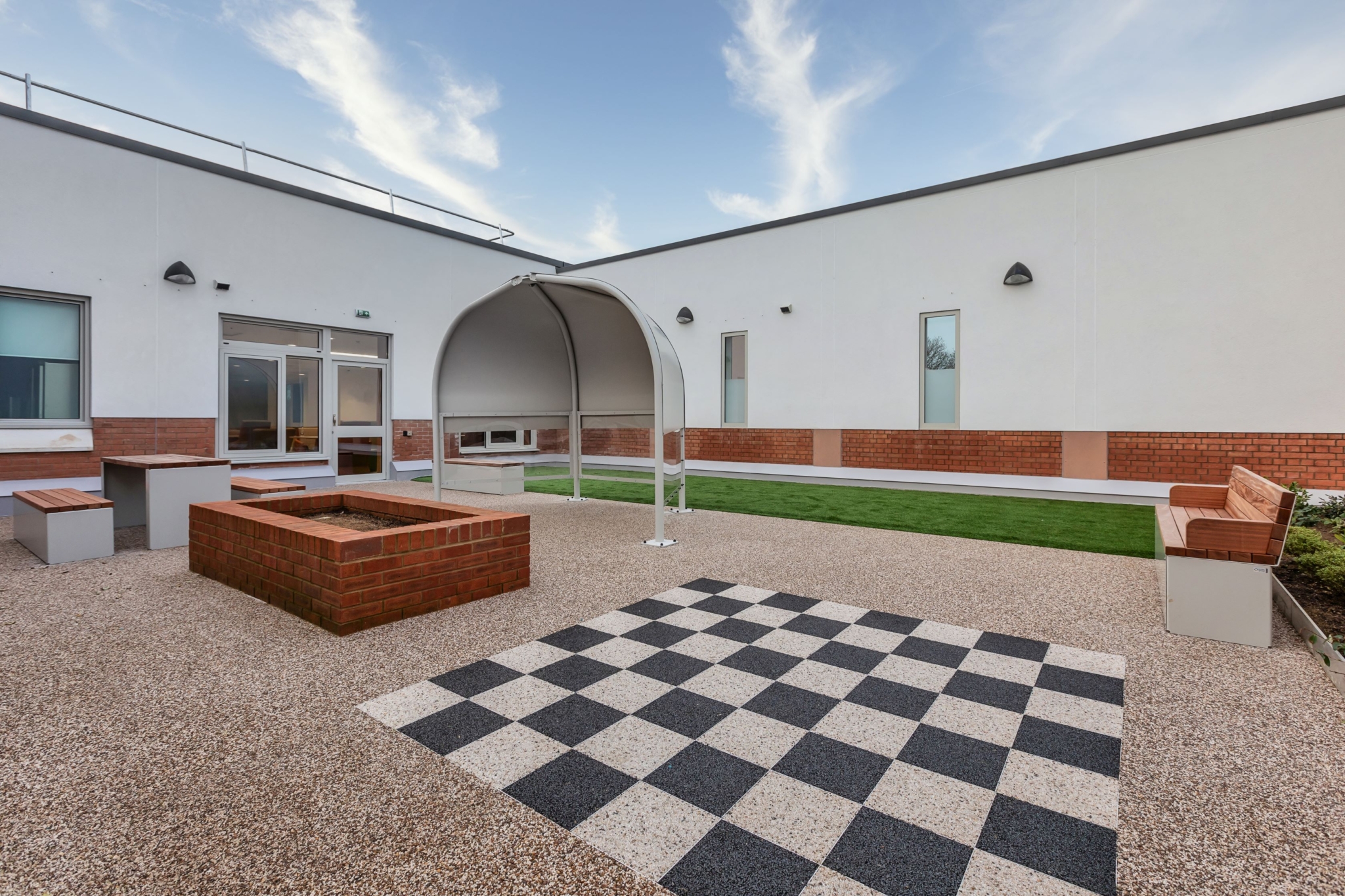
The Abraham Cowley Unit had become outdated and no longer met modern standards for inpatient mental healthcare. Shared dormitory-style accommodation undermined privacy and dignity, and the building lacked dedicated therapeutic spaces or meaningful access to gardens – key elements in contemporary mental health treatment. SABP sought a complete transformation of the inpatient journey, with modern ensuite bedrooms, safe observation lines, improved sensory and therapy areas, and a calm, healing environment.
However, the Trust faced a substantial affordability gap. The initial Stage 3 design exceeded budget constraints by a wide margin, placing the project at risk of being undeliverable. At the same time, construction needed to take place within a live hospital campus alongside two other construction projects, requiring meticulous planning, interface management and strict protection of hospital operations.
The safety-critical nature of mental health environments further amplified the challenge, with anti-ligature detailing, acoustic control and high-precision installation essential to ensuring safe and therapeutic spaces.
The contractor delivered a comprehensive and collaborative solution that restored affordability while preserving the full clinical integrity of the project. When the initial Stage 3 design exceeded budget, the team worked closely with the Trust to re-engineer the scheme without reducing capacity or compromising therapeutic standards. This was achieved through a targeted value engineering process that rationalised the building footprint, optimised floor areas, simplified external works and replaced high-cost façade elements with durable, lower-cost alternatives. The redesign not only made the project deliverable but also enhanced operational value, supported sustainability objectives and retained all 64 single ensuite bedrooms and associated clinical spaces. Early engagement with the Trust’s estates and FM teams ensured future maintenance, energy efficiency and lifecycle costs were significantly improved.
Following approval of the redesigned scheme, the project team advanced into detailed design and construction with an approach grounded in clinical collaboration and lived-experience input. Continuous engagement with clinicians, estates teams and SABP’s Lived Experience Group helped refine layouts, daylighting, observation lines and therapeutic spaces to support dignity, privacy and recovery. Lessons learned from previous mental health schemes informed anti-ligature decisions and material selection, while construction proceeded safely within a live hospital environment through strict logistics management and weekly coordination with adjacent contractors. The contractor’s Millimetres Matter Standard ensured precise installation and rigorous testing of all safety-critical components, supported by anti-ligature training delivered to subcontractors.
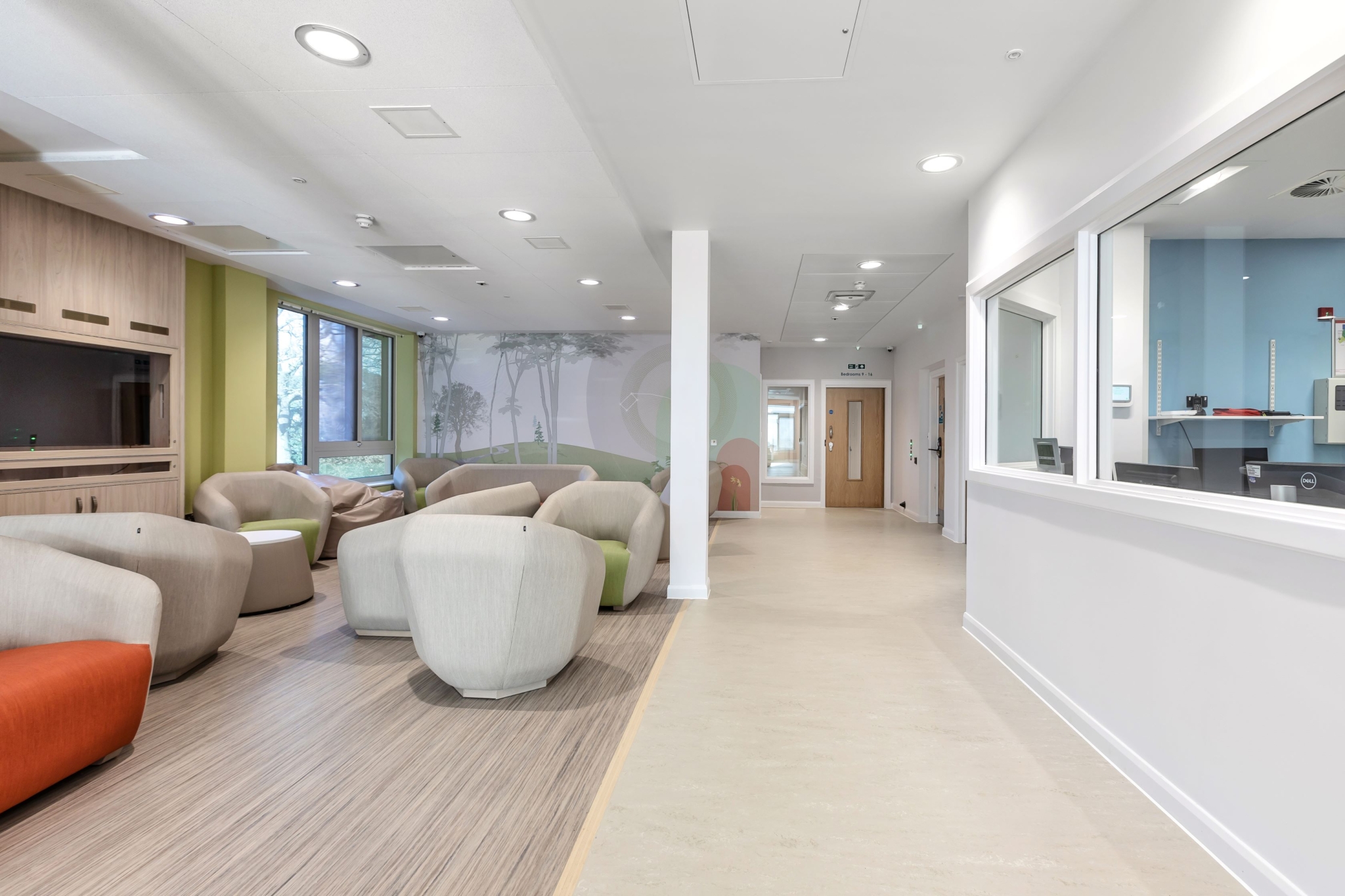
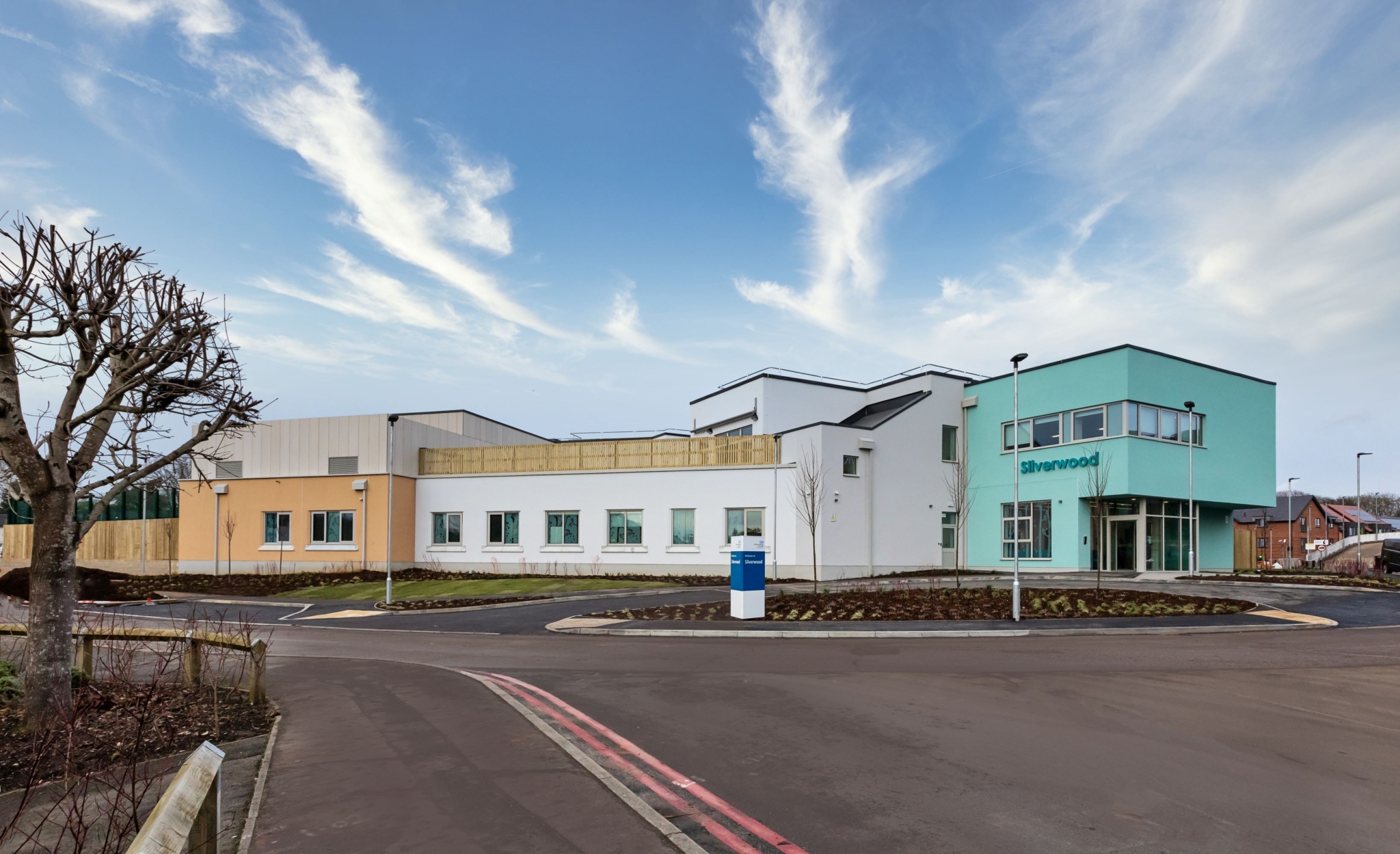
Silverwood was successfully delivered as a modern, therapeutic and operationally efficient inpatient mental health facility that meets the Trust’s clinical, financial and sustainability objectives.
The project’s strategic redesign secured approximately £7.5 million (25%) in savings, enabling the Trust to proceed with a scheme that had previously been unaffordable, without compromising clinical intent, quality standards or capacity.
Construction was delivered without disruption to hospital operations and achieved zero RIDDOR incidents, demonstrating exemplary site management within a live clinical setting. Early FM involvement and optimised building services arrangements also reduced future maintenance and lifecycle costs, ensuring long-term value for the Trust.
As a result, Silverwood now stands as a clinically effective, financially resilient and future-proof facility supporting high-quality inpatient mental health care.
260 hours volunteering, 14 new jobs created for locals within 30 miles and 436 weeks training (apprenticeship & T-Level). Three online career prospects workshops delivered to support service users and volunteers.
Time capsule to honour the legacy of the former Abraham Cowley Unit
Winter Safety Stand Down focused on mental health, leading to quarterly joint MH sessions
Dedicated wellbeing room and Be Well volunteering days for staff and a Therapy garden and community tree-planting events. Hosted a stand at Recovery Fest 2023, providing tours and career information. Multiple Mental Health First Aiders (MHFAs) trained
Prostate Cancer UK toolbox talk and #FootballShirtFriday fundraising and On-site workforce health screening provided
Early trial rooms constructed to test anti-ligature systems, layouts and finishes
Ongoing FM engagement enabled optimised building services and easy maintenance
VR headsets used in design reviews and familiarisation sessions
Soft landings approach ensured smooth operational transition
Rapid post-handover support to resolve early-stage queries
BREEAM Excellent
44/45 CCS score, including 14/15 for environmental performance
Segregated skips, PPE recycling and wood-recycling scheme reduced landfill waste – 99%
Solar-powered CCTV and PIR lighting in cabins to cut energy consumption
Rainwater harvesting implemented to reduce mains water usage
LED lighting installed throughout for long-term energy efficiency
Bat boxes added to enhance biodiversity
Robust hazardous waste storage to minimise pollution risk
The project team faced several significant challenges throughout delivery.
Construction progressed during the COVID-19 pandemic, requiring adherence to evolving government guidance while maintaining programme, budget and quality standards.
Early design coordination was critical because the building was constructed using the Streif offsite modular timber system, which required detailed collaboration between designers, suppliers and subcontractors before manufacture could commence.
In addition, the scheme experienced a significant volume of design and contract changes that needed careful management without affecting programme milestones
Morgan Sindall and Hampshire County Council adopted a highly collaborative approach, engaging key M&E subcontractors early to coordinate design and ensure fabrication could commence on schedule.
Extensive factory visits and quality assurance reviews were undertaken in Germany to verify manufacturing processes and component quality.
The use of the Streif advanced timber panel system enabled much of the construction work to be completed offsite, reducing programme risk, improving quality control and minimising site-based labour requirements.
The school’s fabric-first design, combined with mechanical ventilation heat recovery (MVHR) and solar PV technology, delivers enhanced energy performance and reduced operating costs.
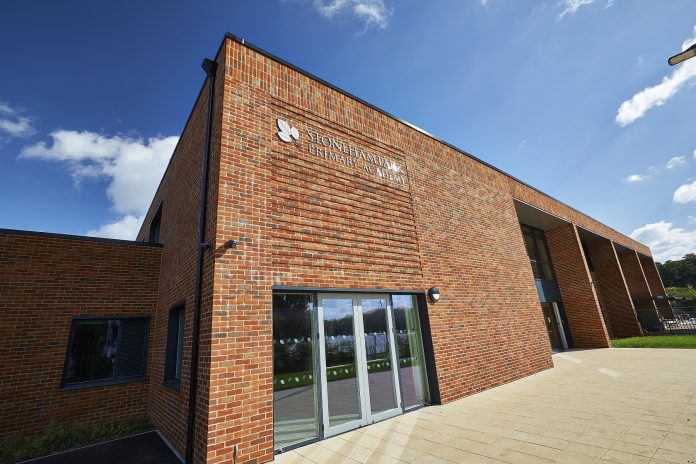
Stoneham Park Academy was successfully handed over in July 2020 during the height of the COVID-19 pandemic, delivered safely, on time, on budget and to a high quality standard.
The project achieved a final cost of £6.64m, approximately 1% below the approved budget, and completed 11 weeks ahead of the original programme.
The academy now provides state-of-the-art educational facilities including 11 classrooms, specialist teaching spaces, sports facilities, extensive outdoor learning areas and a forest school.
The project has also received industry recognition through shortlisting at the Structural Timber Awards and success at the LABC People and Places Awards.