
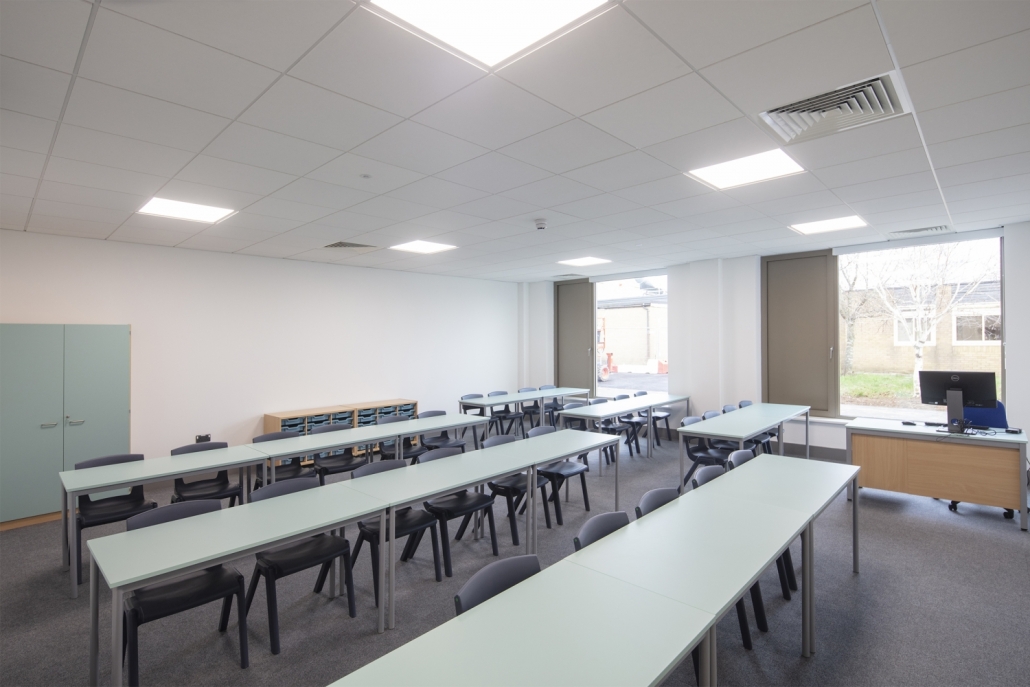
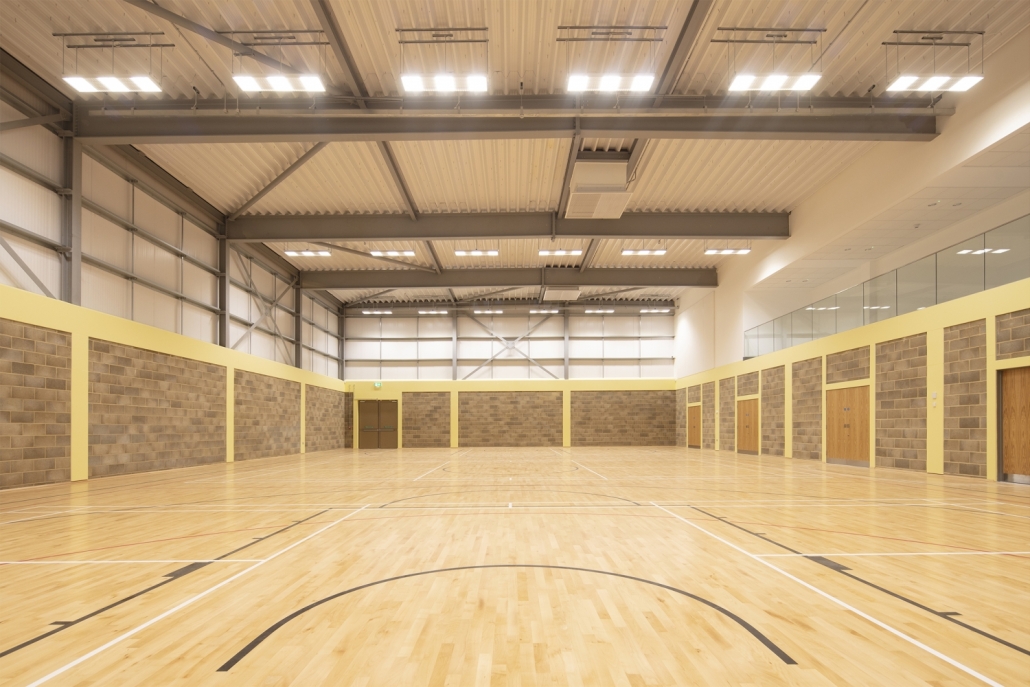
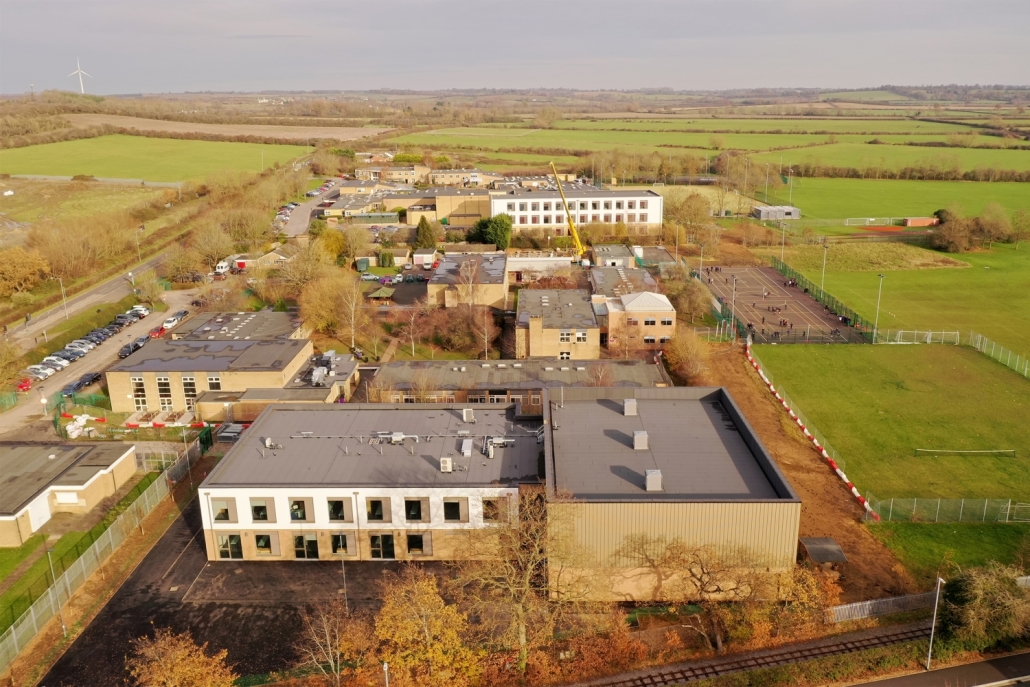
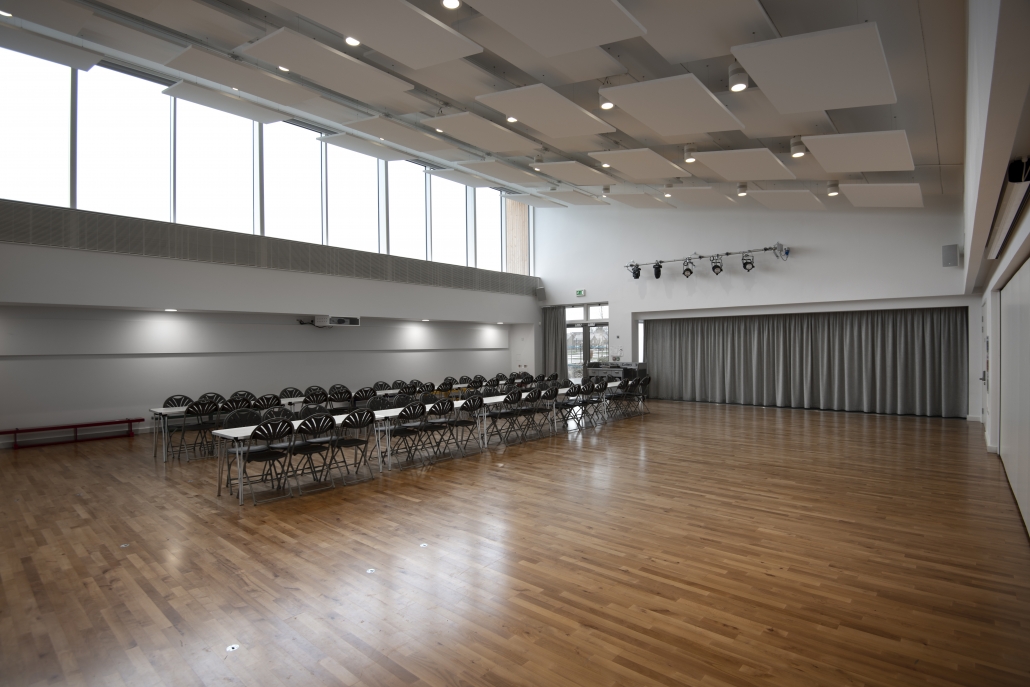
Two storey teaching block providing 10 classrooms and a 3-court sports hall new build, and a combination of 4 separate refurbishment areas including 2 IT labs as well as remodelling the existing school to provide improvements to the school’s catering facilities, and administration areas. In addition, the project introduced new SEND therapy spaces and an external MUGA.
Initial feasibility studies completed for the project identified the requirement for multiple extensions and alterations to the existing school.
Phasing of works
The location for the new sports hall and teaching facility was on the existing school hard-play courts, which doubled as their fire muster point.
Through initial buildability engagement we were able to advise a review of the design to amalgamate the sports hall and teaching facility into one new standalone facility. Due to the design and build process, there was a variety of reviewable design data where approvals where required from the school. During the Client Engagement Meetings we set these as a key part of the agenda to ensure the data was reviewed with the school appropriately providing enough information to allow decisions to be made on time, such that on site activities were not impacted.
Client engagement meetings (CEM) were carried out regularly with the project team during both the pre-con and construction phases. These meetings were especially productive for the site team to engage with the school’s headteacher, teachers and facilities manager to create a robust phasing plan due to the nature and number of small extensions and refurbishment areas located across the existing school.
The provision of the new multi-use games area (MUGA) court would provide the new play area and fire point, however, this commenced at the same time as the new build.
Reviewing the data was especially beneficial for the refurbishment areas where the new finishes were installed early in the programme. Following further engagement, the existing kitchen and dining spaces were able to be relocated to an area of the school that had better construction access and existing services to facilitate.
A detailed construction programme was produced accompanied with a master phasing plan, highlighting the programme periods in each section of work. Where possible, each section was coordinated to commence and complete in line with the school’s academic timetable. From this master phasing plan, detailed access and logistic plans were presented to the school for each work section. Through careful consideration of the school’s current operation, the phasing plans were tweaked to minimise disruption. As part of the induction process on site all operatives were briefed on the phasing plans for the project and the importance of the live school environment.
Through negotiation with Central Bedfordshire Council, we were able to re-surface the adjacent youth centre car-park in return for the school to use this facility as a muster point whilst the MUGA courts were being constructed.
Collaborative delivery of scheme within original programme parameters despite being impacted by COVID-19.

100% payment within 30 days terms

94% waste diverted from landfill
100% timber responsibly sourced

Zero RIDDORs
CCS Score 42/45

During the first month on site the construction team delivered a safety assembly to all students and staff at the school. With the help from Ivor Goodsite (CCS Mascot) a fine balance between humour and seriousness was struck to reinforce the importance for all stakeholders to be conscious of the construction works in a live school environment.
Virtual video tour for the local technical college, 99 Apprenticeship weeks, 14 No of SMEs, 14 beneficiaries, 7 jobs created and 114 trainee weeks.
600 students engaged and £50 donation to charity with 20 volunteer hours

Soft landings for handover
Dedicated Morgan Sindall point of contact
On-line portal for notifying any defects with 3 priority categories for response times
Any site specific process/initiatives

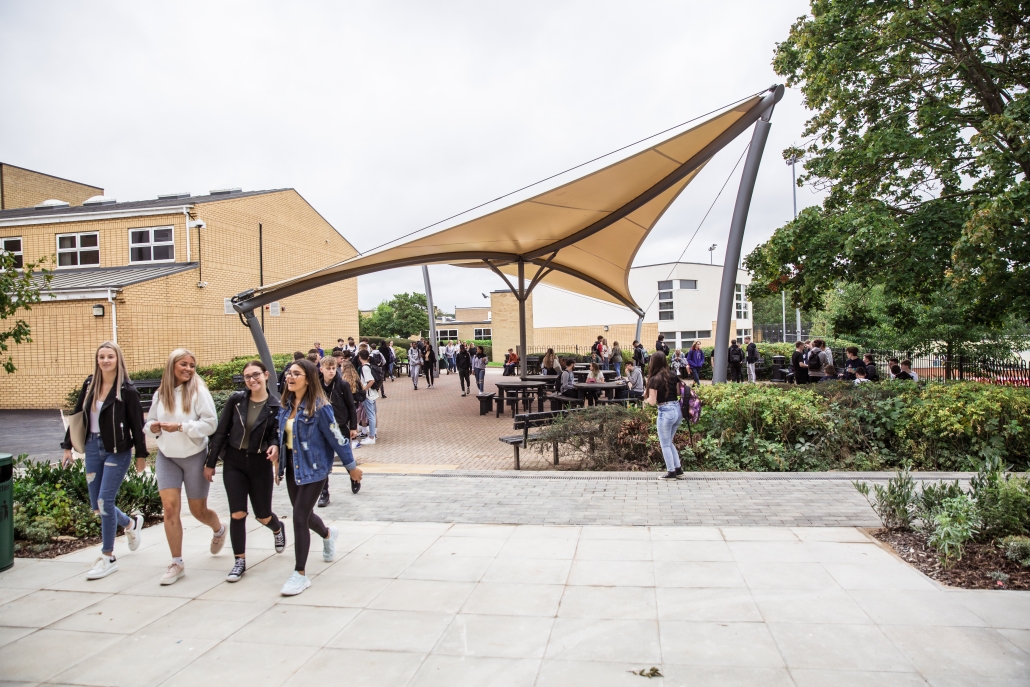
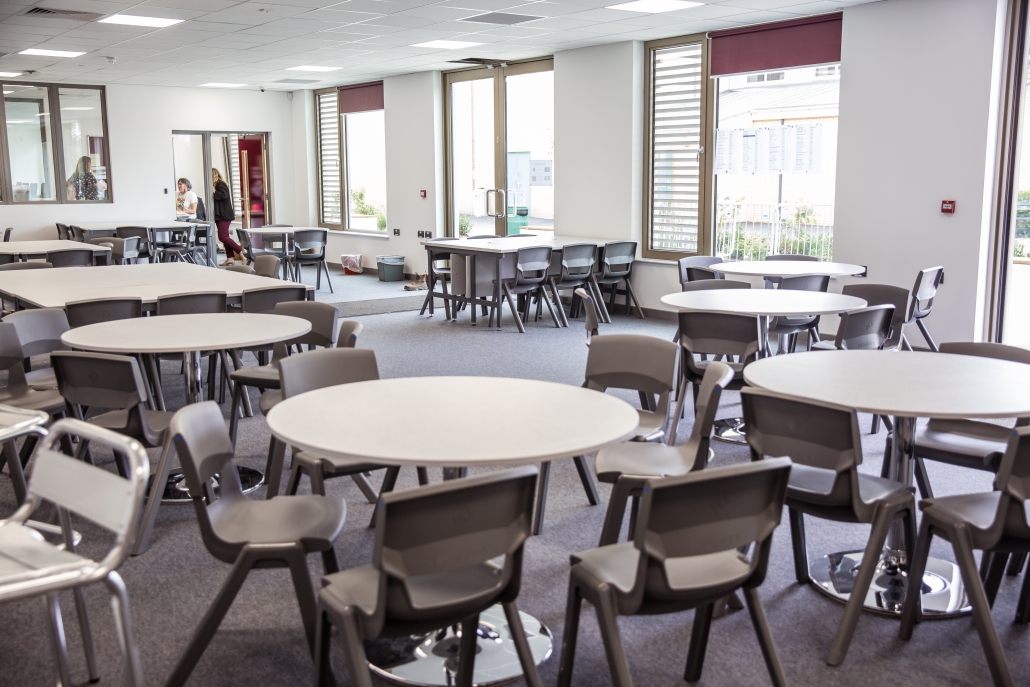
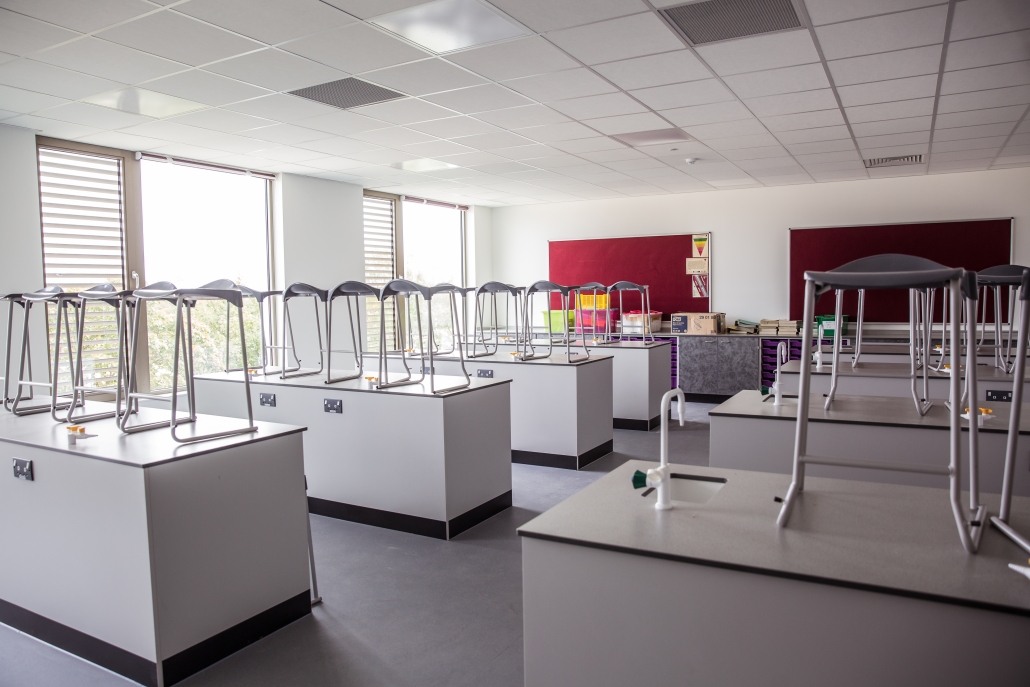
Three storey modular teaching block boasts new science labs and general classrooms relocating 6th form study areas, associated external works and two separate refurbishment areas offering more general teaching space and expands the school’s kitchen and dining area.
The Project Manager, James Wood, went on to win Construction Manager of the Year and showcased the project at the awards ceremony.
A site-specific risk assessment should be in place prior to commencing work accounting for the local environment in which the work is undertaken. This highlighted the area beneath the cycle shelter is heavily populated with services feeding the school including LV, HV and Gas. Upon completing several trial holes in accordance with the services plan it was discovered the services were laid shallow in the ground with some having less than 500mm cover.
As a result of the incoming services feeding a live school, lowering the services was not a feasible option due to an extended shutdown requirement whilst the works were ongoing. Therefore, a propriety protection board was proposed as a solution to protect the services. The cable protection was specified to be 230mm wide concrete tiles with marker tape to be installed above as a standard requirement. In order to install the protection board, the services needed to be fully exposed and the safest and most efficient method of ground clearance was Vacuum Excavation.
A site-specific risk assessment was in place prior to commencing work accounting for the local environment in which the work is undertaken.
Vacuum excavation avoided using mechanical means to dig near live services as well as significantly reducing the risk of service strike. It also meant there was no need to disrupt existing services feeding a live school thus the school was able to remain operational throughout the entire process avoiding any disruption.
Working with Eco Modular, the project team utilised off-site manufacturing to minimise disruption, create cost and time efficiencies and enhance the building’s sustainability performance. This created a high Pre-Manufactured Value (PMV) which meant the design could be strictly coordinated and managed with regular inspections, including stringent quality checks, via weekly factory visits. The project also had a high percentage of PMV MEP installation including containment, first fix, plant room design and structured cabling architecture.
The high percentage of PMV on the building produced a better-quality product with less rework and remaining onsite activities were predictable, plannable and labour loading was simpler.
When Covid struck part-way through, it seemed the project may be in trouble but it was delivered on time and to budget in time for the school’s new academic year..
Zero RIDDORs
CCS Score 44/45
Any site specific initiatives
Soft landings for handover
Dedicated Morgan Sindall point of contact
On-line portal for notifying any defects with 3 priority categories for response times
Any site specific process/initiatives
100% payment within 30 days terms
A celebratory capsule burying ceremony marked the completion milestone for the students, teachers and project team who worked steadily throughout the peak of the COVID-19 pandemic to ensure the project was safely delivered on time
18 SMEs, 19 beneficiaries, 4 jobs created and 112 trainee weeks
350 students Engaged, £600 donations to charity and 61 volunteer hours
82% of the building by volume was constructed using offsite manufacturing providing a programme saving of 16 weeks over traditional methods
Water tightness was achieved within 2 weeks of modules being delivered speeding up the construction programme
97% waste diverted from landfill
100% timber responsibly sourced

Client
Devon County Council
Project Manager
NPS Group
Architect
NPS Group
Contractor
Morgan Sindall
Value
£4.76m
Contract Period
56 weeks
Procurement Type
Framework competitive
Form of Contract
NEC 3 Short Contract
Apprentices
5
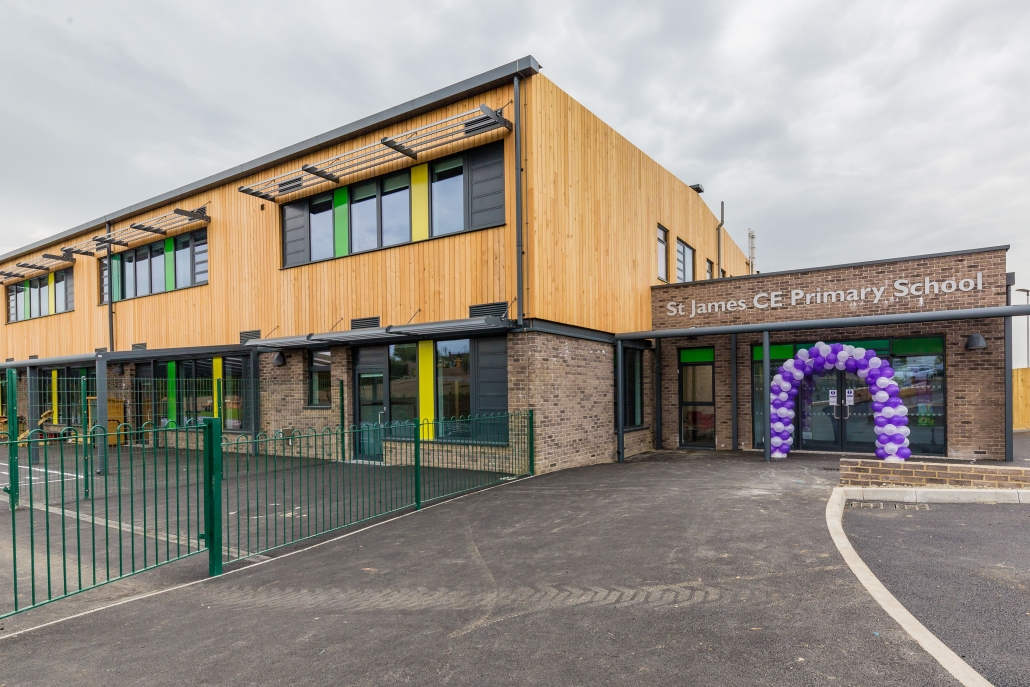
Brand new 450 place primary school and associated nursery on a sloping site, within a new housing development on the outskirts of Devon. Construction generally comprised of load-bearing insulation panels for walls, with steelwork bracing to form a two-storey classroom block with ancillary accommodation and double-storey height hall. External works involved hard and soft play areas, MUGA pitch, sports field with two football pitches, landscaping, drainage works and road access.
Key Challenges
Deliveries during adverse weather conditions
Updated the strategy of coordinating deliveries upon arrival to eliminate any difficulties.
School vacation of temporary classrooms no later than 1/4/2018
Robust programming and logistics ensured the school was available for students to start at the agreed date after Easter.
Project Takeaways
Our Success
KPI’s & Statistics
| Contract | Gateway 2 Planning | Gateway 3 Contract Agreement | Variation |
|---|---|---|---|
| Cost | £4,354,992 | £4,375,899 | 0.5% |
| Time | 34.1 weeks | 34.0 weeks | -0.4% |
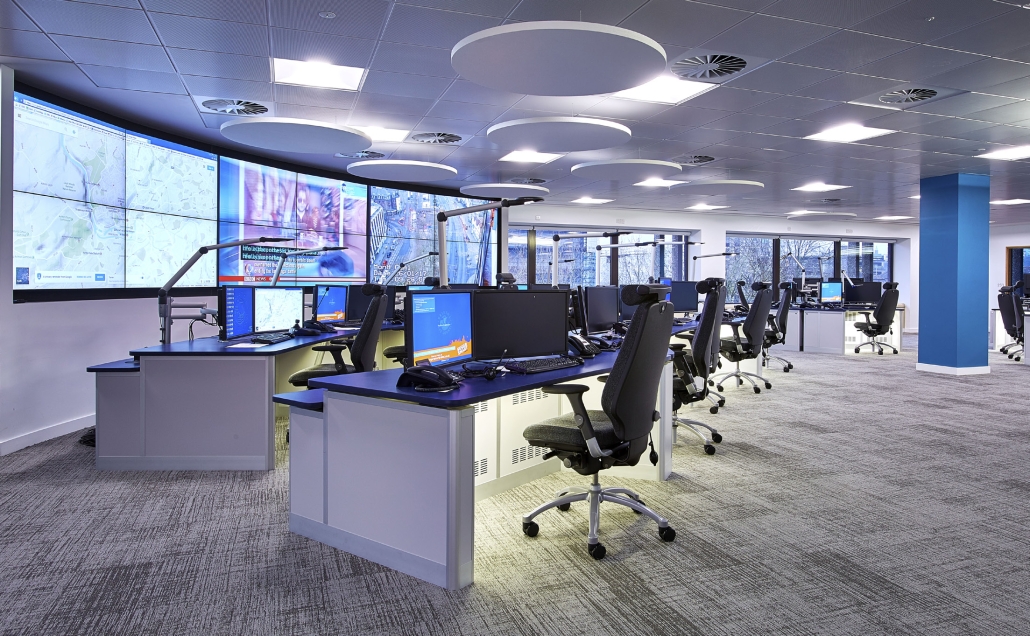
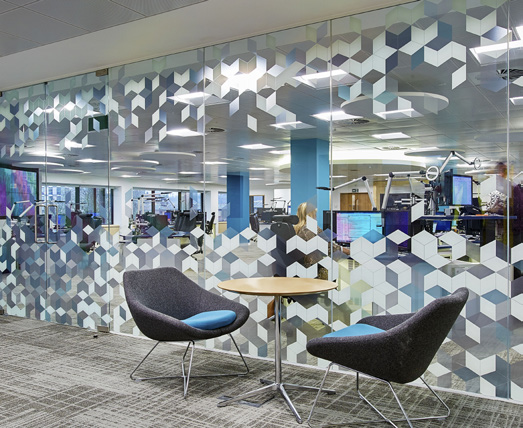
Following the successful completion of Phase 1, Phase 2 refurbishment of Bristol City Council’s headquarters at Temple Street, Bristol including the creation of a new Operations Centre on one floor which provides the central hub for all CCTV cameras in the city. The room also acts as the control centre for major incidents and thus has a higher level of security than the rest of the building.
Provision of high security to one floor and fit out to the rest of the building whilst remaining a live operational building.
Specialist and security systems included the installation of a video wall system which feature images from CCTV cameras that operators can play numerous images on enabling them to split the screen or zoom in.
The refurbishment also included CAT 6 data wiring, installation of a new generator, UPS and air conditioning. The new switch panel was installed over 3 weekends as the building remained occupied.
Fit out to the first floor for the Department of Work and Pensions were phased to keep staff entrances live throughout with minimal disruption. Deliveries were planned carefully. Any drilling was not undertaken after 8.30am
Building handed over on time and within budget whilst remaining operational throughout the works.
100% payment within 30 days terms
100% timber responsibly sourced
Zero RIDDORs
23 No of SMEs
22 Beneficiaries
2 Work experience placements and 16 jobs created
3 curriculum support activities
Soft landings for handover
Dedicated Morgan Sindall point of contact
On-line portal for notifying any defects with 3 priority categories for response times
Client
London Borough of Islington
Project Manager
Baily Garner
Architect
Haverstock
Contractor
Morgan Sindall
Value
£14.2 million
Contract Period
81 weeks
Procurement Type
Design & Build
Form of Contract
JCT 2011 D&B
Size
3,252 sqm
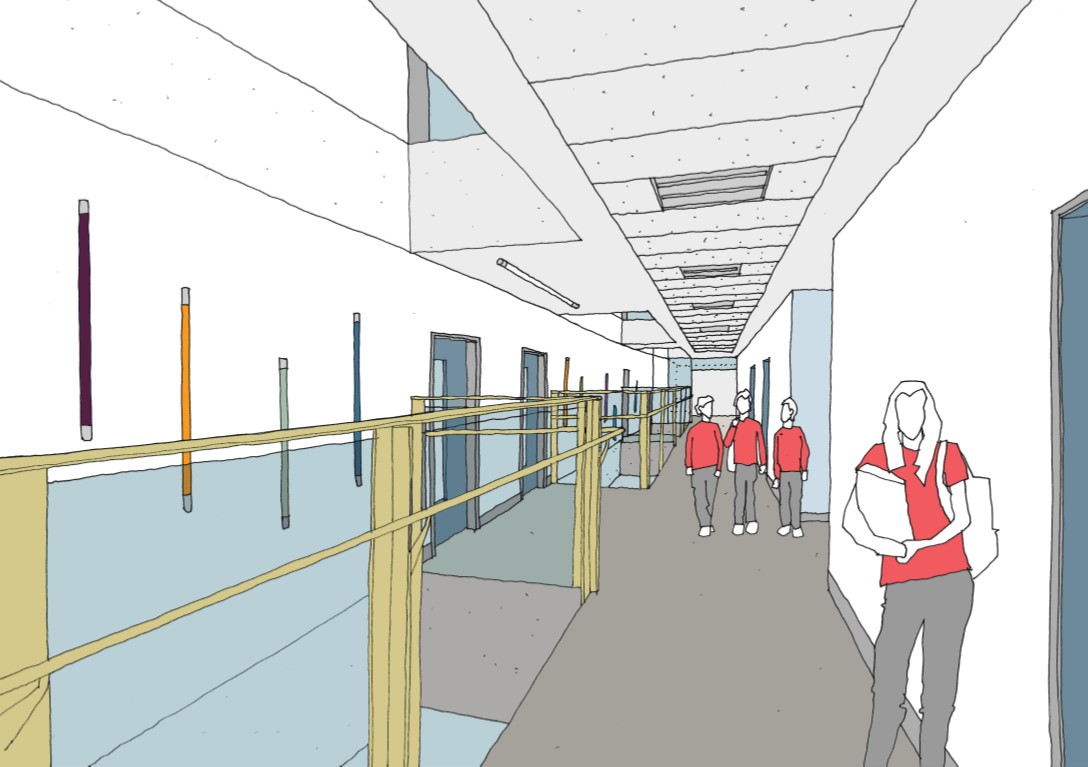
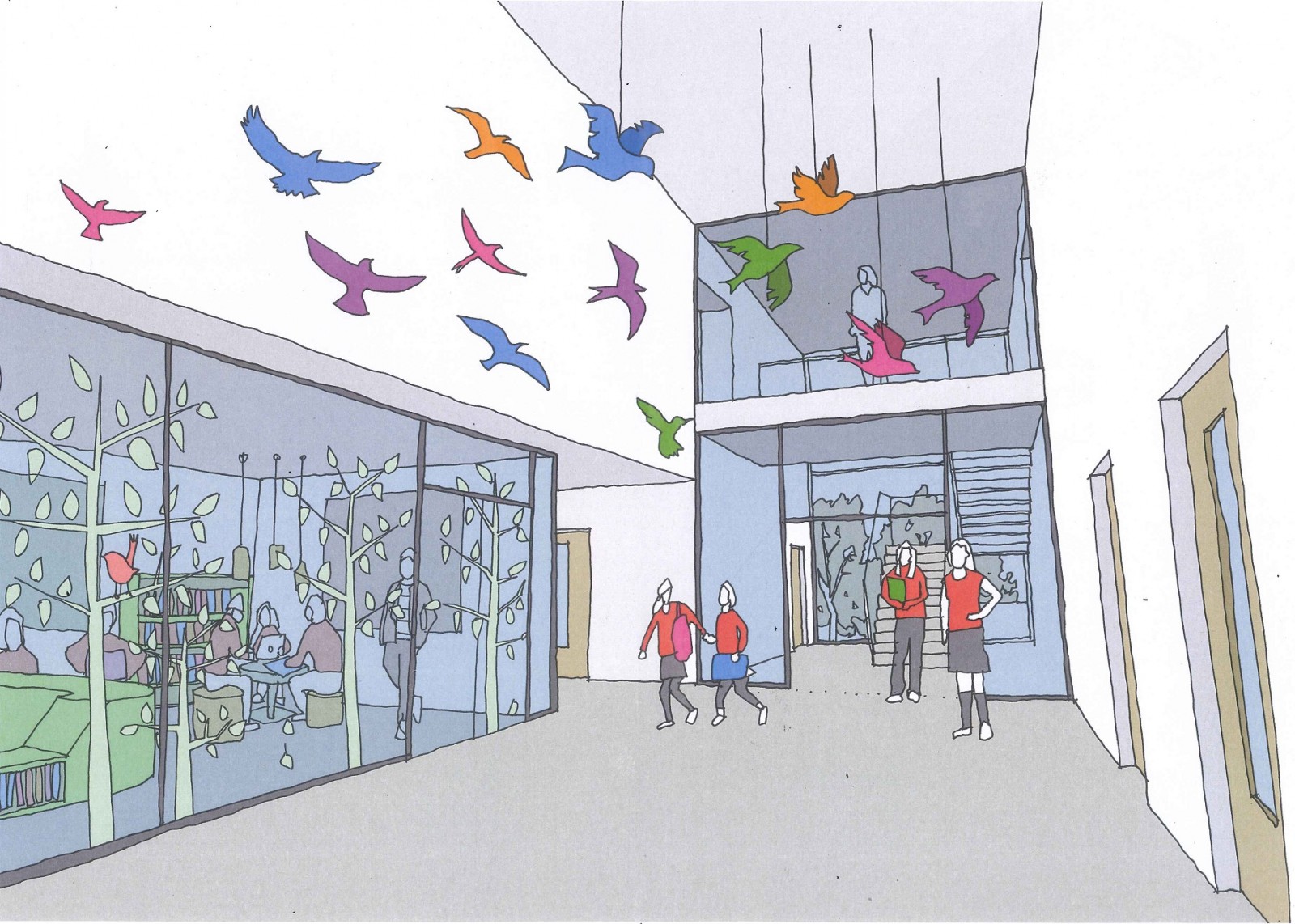
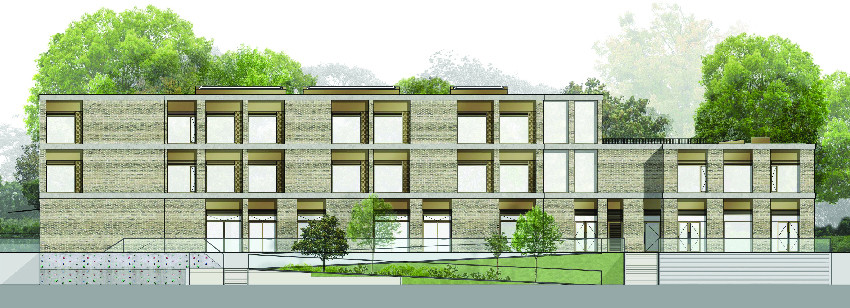
A new 3FE modular primary school and associated landscaping with new MUGA (Multi-Use Games Area) to replace an existing 1.5FE school. The pupils from the existing school were housed in temporary classrooms while the old school was demolished to make way for the new school. Demolition took place in two phases with one building remaining operational throughout the build and was demolished once the school had decanted into the new building.
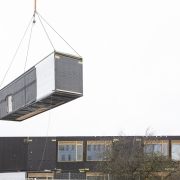
The new school is a modular construction by Eco Modular.
Key Challenges
Four metre difference in site levels from pavement level to where the school building is located
A substantial cut and fill was carried out on the site to level it out and a retaining wall was constructed on three sides.
Challenging access and limited space
The site was landlocked by neighbouring properties on three sides and the site was very tight, making access to it very challenging. In the planning stages, permission for the retaining wall of a listed building was sought, but it wasn’t communicated properly how much working space was needed, which resulted in very limited space on each side of the building.
The modular build was proposed by Morgan Sindall as a solution to the tight site and limited access. Eco modular, who provided the building, also carried out the fit-out meaning there was only one contractor to manage for the whole of the building.
There was very little storage on the tight site, so “just in time” deliveries were scheduled to avoid having to store materials on site. All materials had to be craned in or hand-balled over a bridge and entered the building on the first floor.
Live School environment
Working in a live school environment with school children in very close proximity to the site and having to maintain services to the remaining school building.
A road closure was put in place for five weeks whilst the modular building was being delivered and craned into place. During this time, access still needed to be maintained for a special needs school opposite the site, so the road was only closed between the entrance and exit to the school.
The site team worked with the school to get the site set up initially. A good relationship with the school and local community was maintained throughout the course of the project, with regular site visits by the school’s headteacher and office manager as well as letter drops to neighbours.
Site of Interest for Nature Conservation with a number of Tree Preservation Orders
The site team worked with the school to get the site set up initially. A good relationship with the school and local community was maintained throughout the course of the project, with regular site visits by the school’s headteacher and office manager as well as letter drops to neighbours.

Client
City College
Architect
ADG
Structural/ Civil Engineer
WSP
M&E Engineer:
Hydrock
Contractor
Kier Construction
Value
£9m
Contract Period
March 2016 – July 2017
Form of Contract
JCT 2001 Design & Build
Apprentices
3 Apprentices
Placements
9 weeks work placements
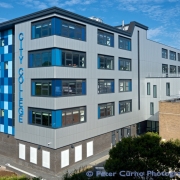
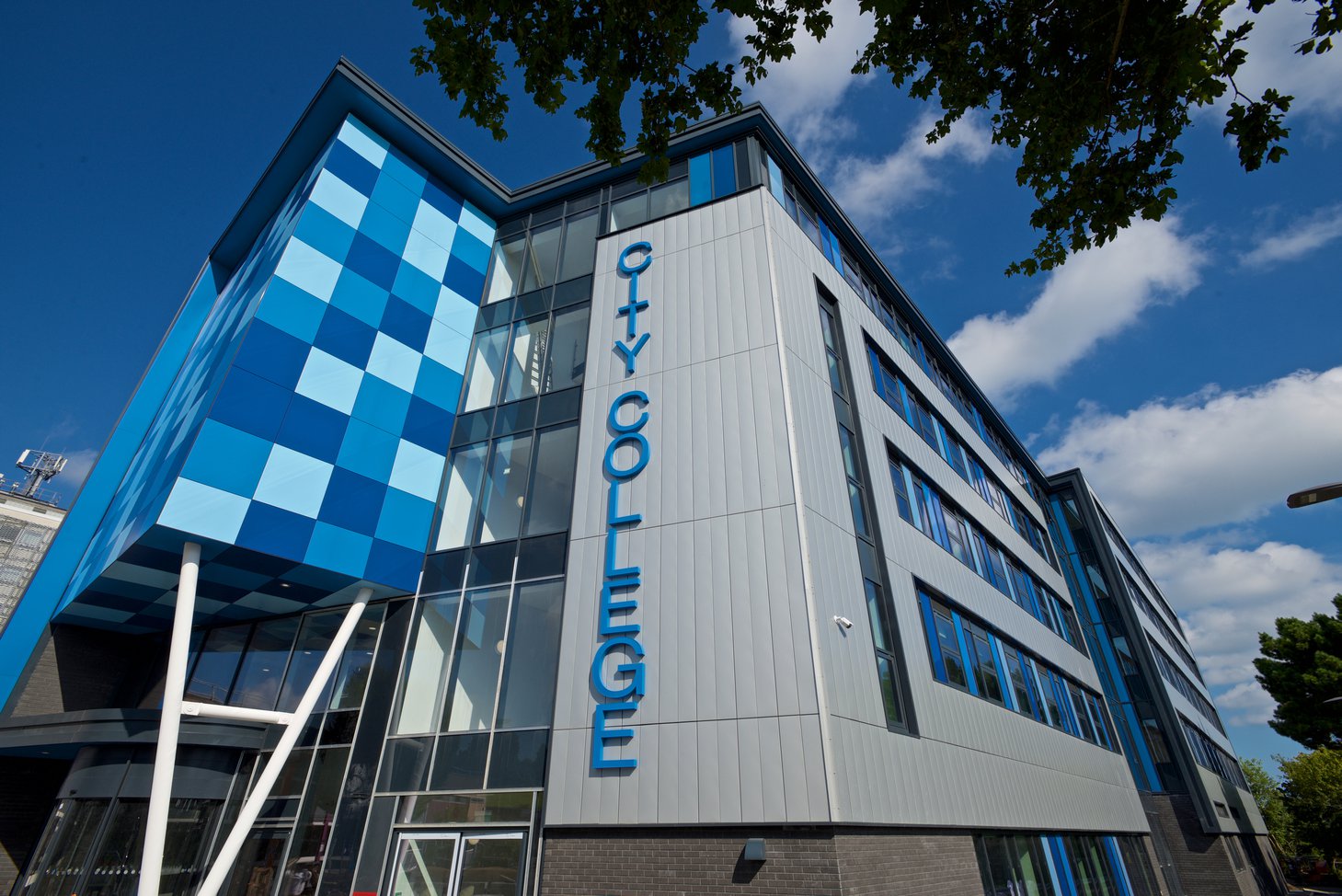
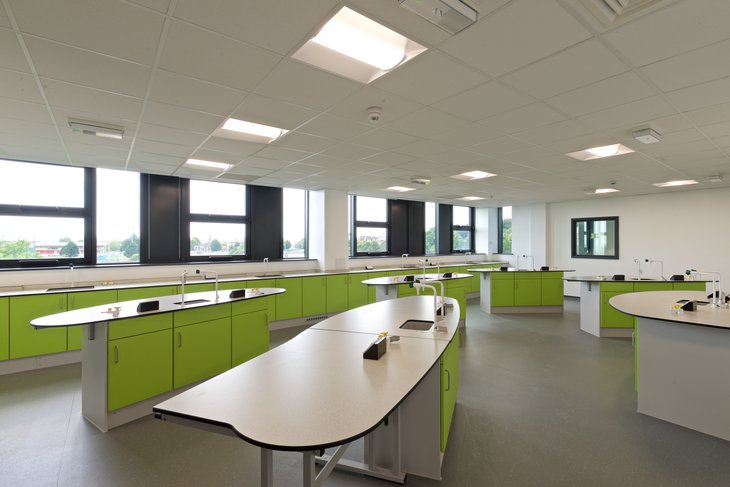
The design and construction of a new Science, Technology, Engineering and Mathematics (STEM) building, along with remodelling and refurbishment of the existing adjacent hall to create a performing arts faculty with associated external works. The project consisted of a 5 storey concrete frame new build with steel frame and atrium.
Specialist design requirements included acoustic work on the ground floor for the music rooms and recording studios.
The design changed to incorporate £1m of value engineering. In the basement the performing arts changing was withdrawn, a handrail around the building for ease of maintenance and the column at the front was changed from square to a v.
Difficulties overcome included the lead designers relying heavily on our design managers and was a big project for the lead architect who struggled to keep up with the pace of the programme
The client was very happy with the result of the design, in particular the cladding and overhang. The result was lots of space for the budget and the internal spaces were well received.
Kier took a lead role in the design management of the project in order to keep to the programme.
Career Development
Key Challenges
Live Campus
Live campus environment required weekly co-ordination meetings with the Clients estates team to ensure deliveries were kept a a minimum during peak campus activity.
Demolition
Demolition of existing building on a live campus. To minimise risk, demolition of the existing building was carried out during school holidays. A robust risk method statement was developed which included dampening dust and protective screens over large glazing.
Project Takeaways
Our Success
Our Learnings
Value Added

Andover, Hampshire

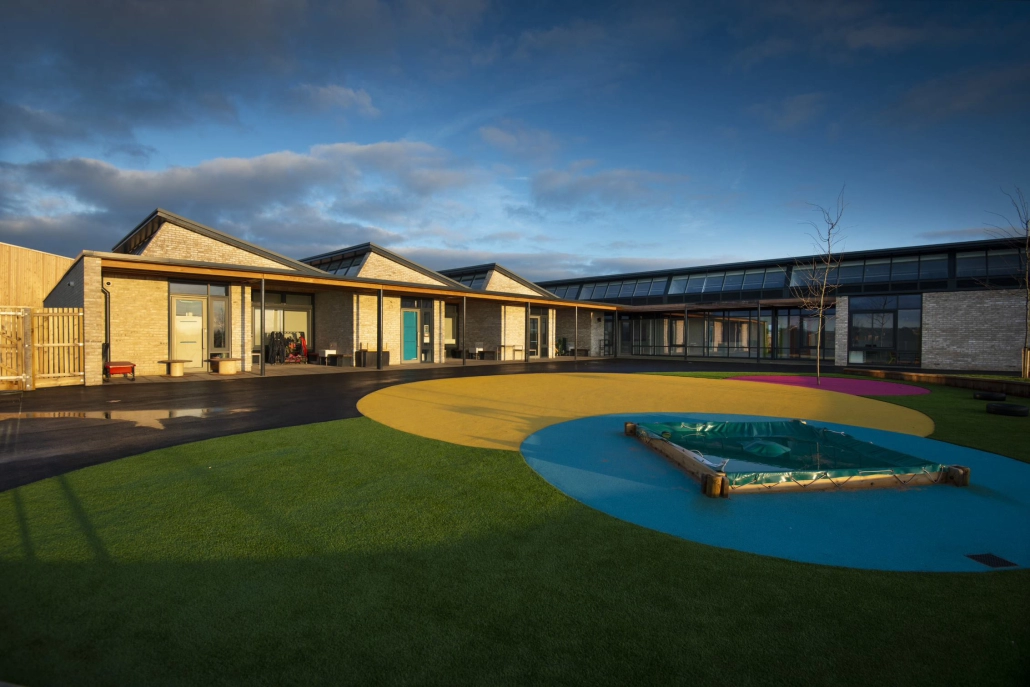
To minimise energy consumption and maximise occupant comfort, our team focused on the careful design of the building form and selection of materials. In particular, the layout of the proposed building features south facing classrooms with north facing clerestory glazing. This arrangement offers good opportunities for providing generous natural daylight with natural cross ventilation and effective shading from excessive solar gain.
Willmott Dixon’s team of education experts have created a new 420 place primary school in Andover. The school provides places for students aged from 4-11 years old and is likely to expand in the future with elements already in place to accommodate this.
This arrangement offers good opportunities for providing generous natural daylight with natural cross ventilation and effective shading from excessive solar gain. The school is highly sustainable with photovoltaics on the roof which provide 10% of the building’s energy use.
The Primary school provided 420 places for students aged from 4-11 years old and is likely to expand in the future with elements already in place to accommodate this. Set within the East Anton Major Development Area (MDA) the school is being built alongside 2,850 new homes with developer Taylor Wimpey.
100% of payments were made promptly and within 30 days
98% diverted from landfill
Created 9 new jobs through the project
Career guidance events
Provided over 186 weeks of training onsite
Zero harm
SCF handover and aftercare process carried out

Building on the success of the Basingstoke PIC [link], the challenge was set by OPCC to develop an identical facility for the Portsmouth site but deliver it quicker and cheaper. Whilst this excluded site abnormals, the focus was on seeking efficiencies in the design by adopting an off-site manufacture / kit of parts approach.
Using the BIM model to carefully interrogate the design the focus was on which elements of the design could be premanufactured and delivered to site, taking the benefits of quicker delivery. The building cores were one focus area, rather than a concrete cast in-situ approach, these were revised to a twin-wall solution. The MEP installation was another focus area, with plant modules being manufactured off-site alongside horizontal services modules for distribution across each floor.
—
The programme benefits delivered through the adoption of premanufacture achieved an approximate 3 week saving and consequential cost saving. The wider benefits included quality checked products, reduced site labour and associated health and safety impacts such as periods spent working at height together with a reduced waste.

Client and sub-contractor payments made within 28 days of certification date.
The installation of PV’s supported the buildings achievement of BREEAM.
Zero RIDDORs
Programme of engagement with UTC Portsmouth to support curriculum activities.
Mace supported the early occupation and operation of the building through maintaining our MEP and Construction Managers on site for the first 2 months to ensure smooth operation and running of the building.
London

Project Team
Architects: Capita
Electrical: Capita
MEP: Capita
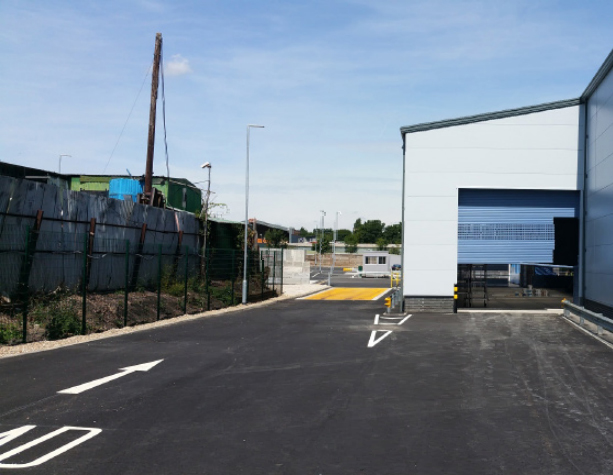
The project was a design and build development of Oakleigh Road South Vehicle Depot to create a Barnet Council vehicle depot and a base for their fleet of 46 household recyclable waste collection vehicles.
There were several challenges faced throughout this project. There was restricted access on a long and narrow site which caused difficulties when trying to overcome other challenges such as dealing with the below ground water, removing underground drainage structures and the buried hazardous waste.
To overcome the narrow site, the Willmott Dixon team worked in a ‘patchwork’ fashion, sectioning off the works and moving operations around to keep the access road fully open throughout the build.
Willmott Dixon found existing sewers and then got permission from Thames Water to use them instead for the below ground water. They found a solution using a land drain pump to drain the ground water which was causing surface water.
Now built, the depot will allow Barnet Council to operate its vehicle maintenance and recycling collection fleet from single coordinated site, ensuring the most efficient service for residents across the borough. The construction also consisted of a tractor barn and car parking, together with associated ancillary facilities, a recycling waste transfer building and bulking facility, a two storey office and welfare building.
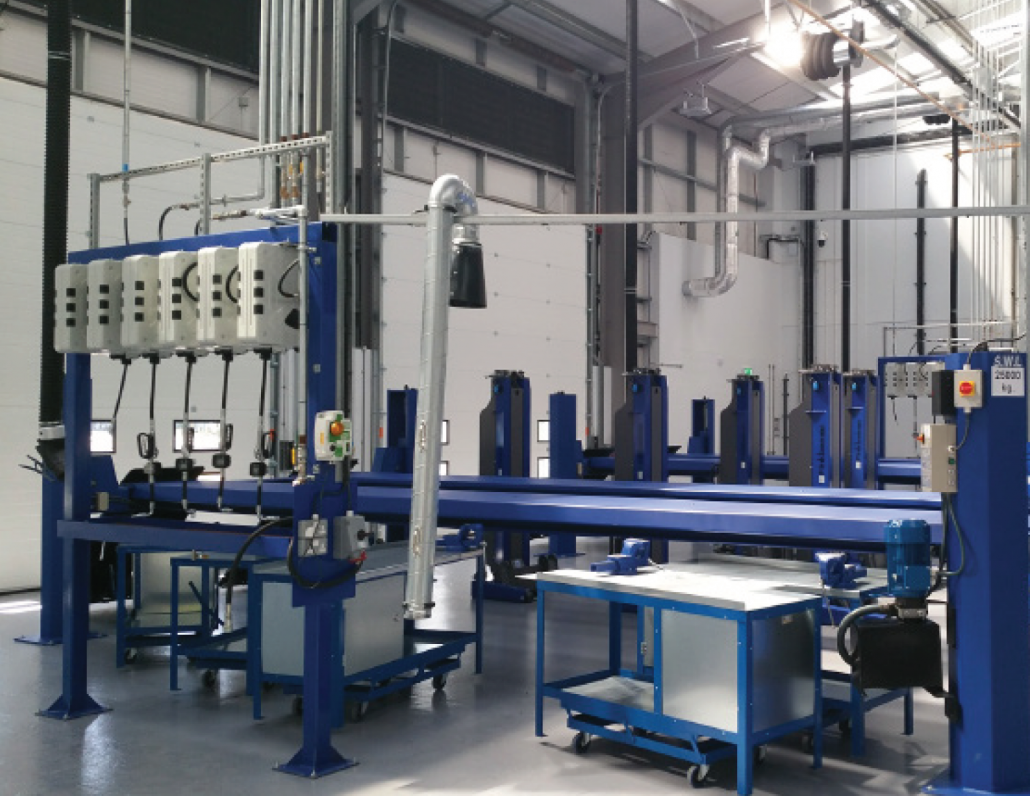
Early contractor engagement realised that by raising finished floor levels by introducing an engineered ground geotextile design produced a saving of c£720k, helping significantly reduce excavated materials resulting in programme saving £110k.
Added surveys resulting in reduced risk on hazardous waste, saving £205k
Regular payments and payment periods did not exceed 30 days
Zero RIDDORs
2 starter apprentices who went on to gain full time graduate employment
SCF handover and aftercare promised carried out

Exeter
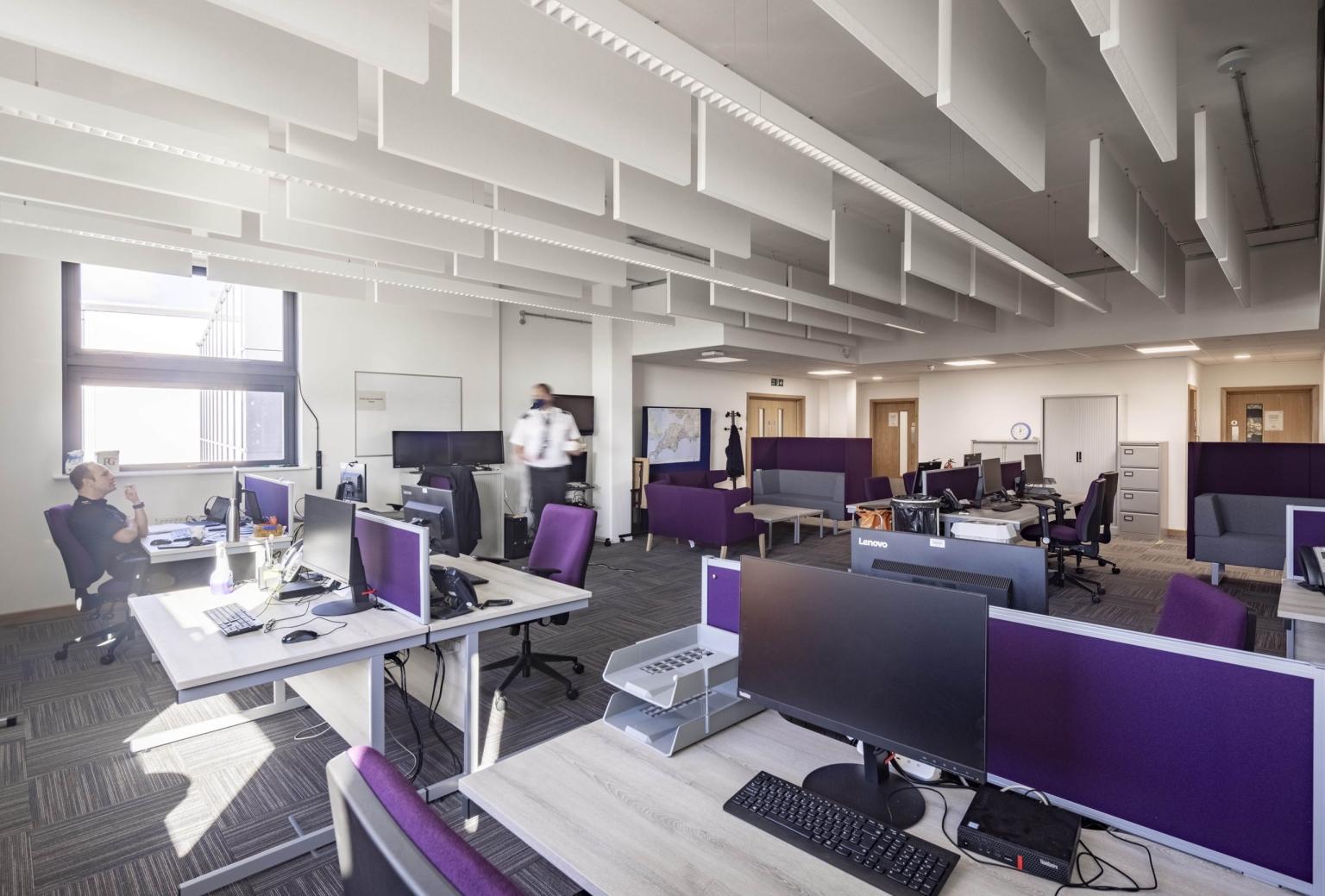
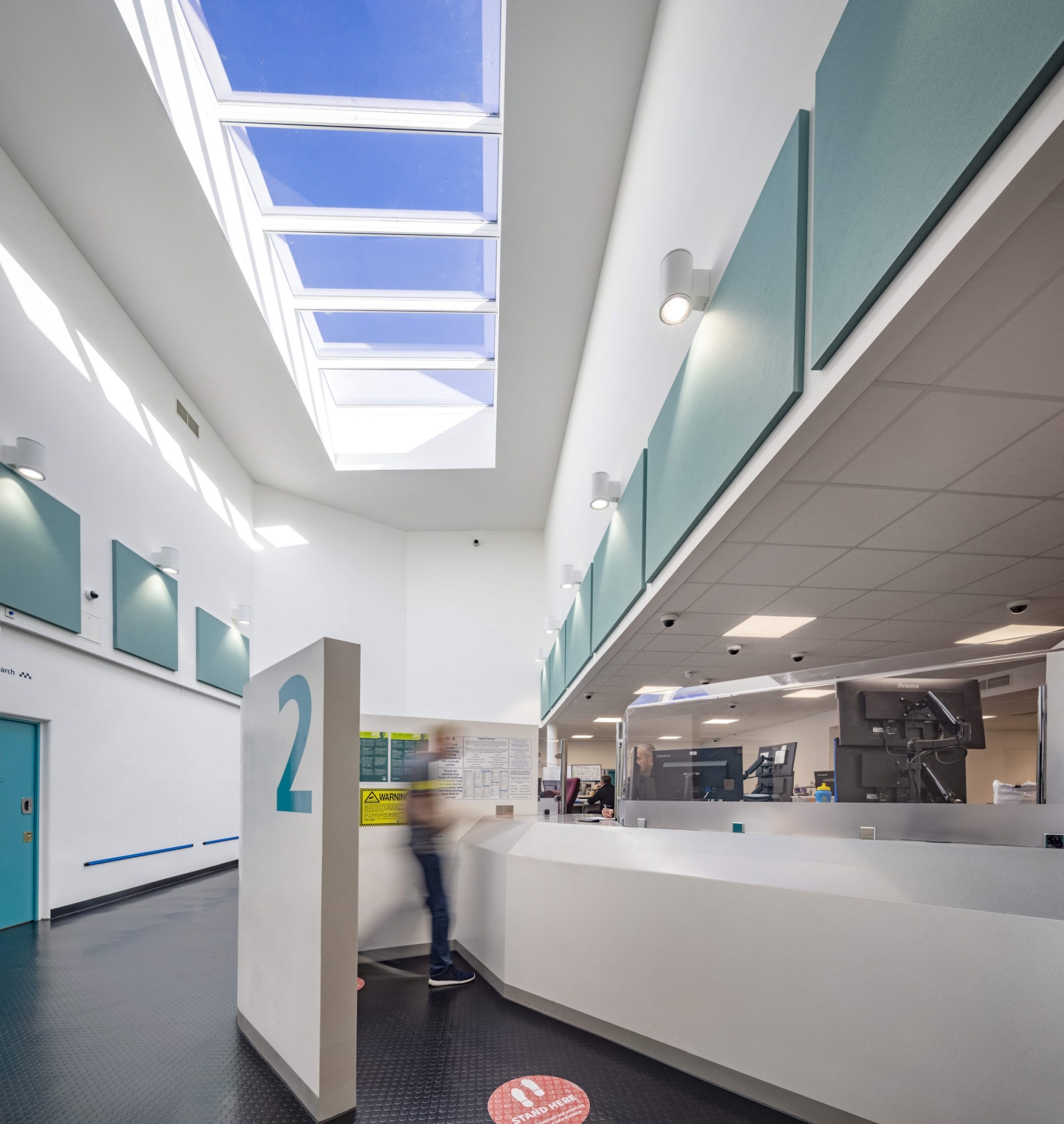
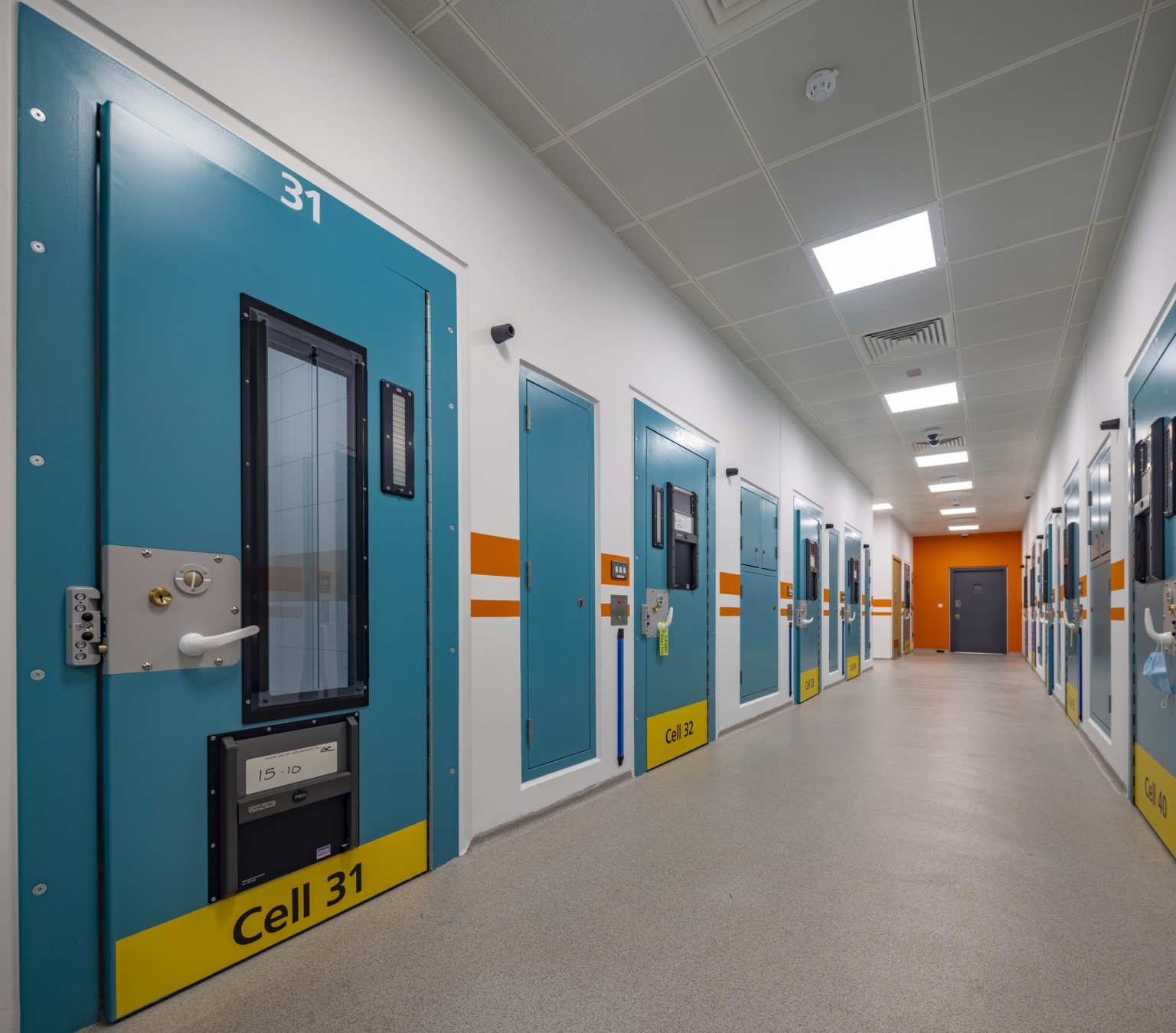
The main challenges relating to this project were optimising the design to meet budget and making sure the design of the custody cells were Ministry of Justice compliant.
Early appointment formed an ‘integrated team’ newly formed with common agreed objectives were able to de-risk prior to any works commencing on site. This aided and protected final account predictability which contributed to completing on time and on budget.
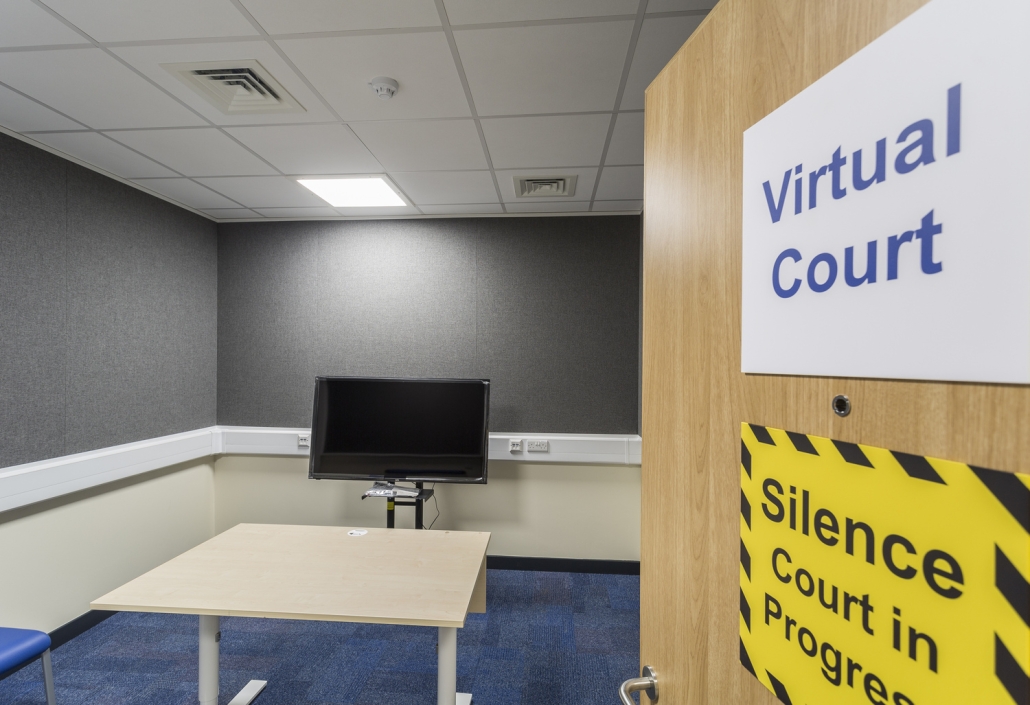
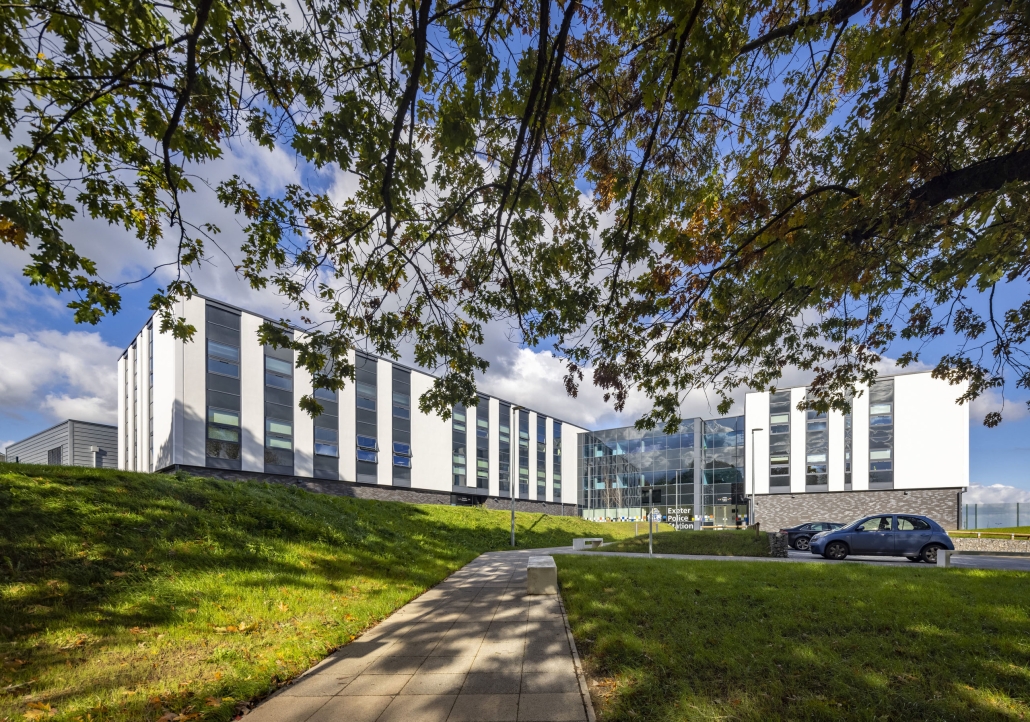
Built to Ministry of Justice standards using the Yellow book design guide providing first-class accommodation for solicitors and partners has been incorporated in the design, including interview rooms and medical suites. The custody centre will use modern technology to monitor the health of vulnerable detainees and offers a virtual courts system. The linked-hub buildings provide modern office and meeting space for all operational police functions.
Completed on time and on budget. Willmott Dixon worked collaboratively with their Works Partner of the Year, Stephenson Group, to reduce the in-situ concrete frame programme by 12 weeks Exeter Police Station met all the requirements for Time, Cost and Quality achievements: defect free, on budget and handed over on time after being completed two weeks early. The project used 67% Mandated Suppliers and 82% Cat A suppliers, proving that building closer relationships builds trust and improves quality and service BREEAM Excellent certification accredited to design stage and is in UK’s top 10% sustainable buildings.
99% of regular payments and payment periods did not exceed 30 days
The facility uses 22% less energy than a traditional building of the same size, generates 68kwh of electricity a year from solar panels and carbon generated from its construction has been offset
Zero RIDDORs
Held 100 school children visits
1,600 students engaged at career events and workshops
2 ex-military personnel joined the construction industry
Zero defects at handover & aftercare